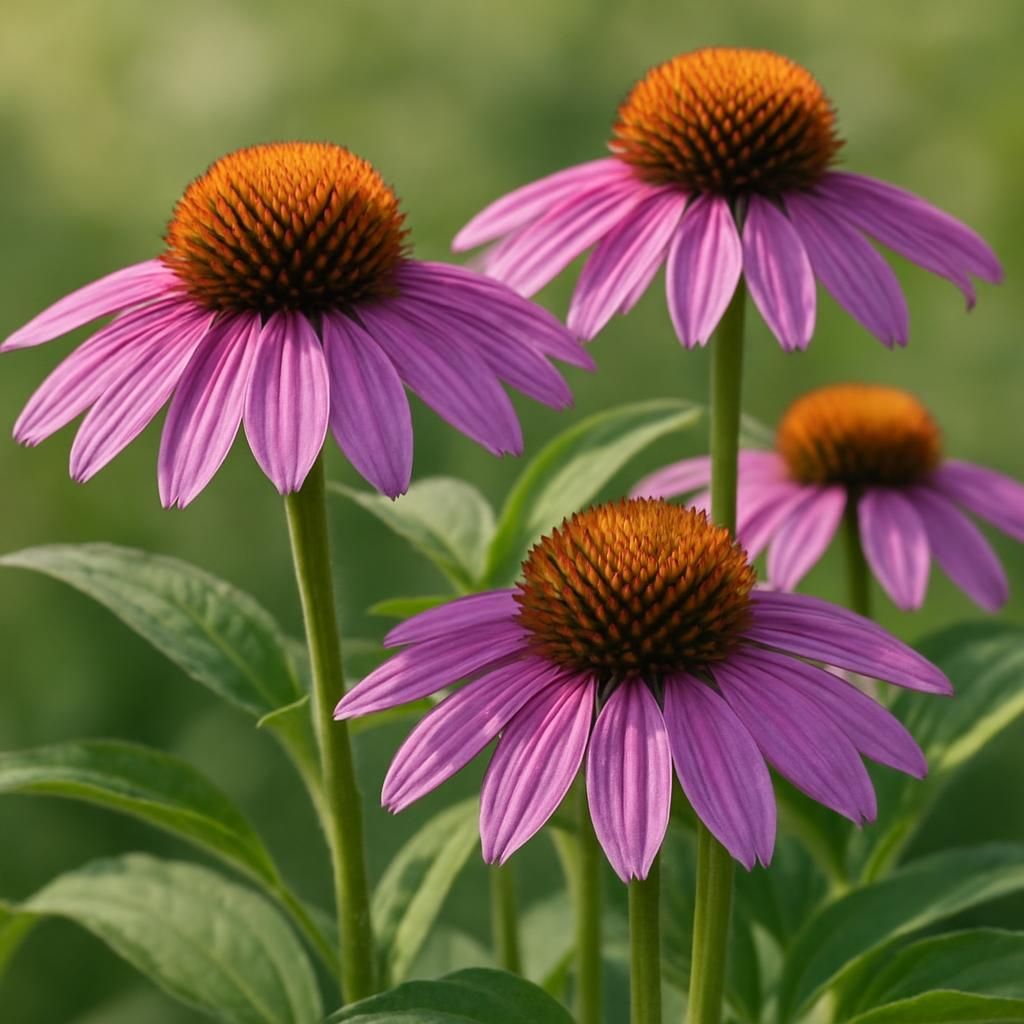
Introduction to coneflower
Coneflower, scientifically known as Echinacea purpurea, is a North American native perennial celebrated for its striking purple-pink petals surrounding a prominent central cone. Widely grown for both ornamental landscapes and medicinal herb production, coneflower attracts bees, butterflies, and beneficial insects while thriving in a wide range of conditions with minimal inputs. Its deep taproot system enables exceptional drought tolerance once established, making it a resilient choice for sustainable agriculture and pollinator-focused plantings.
Commercial growers value coneflower for its high-value dried roots and aerial parts used in herbal supplements, while home gardeners appreciate its long bloom period from midsummer into fall. The plant’s upright habit and extended flowering make it ideal for cut-flower production and low-maintenance perennial borders. With proper site selection and organic management, coneflower can remain productive for five to ten years or more.
Botanical Profile of coneflower
Echinacea purpurea belongs to the Asteraceae family and features coarse, lance-shaped leaves with serrated margins. Mature plants reach 2–5 feet in height with 2–4 foot spreads. The composite flower heads consist of 8–21 ray florets surrounding a domed disk of tubular florets that darken from orange to deep brown as seeds mature.
The species produces achenes as fruit, each containing a single seed. Roots are thick, woody, and aromatic, harvested in the third or fourth year for maximum medicinal potency. Echinacea purpurea is distinct from Echinacea angustifolia and Echinacea pallida by its broader leaves and more robust growth habit.
Soil, pH, and Climate Requirements for coneflower
Coneflower performs best in well-drained, moderately fertile soils. Heavy clay or waterlogged conditions lead to crown rot and reduced longevity. The plant tolerates poor soils once established but benefits from organic matter incorporation at planting.
| Parameter | Ideal Range | Notes |
|---|---|---|
| Soil Type | Loamy to sandy loam | Good drainage essential |
| pH | 6.0–7.0 | Slightly acidic to neutral |
| Temperature | 60–85 °F (15–29 °C) | Hardy to USDA Zone 3 (-40 °F) |
| Annual Rainfall | 20–40 inches | Supplemental irrigation in drought |
| Sun Exposure | Full sun (6+ hours) | Tolerates light afternoon shade |
| Spacing | 12–18 inches | Rows 24–36 inches apart |
Step-by-Step Planting & Propagation
- Site Preparation: Select a location with full sun and excellent drainage. Remove weeds and incorporate 2–3 inches of well-rotted compost or aged manure.
- Soil Testing: Conduct a soil test and amend to achieve pH 6.0–7.0. Add phosphorus if levels are low.
- Seed Sowing: Sow seeds directly in fall or start indoors 8–10 weeks before last frost. Cold stratify seeds for 4–6 weeks at 35–40 °F for improved germination.
- Transplanting: Harden off seedlings and transplant after danger of frost. Space plants 12–18 inches apart in rows 24–36 inches wide.
- Division: Divide established clumps in early spring or fall every 3–4 years to maintain vigor.
- Root Cuttings: Take 2–3 inch root sections in late winter and plant horizontally 1 inch deep.
Care & Maintenance regimes for coneflower
Consistent but moderate care maximizes bloom production and root quality. Mulch helps retain moisture and suppress weeds.
| Task | Schedule | Details |
|---|---|---|
| Watering | Deep soak every 7–10 days | 1 inch per week; reduce after establishment |
| Fertilizer | Early spring & mid-summer | Compost tea or balanced organic 5-5-5 |
| Pruning | Deadhead spent blooms weekly | Cut back to basal leaves; full cutback late fall |
| Mulching | Apply 2–3 inches in spring | Straw, shredded leaves, or bark |
| Division | Every 3–4 years in spring/fall | Replant divisions immediately |
Pests, Diseases & Organic Management
Coneflower is relatively pest-resistant but can be affected by Aphids, Japanese beetles, and powdery mildew. Monitor weekly and use insecticidal soap or neem oil for aphids. Remove infected foliage at first sign of powdery mildew and improve air circulation.
Root and crown rots occur in poorly drained soils; prevent with raised beds and proper spacing. Slugs and snails may damage young shoots—use iron phosphate baits or diatomaceous earth. Beneficial nematodes help control soil-dwelling larvae.
Harvesting, Curing & Optimal Storage
Harvest aerial parts (leaves and flowers) at peak bloom for fresh or dried use. Cut stems in early morning and hang in bunches in a dark, well-ventilated area at 70–80 °F until crisp.
Roots are best harvested in the third or fourth year after planting, in fall after foliage dies back. Dig carefully, wash, and slice into ¼-inch pieces. Dry at 95–105 °F until brittle. Store dried material in airtight glass jars away from light and heat for up to two years.
Companion Planting for coneflower
Coneflower pairs well with Yarrow, Thyme, and Marigold to enhance pollinator attraction and deter pests. Avoid planting near heavy feeders such as Corn that compete for nutrients. Interplant with Nasturtium to provide aphid-trapping sacrificial plants. In mixed perennial beds, coneflower complements Black-eyed Susan and ornamental grasses for extended seasonal interest and soil health.