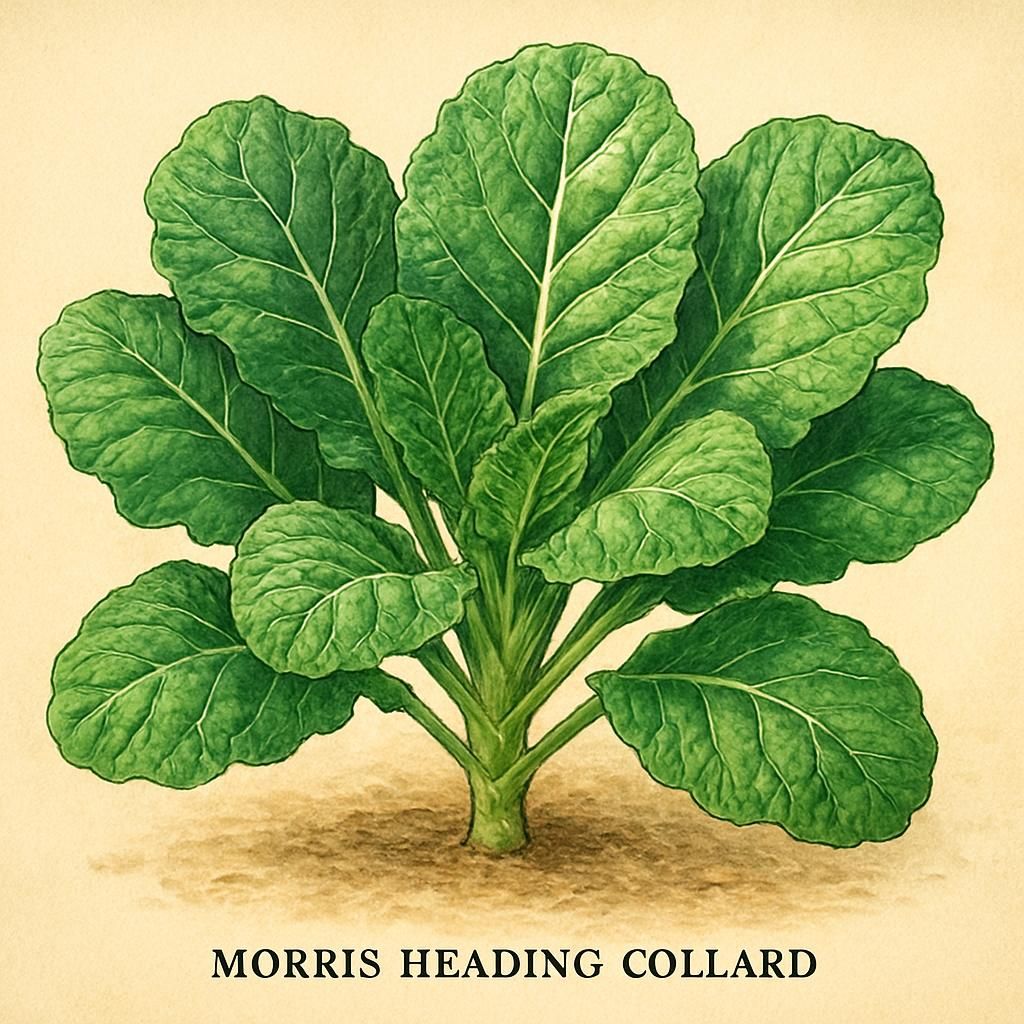
Introduction to Collards (Morris Heading)
Collards, particularly the 'Morris Heading' variety, are a beloved leafy green in many gardens due to their robust growth and tasty, nutrient-dense leaves. Known for their ability to withstand both heat and colder temperatures, this variety is ideal for a range of climates and makes a staple in Southern cuisine, often used in stews and sautés for their hearty flavor.
Botanical Profile of Collards (Morris Heading)
The Morris Heading collard belongs to the Brassica family, categorized as Brassica oleracea var. viridis. This variety is known for its upright growth habit, developing a central 'head' of tender leaves as it matures. Typically, plants reach up to 1-2 feet in height. They flourish in well-drained soils and require adequate watering for optimal growth.
Soil, pH, and Climate Requirements for Collards (Morris Heading)
Collards prefer well-drained, fertile soils and can thrive across a range of climates. Here's a detailed overview of their ideal growing conditions:
| Factor | Optimal Condition |
|---|---|
| pH Level | 6.0 - 7.5 |
| Soil Type | Loamy, well-drained |
| Temperature Range | 55°F to 75°F (13°C to 24°C) |
| Sunlight Exposure | Full sun to partial shade |
| Watering | Regular, moderate water levels |
Step-by-Step Planting & Propagation
- Seed Starting: Begin indoors 6-8 weeks before the last frost date. Use seed trays filled with organic starting mix.
- Transplanting: Once seedlings have 2-3 true leaves, harden them off by gradually exposing them to outdoor conditions before planting.
- Sowing Outdoors: Direct sow seeds after the last frost date, spacing them about 18 inches apart in rows that are 24 inches apart.
- Thinning: After seedlings emerge, thin them to allow 18-24 inches of space between plants.
- Companion Planting: Consider growing Morris Heading collards with Garlic and Onion to deter pests and improve soil conditions.
Care & Maintenance Regimes for Collards (Morris Heading)
To ensure your collards thrive, adhere to the following care routines:
| Aspect | Schedule/Amount |
|---|---|
| Watering | 1-1.5 inches per week |
| Fertilizing | Balanced NPK fertilizer every 4-6 weeks |
| Pruning | Harvest lower leaves regularly to promote new growth |
Collards require regular maintenance to prevent bolting and maintain leaf quality. Water consistently, especially during dry spells, and mulch around the base to retain moisture and prevent weeds.
Pests, Diseases & Organic Management
Collards may face threats from several pests and diseases. Common issues include:
- Pests: Aphids, Harlequin Bugs, and Imported Cabbageworm.
- Diseases: Downy mildew and clubroot.
Organic Management:
- Use insecticidal soap for aphids and practice rotating crops to minimize disease impact.
- Introduce beneficial insects like ladybugs as a natural control method.
- Employ physical barriers like row covers to shield from harmful insects.
- Ensure good air circulation to prevent fungal diseases.
Read more on 7 Summer Pest Traps That Sabotage Small Farm Harvests for additional insights on pest management.
Harvesting, Curing & Optimal Storage
Harvest collards when leaves reach about 10 inches. Begin from the bottom and work upwards. To store, wash and blanched then freeze or refrigerate in plastic bags. Leaves stay fresh in the refrigerator for up to a week when stored properly.
Companion Planting for Collards (Morris Heading)
Successful companion plants for collards include garlic and Onion for pest deterrence, while marigolds can provide a vibrant protective barrier.
For further details, explore Summer Companion Planting: 10 Organic Pairings to Boost Small Farm Resilience.