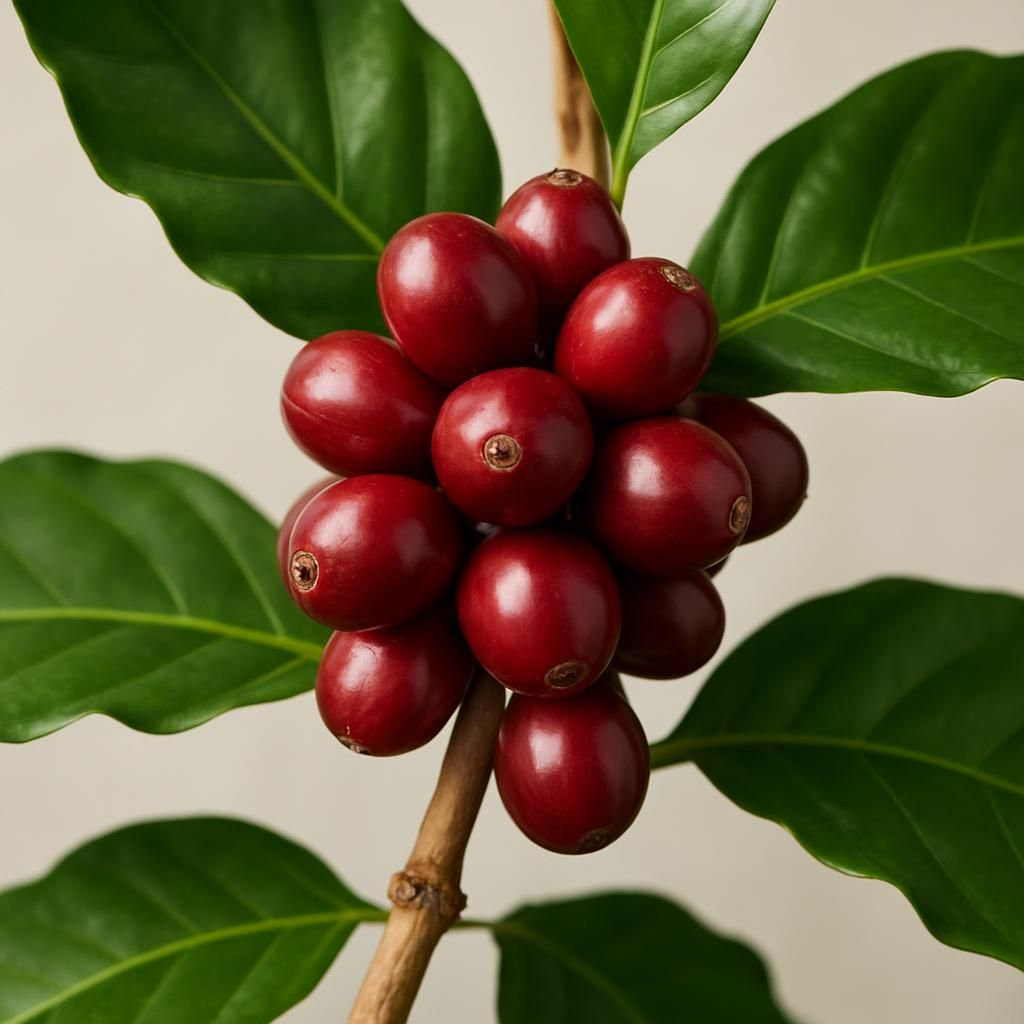
Introduction to Coffee (Liberica)
Coffea liberica, commonly known as Liberica coffee, is one of the four commercially cultivated coffee species and accounts for less than 2 % of global production. Native to the lowland forests of Liberia and surrounding West African countries, the species was introduced to Southeast Asia and parts of South America in the late 19th century after coffee leaf rust devastated Arabica plantings. Today, significant commercial volumes are produced in Malaysia, the Philippines, Indonesia, and parts of Vietnam and India.
Liberica is valued by farmers because of its exceptional vigor, tolerance to poor soils, resistance to many diseases that affect Arabica Coffee (Typica), and ability to thrive at lower altitudes where Robusta also grows. The beans are notably large—often 20–25 mm long—and produce a brew characterized by bold body, smoky aroma, and a slight bitterness that appeals to certain specialty markets and traditional blends.
Botanical Profile of Coffee (Liberica)
Coffea liberica is an evergreen shrub or small tree that can reach 5–15 m when unpruned. Leaves are large, glossy, and oblong with prominent veins. The species is predominantly self-incompatible, requiring cross-pollination by insects, although some clones show partial self-fertility. Flowers are white, fragrant, and appear in clusters of 4–12 along the branches; fruit maturation takes 10–12 months. Each fruit (drupe) contains two seeds, occasionally one peaberry, with thick parchment and silver skin.
Soil, pH, and Climate Requirements for Coffee (Liberica)
Liberica performs best on deep, well-drained soils with good organic matter. It tolerates a wider pH range than Arabica and shows resilience to periodic waterlogging.
| Parameter | Ideal Range | Notes |
|---|---|---|
| Soil Type | Sandy loam to clay loam | Avoid compacted or saline soils |
| Soil pH | 5.0–6.5 | Slightly acidic to neutral |
| Organic Matter | 3–5 % | Incorporate compost or cover crops |
| Altitude | 0–800 m | Performs well at sea level |
| Temperature | 22–30 °C daytime, >18 °C night | Sensitive to frost |
| Annual Rainfall | 1,500–3,000 mm | Even distribution preferred |
| Relative Humidity | 70–85 % | High humidity aids flowering and fruit set |
Step-by-Step Planting & Propagation
- Seed Preparation: Select ripe cherries from high-yielding mother trees. Remove pulp, ferment 24–36 h, wash, and dry to 18 % moisture. Store seeds no longer than three months.
- Nursery Phase: Sow in shaded beds (50 % shade) at 1 cm depth. Germination occurs in 4–8 weeks. Seedlings are pricked out at the two-leaf stage into polybags.
- Vegetative Propagation: For clonal uniformity, use single-node cuttings or grafting onto Robusta rootstocks. Maintain 80–90 % humidity until roots form (6–8 weeks).
- Field Planting: Transplant 6–9-month-old seedlings at the start of the rainy season. Recommended spacing is 3 m × 3 m for single-stem or 2.5 m × 2.5 m for multi-stem systems.
- Windbreaks & Shade: Establish windbreaks of Gliricidia or Sesame at field borders. Temporary shade (30 %) is beneficial for the first two years.
Care & Maintenance regimes for Coffee (Liberica)
Liberica requires consistent moisture during flowering and fruit development but tolerates short dry spells once established.
| Operation | Schedule | Rate / Method |
|---|---|---|
| Irrigation | Every 7–10 days in dry season | 20–30 L per tree; drip or micro-sprinkler |
| Fertilizer (NPK) | Split applications at 3, 6, 9 months | Year 1: 100 g 15-15-15; Year 3+: 400–600 g/tree |
| Organic Manure | Twice yearly | 10–15 kg well-rotted compost or cattle manure/tree |
| Pruning | Annual after harvest; rejuvenation every 5–7 yr | Remove dead wood; maintain 1.8–2.2 m height |
| Weed Control | Monthly for first two years | Mulch or cover crops; spot spray glyphosate if needed |
Pests, Diseases & Organic Management
Major insect pests include coffee berry borer, scale insects, and mealybugs. Liberica is generally resistant to coffee leaf rust but can suffer from anthracnose and root rot in poorly drained soils.
Organic control strategies:
- Monitor with pheromone traps for berry borer.
- Release Cryptolaemus montrouzieri against mealybugs.
- Apply neem oil (0.5 %) or Beauveria bassiana sprays at early infestation.
- Improve drainage and use Trichoderma-enriched compost to suppress soil-borne fungi.
Harvesting, Curing & Optimal Storage
Harvest when cherries turn deep red and begin to soften (10–12 months after flowering). Strip-pick or selective pick every 10–14 days. Process within 24 h to avoid fermentation.
- Dry processing: Sun-dry whole cherries on raised beds to 11–12 % moisture (7–14 days).
- Wet processing: Depulp, ferment 24–36 h, wash, and dry parchment to 11 % moisture.
- Storage: Keep parchment or green beans in jute bags at 10–12 % moisture, 18–22 °C, and <65 % RH. Protect from direct light and strong odors.
Companion Planting for Coffee (Liberica)
Interplant with leguminous shade trees such as Gliricidia or Pigeon pea to fix nitrogen and moderate temperature. Understory crops like Ginger or Turmeric utilize the partial shade and improve soil structure. Flowering companions such as Marigold attract pollinators and repel nematodes. Avoid heavy feeders like Banana in the same row to reduce competition for potassium.