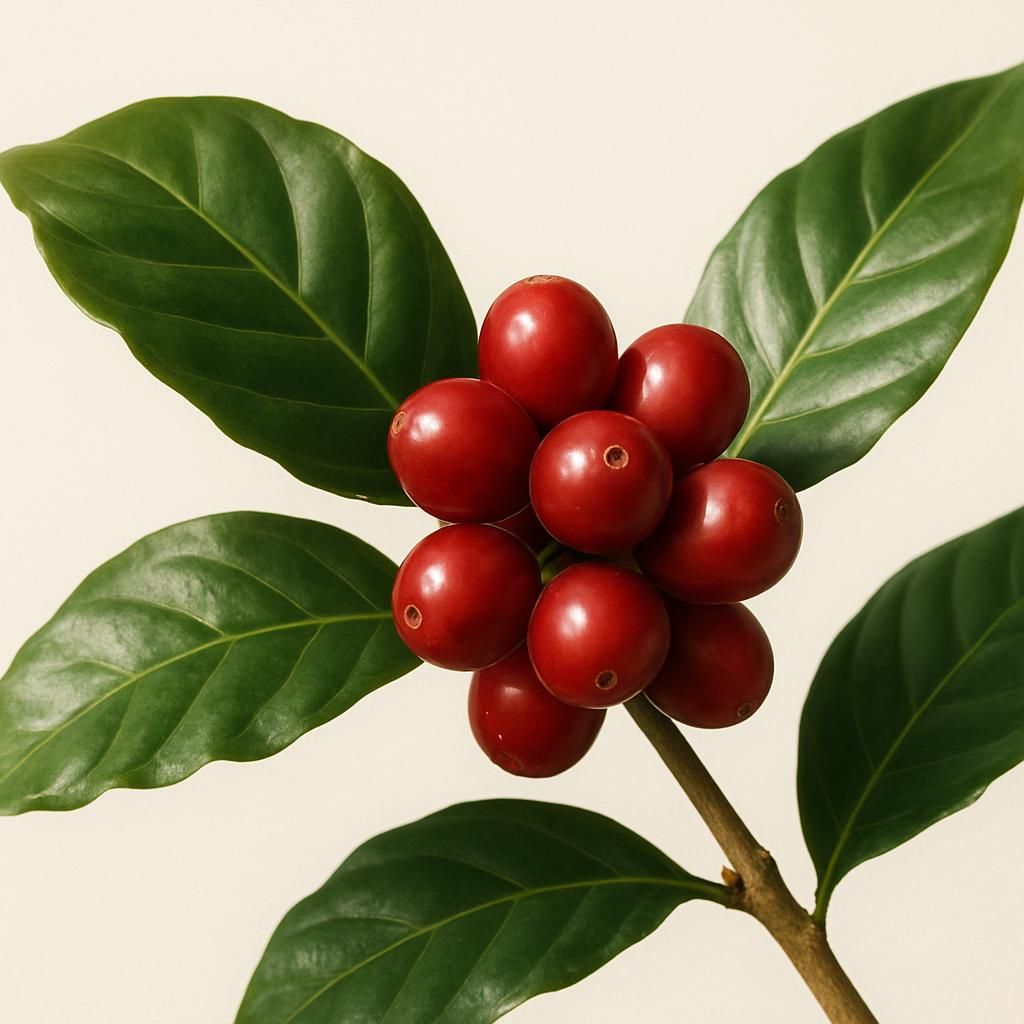
Introduction to Coffee (Arabica - Typica)
Arabica Typica represents one of the oldest and most genetically stable cultivars of Coffee (crop). Grown at higher elevations than many modern hybrids, Typica delivers exceptional cup quality with bright acidity, floral aromatics, and a silky body. Professional growers value its predictable growth habit and consistent bean size, making it a benchmark variety for specialty coffee production worldwide.
Typica originated in Ethiopia and Yemen before spreading through colonial trade routes to Latin America and Asia. Today it remains a cornerstone cultivar in countries such as Colombia, Jamaica, and Hawaii where terroir-driven flavor is paramount. While lower yielding than some newer varieties, its superior flavor commands premium pricing in direct-trade and single-origin markets.
Successful cultivation requires precise attention to altitude, temperature stability, and soil fertility. This guide synthesizes decades of agronomic research into actionable steps for commercial and serious home growers seeking to produce competition-grade beans.
Botanical Profile of Coffee (Arabica - Typica)
Coffea arabica var. Typica is an evergreen shrub or small tree in the Rubiaceae family. Mature plants reach 3–5 meters in height with a single main stem and opposite, glossy leaves measuring 8–15 cm long. The variety produces white, fragrant flowers in clusters of 5–20 blooms that appear after dry periods followed by rain.
Fruits develop as drupes commonly called cherries, ripening from green to deep red over 6–9 months depending on elevation and temperature. Each cherry typically contains two seeds (beans) surrounded by parchment, mucilage, and pulp. Typica beans are elongated with a pronounced center cut, averaging 10–12 mm in length.
The plant exhibits moderate branching and responds well to pruning systems that maintain an open canopy for light penetration and air circulation. Typica is self-fertile but benefits from cross-pollination by bees, which can increase fruit set by 10–20% in dense plantings.
Soil, pH, and Climate Requirements for Coffee (Arabica - Typica)
Typica thrives in well-structured, deep, friable soils with high organic matter. Volcanic loams and andisols provide ideal drainage and mineral content. The variety is sensitive to waterlogging; raised beds or contour planting on slopes greater than 8% are recommended.
| Parameter | Ideal Range | Notes |
|---|---|---|
| Soil pH | 5.5 – 6.5 | Slightly acidic; lime only if below 5.0 |
| Temperature | 15 – 24 °C (day); 10 – 18 °C (night) | Frost below 5 °C causes severe damage |
| Annual Rainfall | 1,500 – 2,500 mm | Even distribution; 2–3 month dry season preferred |
| Altitude | 1,000 – 2,000 m | Higher altitudes improve acidity and density |
| Relative Humidity | 60 – 80 % | Prevents excessive transpiration stress |
| Soil Texture | Loam to clay loam | 25–35% clay; excellent drainage required |
| Organic Matter | 3 – 6 % | Maintain with mulch and compost |
Step-by-Step Planting & Propagation
Seed Selection & Preparation: Choose ripe cherries from high-performing Typica mother trees. Remove pulp, ferment 24–48 hours, wash thoroughly, and dry parchment to 11–12% moisture. Store seeds no longer than 4–6 months for best viability.
Nursery Establishment: Use 50% shade cloth over raised beds filled with sterilized media (equal parts forest soil, coarse sand, and well-rotted compost). Sow seeds 1 cm deep, 3 cm apart in rows 15 cm wide. Germination occurs in 4–8 weeks at 20–25 °C.
Seedling Care: Maintain consistent moisture without saturation. Apply 5-10-10 NPK at 2 g/L every 3 weeks starting at the two-leaf stage. Transplant to polybags (20 × 30 cm) when seedlings reach 15–20 cm and have 4–6 pairs of leaves.
Field Planting: Select sites with morning sun and afternoon shade if possible. Dig holes 60 × 60 × 60 cm, incorporate 5 kg compost plus 100 g rock phosphate. Plant at 2.5 × 2.5 m spacing (1,600 plants/ha) on flat land or 2.0 × 3.0 m on slopes.
Initial Training: Stake young plants and remove lower branches to form a single stem up to 40–50 cm. Top the plant at 1.5–1.8 m to encourage lateral branching and facilitate future harvesting.
Care & Maintenance regimes for Coffee (Arabica - Typica)
Consistent cultural practices are essential for sustained productivity. Typica responds strongly to balanced nutrition and timely pruning. The following table outlines seasonal schedules calibrated for subtropical highlands.
| Season | Watering Schedule | Fertilizer Application | Pruning & Canopy Management |
|---|---|---|---|
| Pre-Flower (Dec–Feb) | 25–30 mm/week; reduce 2 weeks before bloom | 200 g 15-5-20 + 50 g magnesium sulfate/plant | Remove suckers; thin inner branches for light |
| Flowering (Mar–Apr) | Maintain even moisture; avoid water stress | Foliar 1% urea + micronutrients at 50% bloom | Light tipping of new growth only |
| Fruit Development (May–Sep) | 30–40 mm/week if rainfall insufficient | Split 400 g 10-5-20 into 3 applications | Selective pruning of 20% oldest wood |
| Harvest & Recovery (Oct–Nov) | Taper to 15 mm/week after final pick | Apply 150 g potassium sulfate post-harvest | Stumping or rejuvenation pruning if needed |
Mulch with 10–15 cm of coffee pulp or legume residues to conserve moisture and suppress weeds. Monitor leaf nutrient levels annually; maintain N at 2.8–3.2%, P at 0.15–0.20%, and K at 1.8–2.2% on a dry-weight basis.
Pests, Diseases & Organic Management
Major insect threats include Coffee Berry Borer and Mealybugs. Cultural controls such as prompt harvesting, sanitation, and trap crops (e.g., Cajanus cajan) reduce populations significantly. Release of parasitoid wasps (Cephalonomia stephanoderis) provides biological suppression of berry borers.
Fungal diseases such as Coffee Leaf Rust (Hemileia vastatrix) and Anthracnose are managed through resistant rootstocks, proper spacing, and copper-based sprays only when disease pressure exceeds economic thresholds. Maintain 30–40% shade to moderate humidity and reduce spore germination.
Nematode issues, particularly Root-knot nematodes, are mitigated by rotating with Tagetes erecta and incorporating neem cake at 2 t/ha before planting. Regular scouting and early intervention remain the most cost-effective strategies.
Harvesting, Curing & Optimal Storage
Selective hand-picking of fully ripe cherries every 7–10 days ensures optimal sugar development. Target 18–22% moisture at harvest. Process within 8 hours using either washed or honey methods depending on desired flavor profile.
Washed process: Depulp, ferment 24–48 hours at 20–25 °C, wash until parchment is clean, then dry on raised African beds to 10–11% moisture over 8–12 days. Honey process retains mucilage for 3–5 days before drying.
Store green coffee in jute bags inside hermetic GrainPro liners at 18–22 °C and <65% RH. Maintain moisture below 11% to prevent mold and preserve cup quality for 12–18 months.
Companion Planting for Coffee (Arabica - Typica)
Integrate nitrogen-fixing shade trees such as Inga edulis and Erythrina poeppigiana at 8–10 m spacing to provide 30–40% canopy cover. Understory legumes including Clover and Desmodium intortum improve soil nitrogen and suppress weeds.
Flowering companions like Marigold and Nasturtium attract beneficial insects while repelling nematodes. Avoid planting Banana too close as it competes for potassium and increases humidity-related disease pressure.
Strategic windbreaks of Gliricidia sepium reduce evapotranspiration by 15–20% and protect young plants from mechanical damage during storms. Rotate cover crops every 3–4 years to break pest cycles and maintain long-term soil health.
Stop Treating Tomato Blight Like a Spray Problem: Here Is What Works Better