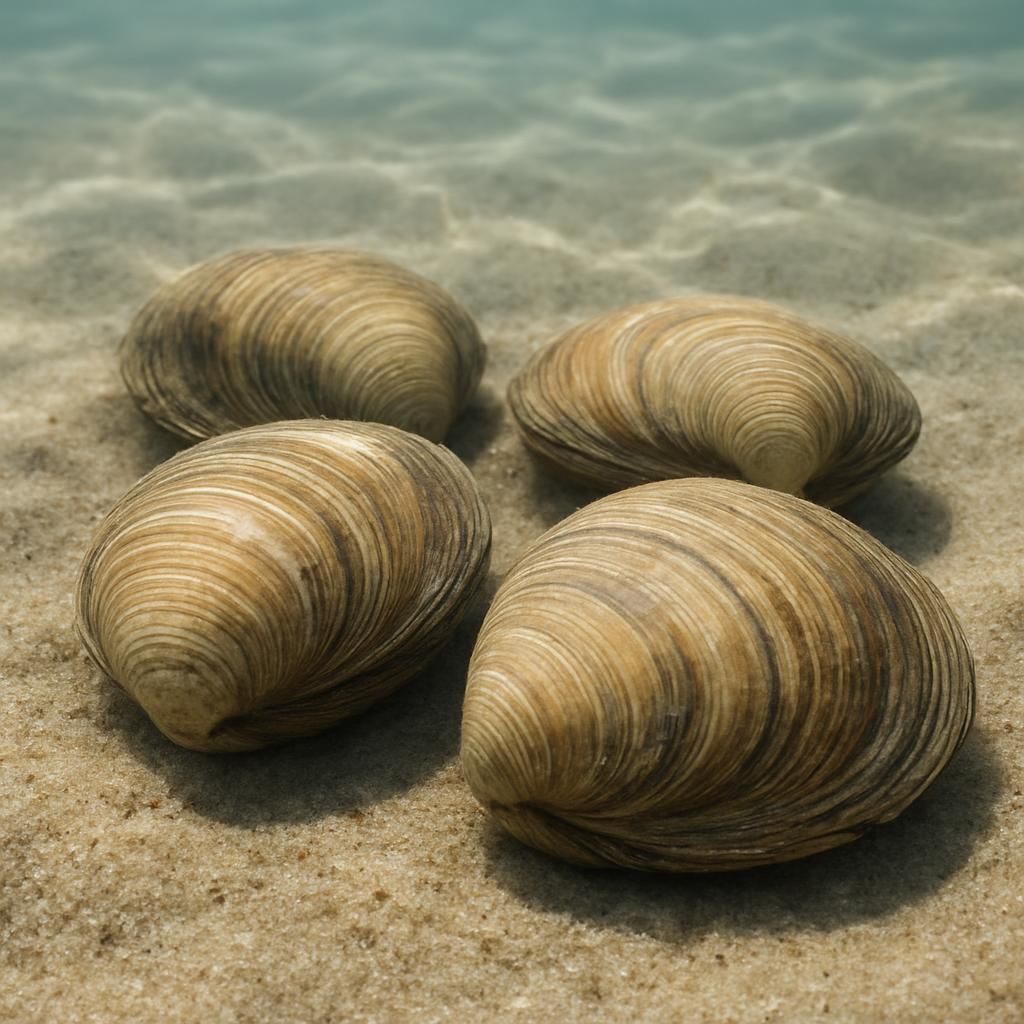
Introduction to Clam
Clam cultivation, also known as clam farming or aquaculture, is a specialized form of marine agriculture that focuses on the controlled production of bivalve mollusks for commercial and subsistence markets. Unlike terrestrial crops, clams are filter feeders that derive nutrition directly from phytoplankton and organic particles suspended in water. Professional growers manage salinity, sediment quality, and tidal exchange to optimize growth rates and meat quality. Successful operations combine traditional knowledge with modern monitoring of water chemistry and predator exclusion techniques.
Global demand for clams continues to rise due to their high protein content, low fat profile, and culinary versatility. Hard clams (Mercenaria mercenaria) remain the dominant commercial species in temperate regions, while other species thrive in subtropical and tropical estuaries. Sustainable practices emphasize minimal environmental impact, including the use of predator netting and polyculture systems that integrate clams with seaweeds or oysters.
This comprehensive guide covers every stage from site selection through post-harvest handling, providing actionable data tables and evidence-based recommendations for both new and experienced producers.
Botanical Profile of Clam
Clams belong to the class Bivalvia within the phylum Mollusca. The hard clam (Mercenaria mercenaria) features a thick, ridged shell with concentric growth lines that record age and environmental conditions. The soft body consists of a muscular foot for burrowing, paired gills for filter feeding, and a mantle that secretes the protective shell.
Clams are broadcast spawners; males and females release gametes into the water column where external fertilization occurs. Larval stages remain planktonic for 1–3 weeks before settling as pediveligers and metamorphosing into juveniles. Growth is temperature-dependent, with optimal shell deposition occurring between 15–25 °C. Market size is typically reached in 18–36 months depending on stocking density and nutrient availability.
Soil, pH, and Climate Requirements for Clam (MUST INCLUDE A MARKDOWN TABLE OF IDEAL CONDITIONS)
Clam beds require stable, well-aerated sediments with moderate organic content. Preferred substrates include sandy loam or fine sand mixed with shell hash that provides structural support and facilitates siphon extension. Sediment pH should remain near neutral to slightly alkaline to prevent shell dissolution. Salinity tolerance varies by life stage; adults thrive at 20–30 ppt while juveniles require 15–25 ppt for optimal osmoregulation.
Temperature regimes dictate metabolic rate and survival. Prolonged exposure above 30 °C induces thermal stress and increased mortality, while winter temperatures below 5 °C slow growth but rarely cause death if oxygen levels remain adequate. Tidal amplitude of 0.5–2 m ensures regular water exchange that replenishes food and removes metabolic wastes.
| Parameter | Ideal Range | Notes |
|---|---|---|
| Sediment Type | Sandy loam to fine sand | Avoid heavy clay or anoxic mud |
| Sediment pH | 7.0 – 8.2 | Prevents shell erosion |
| Salinity (ppt) | 20 – 30 | Juveniles tolerate 15 – 25 |
| Water Temperature (°C) | 15 – 25 | Growth slows below 10 °C |
| Dissolved Oxygen (mg/L) | > 5.0 | Critical during summer stratification |
| Tidal Range (m) | 0.5 – 2.0 | Ensures nutrient flux and waste removal |
Step-by-Step Planting & Propagation
Site preparation begins with sediment analysis and predator assessment. Remove large debris and install predator exclusion netting (6–12 mm mesh) anchored with rebar or sandbags. Seed stock consists of hatchery-produced juveniles (5–10 mm shell length) or wild-collected seed when permitted by regulation.
Broadcast seeding at densities of 200–400 juveniles per square meter ensures adequate spacing as clams grow. Gently rake seed into the upper 2–3 cm of sediment to reduce dislodgement by currents. In high-energy sites, use bottom cages or floating rafts to protect seed until they reach 20 mm.
Monitor settlement success after 7–10 days by sampling 0.25 m² quadrats. Adjust future densities based on observed survival rates. Record environmental parameters daily during the first month to identify any acute stressors.
Care & Maintenance regimes for Clam (MUST INCLUDE A MARKDOWN TABLE OF WATER, FERTILIZER, AND PRUNING SCHEDULES)
Routine maintenance focuses on water quality monitoring, predator control, and sediment aeration. Weekly checks of dissolved oxygen, salinity, and temperature allow rapid response to harmful algal blooms or hypoxia events. Fertilization is indirect; growers may enhance natural productivity through controlled nutrient additions or by co-culturing with seaweeds that release dissolved organic matter.
Mechanical aeration using propeller-driven devices or air-lift pumps prevents sediment compaction and maintains oxic conditions around siphons. Pruning refers to the periodic removal of fouling organisms (barnacles, tunicates) from netting and culture gear to preserve water flow.
| Task | Frequency | Method | Notes |
|---|---|---|---|
| Water Quality Check | Weekly | Handheld probes or automated sensors | Record DO, salinity, temperature, pH |
| Predator Net Inspection | Bi-weekly | Visual survey and manual removal | Repair tears immediately |
| Sediment Raking | Monthly | Hand rakes or mechanical tillers | Prevent anoxia and improve growth |
| Fouling Removal | Quarterly | High-pressure spray or manual scraping | Maintain water exchange |
| Nutrient Supplementation | As needed | Seaweed co-culture or slow-release pellets | Only in oligotrophic systems |
Pests, Diseases & Organic Management
Common clam pests include crabs, whelks, and shorebirds that prey on juveniles. Disease threats encompass Perkinsus marinus (Dermo), Quahog Parasite Unknown (QPX), and various bacterial infections. Organic management emphasizes prevention through optimal stocking densities, regular sediment turnover, and exclusion netting.
When outbreaks occur, reduce density and improve water exchange. Remove and dispose of heavily infected individuals away from culture areas. Biological controls such as oyster toadfish or specific wrasse species can reduce crab populations without chemical intervention. Maintain detailed health logs to track seasonal patterns and refine future biosecurity protocols.
Harvesting, Curing & Optimal Storage
Harvest timing is determined by market size (typically 50 mm shell length) and meat yield. Hand raking or hydraulic harvesting methods are used depending on scale. Immediately after harvest, clams are rinsed in clean seawater and graded by size.
Curing involves a 24–48 hour depuration period in filtered, UV-treated water to purge sand and reduce bacterial load. Store at 2–5 °C with 85–95 % relative humidity; do not submerge in freshwater. Under these conditions, clams remain viable for 7–10 days. For longer storage, flash-freeze at –30 °C or process into value-added products.
Companion Planting for Clam
Polyculture systems pair clams with Oyster Mushroom culture on floating rafts or integrate them beneath suspended seaweed lines. Clams benefit from the organic detritus produced by seaweeds while seaweeds utilize dissolved nutrients released by clam metabolism.
Dragon Fruit farms located adjacent to estuarine ponds can supply fruit waste that supports phytoplankton blooms, indirectly feeding clams. Avoid pairing with species that compete for space or introduce predators. Monitor water chemistry closely when introducing new companion species to prevent unintended imbalances.