Introduction to seaweed
Seaweed farming represents one of the fastest-growing segments of global aquaculture, supplying nutrient-dense biomass for human consumption, animal feed, soil amendments, and industrial extracts such as alginates and carrageenan. Unlike terrestrial crops, seaweed grows attached to substrates in marine or brackish waters, drawing dissolved nutrients directly from the surrounding water column. Successful commercial operations integrate site selection, species selection, and seasonal timing to maximize biomass while preserving coastal ecosystem services.
Botanical Profile of seaweed
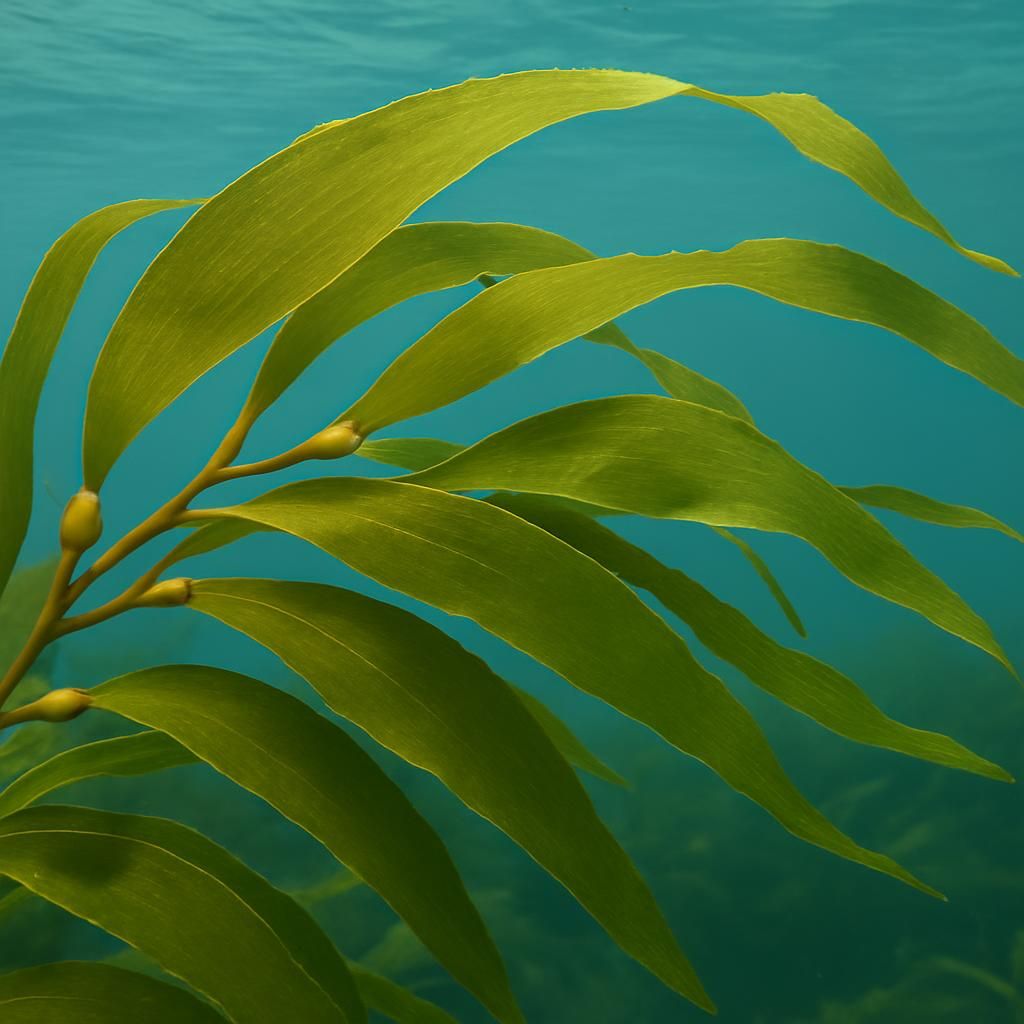
Seaweeds are multicellular marine algae classified into three main groups: brown (Phaeophyceae), red (Rhodophyta), and green (Chlorophyta). Brown species such as kelp feature large, leathery fronds anchored by holdfasts and capable of rapid linear growth exceeding 0.5 m per day under optimal conditions. Red seaweeds like nori (Porphyra) and dulse (Palmaria) possess complex life cycles alternating between microscopic and macroscopic phases. Green seaweeds such as sea lettuce (Ulva) thrive in nutrient-rich waters and can double biomass within days when nitrogen levels remain elevated.
Soil, pH, and Climate Requirements for seaweed (MUST INCLUDE A MARKDOWN TABLE OF IDEAL CONDITIONS)
Seaweed production depends on water quality parameters rather than terrestrial soil. Salinity, temperature, light penetration, and nutrient concentrations determine productivity and species suitability.
| Parameter | Ideal Range | Notes |
|---|---|---|
| Salinity | 25–35 ppt | Most temperate species tolerate 20–40 ppt |
| Water Temperature | 8–20 °C (species dependent) | Tropical species 20–30 °C |
| pH | 7.8–8.4 | Stable oceanic pH supports calcification |
| Light / PAR | 100–400 µmol m⁻² s⁻¹ | 6–10 h photoperiod for vegetative growth |
| Dissolved Nitrogen | 5–20 µM NO₃-N | Higher levels increase growth rate |
| Current / Flow | 0.1–0.5 m s⁻¹ | Prevents fouling and supplies nutrients |
Step-by-Step Planting & Propagation
- Select a sheltered bay or long-line system with adequate water exchange.
- Prepare seed string by seeding reproductive fronds onto twine in controlled hatcheries.
- Deploy seeded lines at 1–2 m depth using surface buoys or submerged rafts.
- Monitor attachment success within 7–14 days; thin seedlings to 10–15 cm spacing.
- Transition to grow-out lines spaced 1–2 m apart on horizontal long-lines anchored at both ends.
Care & Maintenance regimes for seaweed (MUST INCLUDE A MARKDOWN TABLE OF WATER, FERTILIZER, AND PRUNING SCHEDULES)
Routine monitoring of water chemistry and biomass density prevents fouling and maintains product quality.
| Task | Frequency | Method / Rate | Season |
|---|---|---|---|
| Water exchange / flow | Continuous | Maintain 0.1–0.5 m s⁻¹ current | Year-round |
| Nutrient supplementation | Weekly | 2–5 kg N ha⁻¹ equivalent via slow-release | Spring–Autumn |
| Biomass thinning | Every 4–6 weeks | Remove 30 % oldest fronds | Growth phase |
| Biofouling removal | Bi-weekly | Gentle brushing or freshwater dip | Summer |
| pH & salinity checks | Daily | Handheld probes; adjust depth if needed | All seasons |
Pests, Diseases & Organic Management
Common issues include epiphytic algae, slugs and snails, and bacterial soft rots. Integrated management relies on site rotation, mechanical removal, and deployment of herbivorous fish such as rabbitfish in integrated multi-trophic aquaculture (IMTA) systems. Maintaining optimal flow and avoiding overstocking reduces disease pressure without chemical inputs.
Harvesting, Curing & Optimal Storage
Harvest when fronds reach target length (typically 1–3 m) by cutting 20–30 cm above the holdfast to allow regrowth. Rinse biomass in clean seawater to remove sand and epiphytes, then air-dry on racks at <25 °C or freeze at –18 °C for long-term storage. Properly cured product retains >90 % dry matter and can be vacuum-packed for 12–18 months shelf life.
Companion Planting for seaweed
Seaweed integrates well with bivalve mussels and sea cucumbers in IMTA configurations, where bivalves filter particulates and sea cucumbers process organic detritus. Co-cultivation with oyster mushroom spawn on floating substrates has shown promise for bioremediation of excess nutrients. Avoid proximity to high-sediment river mouths that can smother young plants.