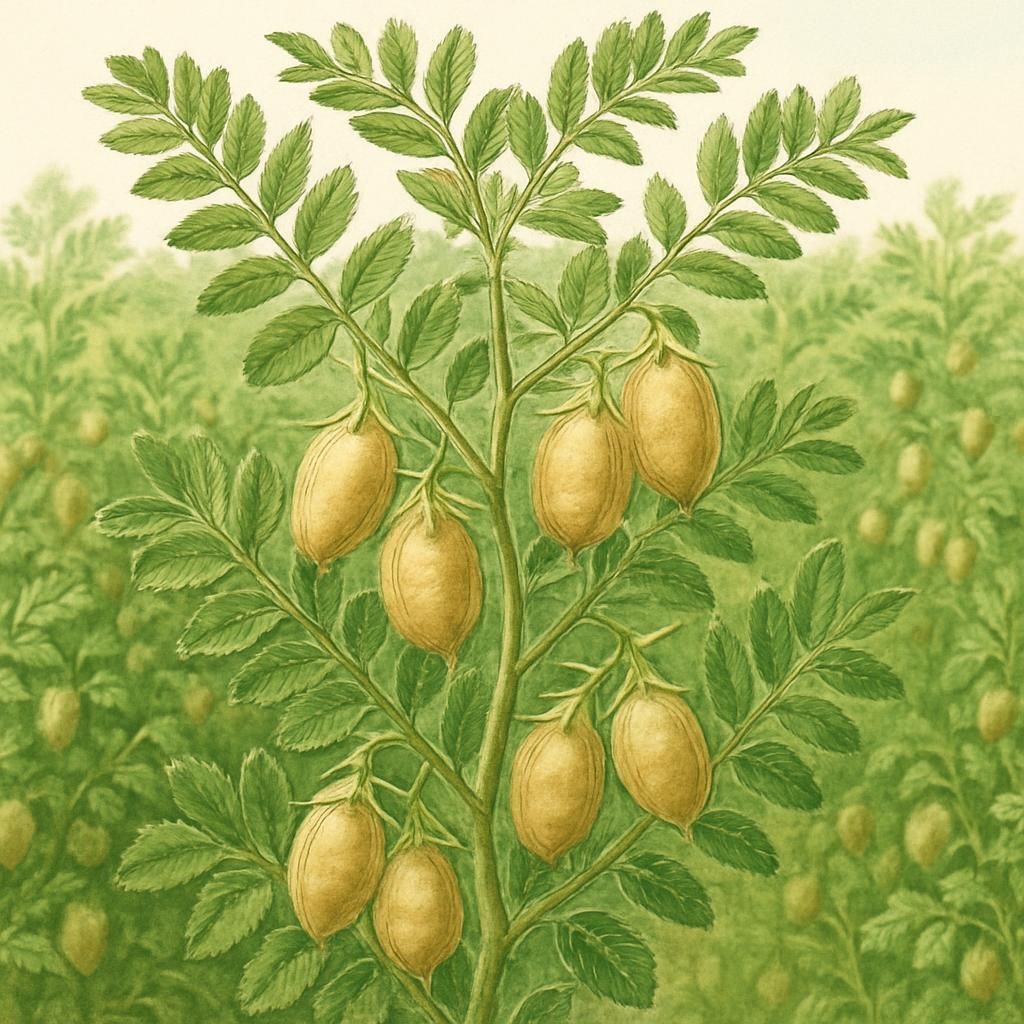
Introduction to Chickpea (Kabuli)
Chickpeas, scientifically known as Cicer arietinum, are an essential staple legume cultivated worldwide, prized for their nutritional benefits and versatility in various cuisines. Of the two main types of chickpeas, Kabuli chickpeas are distinguished by their larger size and lighter color, often preferred in Mediterranean, Middle Eastern, and some Indian dishes. They are rich in protein, fiber, and essential vitamins, making them a valuable addition to health-conscious diets.
Botanical Profile of Chickpea (Kabuli)
Kabuli chickpeas belong to the family Fabaceae. The plants are annual, bushy shrubs that grow to about 18-24 inches in height. The leaves are pinnate with small, elliptical leaflets. A key feature of chickpeas is their peas, which develop in small, hairy pods that each contain one to two seeds, the edible chickpeas.
Soil, pH, and Climate Requirements for Chickpea (Kabuli)
Kabuli chickpeas are well-suited to semi-arid climates and prefer well-drained soils with a neutral pH. They are relatively drought-resistant once established but benefit from additional water during flowering and podding stages.
| Condition | Ideal Requirement |
|---|---|
| Soil Type | Well-drained, loamy or sandy |
| Soil pH | 6.0 - 6.5 |
| Temperature | 21-26°C (70-79°F) |
| Rainfall | 400-500 mm annually |
| Sunlight | Full sun |
Step-by-Step Planting & Propagation
- Site Selection: Choose a site with full sun exposure and well-drained soil.
- Soil Preparation: Till the soil to a depth of 12 inches, incorporating organic matter or compost to improve soil fertility.
- Sowing Seeds: Plant seeds directly into the ground 4 to 6 weeks before the last expected frost. Sow seeds about 1.5 inches deep, spaced 6 inches apart, with rows 18-24 inches apart.
- Germination: Seeds typically germinate within 10-14 days.
- Support Structures: Consider staking if the plants grow taller in windy areas to prevent lodging.
Care & Maintenance Regimes for Chickpea (Kabuli)
Chickpea plants require regular care to maximize yields, which include timely watering, fertilization, and pest management.
| Activity | Schedule |
|---|---|
| Watering | 1 inch per week, avoid overhead watering to prevent disease |
| Fertilizing | Nitrogen-fixing plants; phosphorus and potassium at planting |
| Pruning | Remove infected or overcrowded branches regularly |
Pests, Diseases & Organic Management
Chickpeas can be affected by a variety of pests and diseases such as aphids, spider mites, and root rots. Organic management strategies include:
- Companion Planting: Plant with radish or beet to deter pests.
- Biological Control: Introduce beneficial insects like ladybugs to manage aphid populations.
- Cultural Practices: Rotate crops and avoid continuous chickpea planting to reduce soil-borne diseases.
Read more about strategies for pest control at 7 Summer Pest Traps That Sabotage Small Farm Harvests.
Harvesting, Curing & Optimal Storage
Chickpeas are ready to harvest when the pods turn brown and dry out completely, usually 100-120 days after sowing. To harvest, cut the plants at the base and allow them to dry for a few days in a warm, dry place. Once dried, thresh to separate the seeds from the pods. Store in a cool, dry location in airtight containers to prevent insect infestations.
Companion Planting for Chickpea (Kabuli)
Chickpeas benefit greatly from companion planting. Ideal companions include:
- Garlic and onion: Help repel insect pests.
- Cucumber: Shared space utilization with complementary root systems.
Avoid planting chickpeas near garbanzo beans as they compete for similar nutrients and attract similar pest risks.