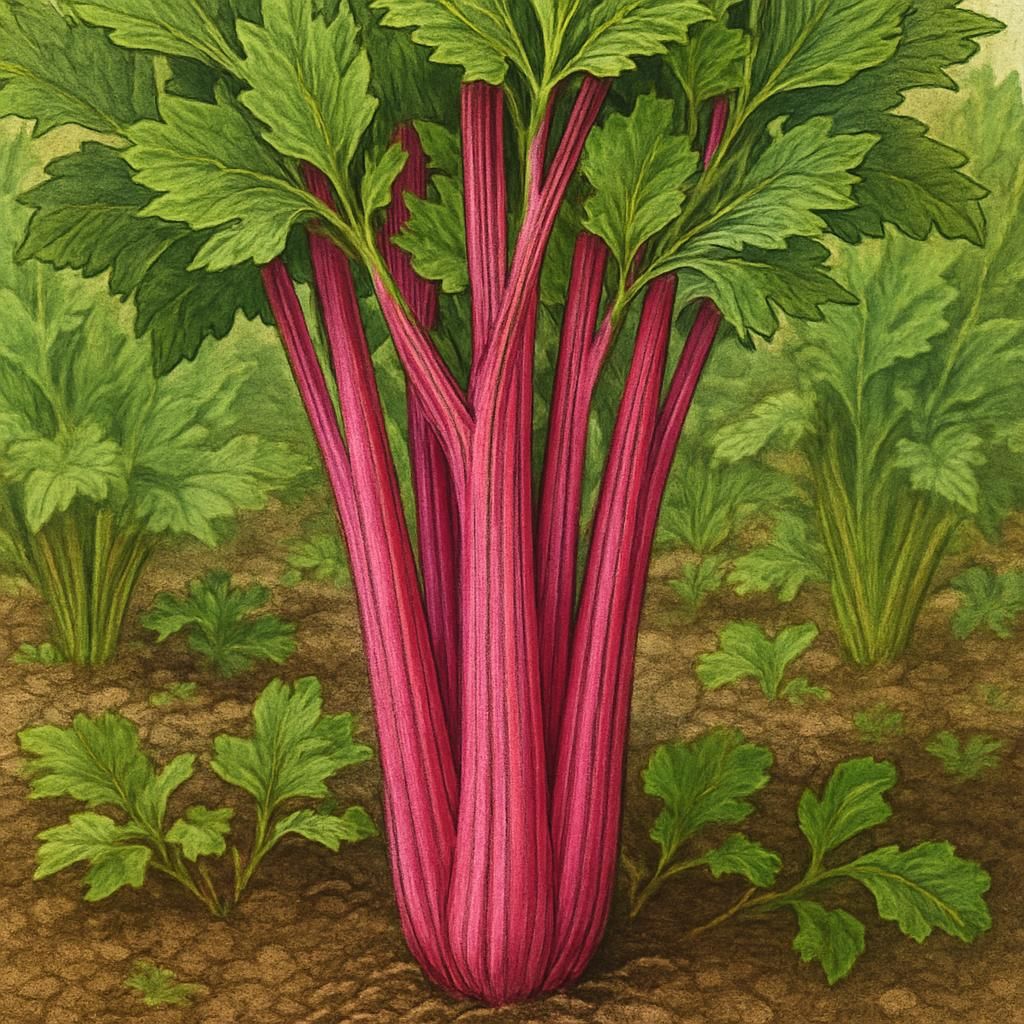
Introduction to Celery (Pink)
Pink Celery, a stunning cultivar of the common celery plant, boasts eye-catching pink hues alongside the traditional green. Its unique coloration makes it a favorite among gardeners seeking both aesthetic appeal and flavorful, fresh produce. This guide aims to provide comprehensive insights into growing Pink Celery successfully.
Botanical Profile of Celery (Pink)
Belonging to the species Apium graveolens, Pink Celery is a variant recognized for its distinct color and flavor. The plant requires similar growing conditions to other celery types but stands out with its vibrant stalks that add color to salads and culinary dishes.
Soil, pH, and Climate Requirements for Celery (Pink)
To thrive, Pink Celery demands specific soil and climate conditions, which can be managed through careful planning and monitoring.
| Parameter | Ideal Condition |
|---|---|
| Soil Type | Loamy, rich, well-draining |
| Soil pH | 6.0 - 7.0 |
| Temperature | 15-21°C (59-70°F) |
| Rainfall | Moderately High |
These conditions ensure proper growth, leading to healthier plants with the robust flavor and color Pink Celery is known for.
Step-by-Step Planting & Propagation
- Seed Selection: Choose high-quality Pink Celery seeds from a trusted supplier.
- Preparation: Start seeds indoors in early spring, 8-10 weeks before the last expected frost.
- Soil Preparation: Enrich the planting bed with organic matter like compost to enhance soil fertility.
- Transplanting: Once seedlings have reached 10-12 cm in height, space them 15-20 cm apart in rows, ensuring well-drained soil.
- Watering: Ensure a consistent supply of water, as celery requires regular moisture.
- Mulching: Apply mulch around plants to maintain soil moisture and suppress weed growth.
- Fertilizing: Use a balanced organic fertilizer to promote vigorous growth.
Care & Maintenance regimes for Celery (Pink)
Proper care is crucial in maintaining healthy Pink Celery plants and achieving a high yield.
| Aspect | Schedule |
|---|---|
| Watering | Regularly; Ensure soil is consistently moist but not waterlogged |
| Fertilization | Every 3-4 weeks with balanced organic fertilizer |
| Pruning | Remove any yellowing leaves to prevent disease |
Pests, Diseases & Organic Management
Pink Celery is vulnerable to a range of pests and diseases, much like its green counterparts. Some common issues include:
- Spider Mites: These pests can cause stippling and loss of chlorophyll. Control them by ensuring proper humidity levels and using neem oil if needed.
- Septoria leaf spot: Characterized by spots on leaves, it can be managed by spacing plants properly to improve air circulation.
- Aphids and Caterpillars: Regular inspection and the use of insecticidal soap can control these pests organically.
For a more extensive understanding of managing crop diseases, visit Crop Diseases Under the Microscope: 9 Organic Fixes for Small Farm Resilience.
Harvesting, Curing & Optimal Storage
Harvest Pink Celery when the stalks are about 18-25 cm long, typically 85-120 days after planting. Use a sharp knife to cut each stalk at the base of the plant. For optimal storage:
- Curing: Temporarily store them upright in water for a day to retain moisture.
- Refrigeration: Store in a cool, humid environment, ideally wrapped in a slightly damp cloth, in the refrigerator crisper drawer.
- Duration: Best consumed fresh but can be stored for up to two weeks.
Companion Planting for Celery (Pink)
Pink Celery benefits from being planted alongside other garden favorites. Consider integrating:
- Carrots: Enhances growth and protects celery from pests such as aphids.
- Tomatoes: Improve flavor and produce a symbiotic relationship aiding in mutual growth.
- Avoid planting with Corn and Potato, as these can harbor pests detrimental to celery development.
For more tips on effective companion planting, refer to Spring Companion Planting: 8 Organic Pairings to Maximize Small Farm Yields.