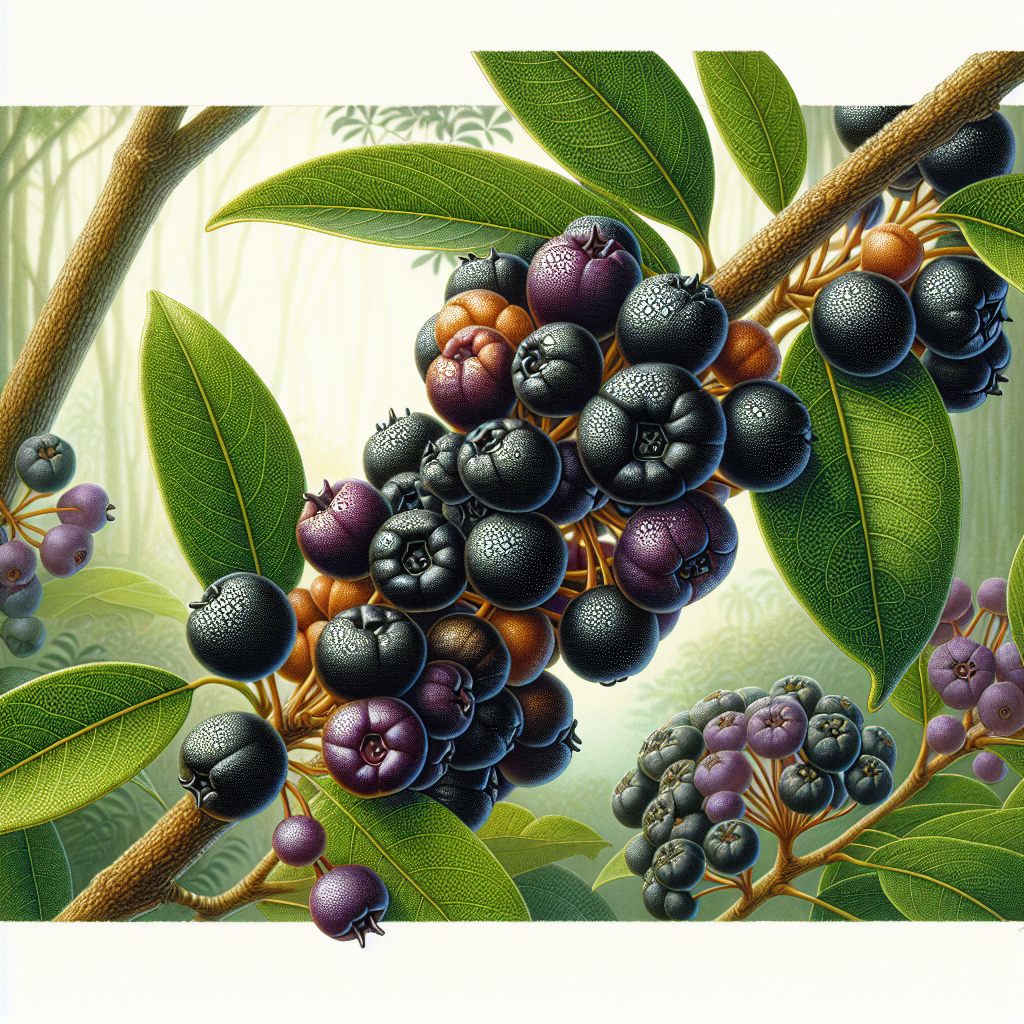
Introduction to Cedar Bay Cherry (Eugenia reinwardtiana)
Cedar Bay Cherry, scientifically known as Eugenia reinwardtiana (synonym Syzygium luehmannii), is an exquisite Australian native fruit tree that has captured the attention of botanists, horticulturists, and foodies alike. Often referred to as Cherry Sato or Lilli Pilli, this compact evergreen shrub produces clusters of small, glossy, dark crimson to purple-black berries that burst with sweet-tart flavor reminiscent of wild cherries. Native to the rainforests of coastal Queensland and New South Wales, including the Cedar Bay region, it has adapted remarkably well to home gardens, permaculture systems, and small-scale commercial orchards in subtropical and tropical zones worldwide.
What sets Cedar Bay Cherry apart is its versatility: the fruits are not only delicious fresh but also excel in jams, jellies, sauces, and desserts, boasting high levels of antioxidants, vitamin C, and anthocyanins. The plant's dense, attractive foliage makes it a superb hedge, screen, or specimen tree, reaching 3-8 meters in height with a spread of 2-4 meters. It's particularly appealing for urban gardeners due to its salt tolerance, bird-attracting qualities, and resilience to coastal conditions. Guava (crop) shares similar tropical adaptability, making it a natural companion in mixed orchards.
In recent years, interest in native superfoods has surged, positioning Cedar Bay Cherry as a sustainable alternative to imported berries. With proper care, it yields prolifically from year two, offering multiple harvests annually. This comprehensive guide draws on decades of field research and grower experience to equip you with professional-grade techniques for success, from propagation to harvest.
Botanical Profile of Cedar Bay Cherry (Eugenia reinwardtiana)
Belonging to the Myrtaceae family, alongside eucalyptus and clove, Eugenia reinwardtiana is a small tree or large shrub with opposite, lanceolate leaves measuring 5-12 cm long and 2-4 cm wide. The glossy green foliage emits a subtle spicy aroma when crushed, thanks to essential oils. New growth flushes coppery-red, providing year-round visual interest.
Flowers emerge in spring and summer as fluffy white clusters (panicles) up to 10 cm long, attracting bees and native pollinators. Each flower is small (5-8 mm), with five petals and numerous stamens, leading to fruit set within weeks. Berries develop over 4-6 weeks, starting green, turning mahogany, and ripening to glossy black-purple. Fruits are 12-20 mm in diameter, containing one hard seed surrounded by juicy, edible flesh. Seedlings exhibit variable flavors—select sweet strains for cultivation.
Root systems are fibrous and non-invasive, ideal for pots or near structures. The tree is dioecious in some populations but predominantly self-fertile, though cross-pollination boosts yields. Hardiness zones are 10-11 (USDA), tolerating brief dips to 0°C but thriving above 15°C. Lifespan exceeds 50 years with minimal intervention. For more on related Myrtaceae fruits, explore Apple Guava (crop).
Soil, pH, and Climate Requirements for Cedar Bay Cherry (Eugenia reinwardtiana)
Cedar Bay Cherry demands well-draining, fertile soils rich in organic matter—loams or sandy loams with 20-30% humus content perform best. Avoid heavy clays prone to waterlogging, which invite root rot (disease). Incorporate 5-10 kg compost per square meter pre-planting, aiming for 2-5% organic matter. Mulch with 10 cm of sugar cane or leaf litter to retain moisture and suppress weeds.
Optimal pH ranges 5.5-7.0; test soil and amend with dolomite lime if below 5.5 or sulfur if exceeding 7.5. It tolerates light salt but not alkaline sands without gypsum application (1-2 kg/m²). Full sun (6+ hours daily) maximizes fruiting, though partial shade (4 hours) suits hotter climates. Ideal temperatures: 18-32°C daytime, 10-20°C nights. Humidity above 60% enhances growth; protect from winds exceeding 50 km/h.
Rainfall needs 1000-2000 mm annually, evenly distributed, or supplement with drip irrigation (20-40 L/week per mature tree in dry spells). In cooler regions, use frost cloth or microclimates near walls. For heatwave strategies, see Why Summer Heatwaves Are Silently Killing Small Farm Yields - And 7 Organic Strategies to Fight Back. Salt tolerance makes it viable for coastal farms, outperforming many temperate fruits.
Step-by-Step Planting & Propagation
Propagation: Seeds germinate in 2-4 weeks at 25-30°C; scarify by nicking and soak 24 hours in water. Sow 1 cm deep in 50/50 seed-raising mix/perlite. Air-layering or semi-hardwood cuttings (10 cm, IBA 3000 ppm) root in 6-8 weeks under mist. Grafted cultivars ensure superior fruit quality.
Planting: Select 1-2 year nursery stock (30-50 cm). Dig holes 60x60x60 cm, spacing 3-4 m apart for trees, 1.5-2 m for hedges. Plant at soil level, backfill with amended mix, stake if needed. Water deeply post-planting. Best times: late spring/early summer.
Pot Culture: Use 45-100 L pots with free-draining mix. Repot every 2 years; fertilize monthly.
Care & Maintenance regimes for Cedar Bay Cherry (Eugenia reinwardtiana)
Water young plants weekly (30 L), mature ones during fruit swell. Apply balanced NPK 10-10-10 (200 g/tree annually, split applications) plus micronutrients. Prune post-harvest to shape, removing deadwood. Thin crowded clusters for larger fruits. Mulch annually. Monitor for nutrient deficiencies: yellow leaves indicate iron/zinc shortage—chelate foliar sprays resolve this.
Pests, Diseases & Organic Management
Common pests: Aphids (pest), scale insects (pest), fruit fly—control with neem oil (2 ml/L weekly) or yellow sticky traps. Birds love ripe fruit; use netting. Diseases: Anthracnose (disease), powdery mildew (disease)—prevent with copper fungicide (preventative sprays) and airflow. Organic IPM: Introduce lacewings, maintain hygiene. Details in Why 90% of Small Farms Fail at Pest Management - And 8 Organic Fixes That Actually Work.
Harvesting, Curing & Optimal Storage
Harvest when fully black-purple, twist gently. Yields: 5-10 kg/tree/year after year 3. Fruits store 1-2 weeks refrigerated (4°C). For jams, process immediately. Dry or freeze for longevity.
Companion Planting for Cedar Bay Cherry (Eugenia reinwardtiana)
Pair with Thai Basil (crop) for pest repulsion, Marigold (crop) for nematodes, nitrogen-fixers like pigeon pea. Avoid water-hungry crops. Insights from Why Companion Planting Feels Like Guesswork for Small Farms - And How AI Makes It Foolproof.