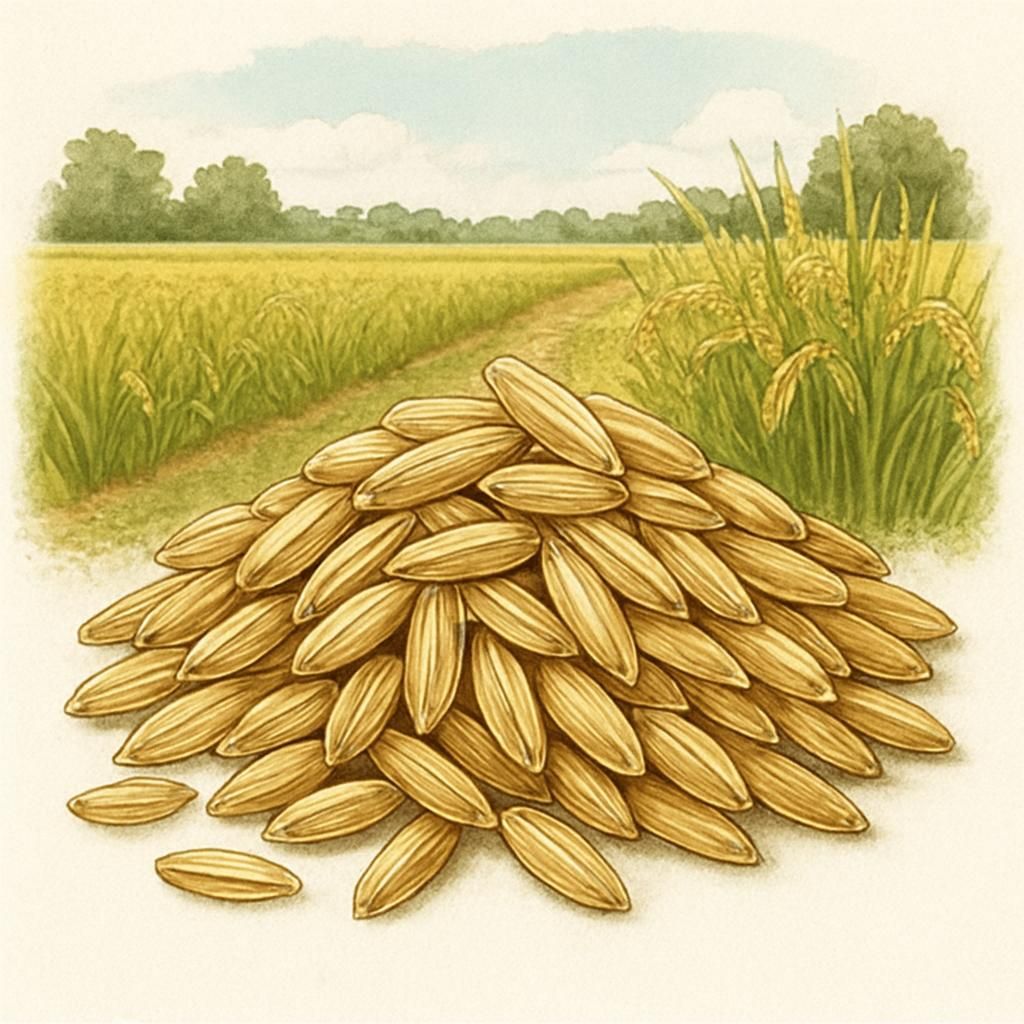
Introduction to Carolina Gold Rice
Carolina Gold Rice is a historic variety that traces its roots back to the 18th century American Southeast. Renowned for its distinctive flavor and golden hue, this rice was a staple in the rich agricultural traditions of the Carolinas. Today, it is celebrated not only for its culinary qualities but also for its adaptability, making it an excellent choice for small to medium-scale farms aiming for a heritage crop with a market appeal.
Botanical Profile of Carolina Gold Rice
Carolina Gold Rice is a member of the species Rice, scientifically classified as Oryza sativa. It is characterized by its long grains and aromatic quality, retaining a distinctive nutty flavor when cooked. The plant is a robust annual grass, typically growing 3 to 5 feet tall, with long, arching leaves and compact panicles where the grains develop.
Soil, pH, and Climate Requirements for Carolina Gold Rice
For optimal growth, Carolina Gold Rice requires specific environmental conditions. Understanding these requirements will help you produce a bountiful harvest.
| Factor | Ideal Conditions |
|---|---|
| Soil Type | Loamy, well-drained |
| Soil pH | 5.5 to 6.5 |
| Temperature | 75°F to 86°F (24°C to 30°C) |
| Rainfall | 40 to 50 inches annually |
Step-by-Step Planting & Propagation
- Site Selection: Choose a site with full sun exposure and minimal soil compaction.
- Soil Preparation: Improve soil fertility by incorporating organic matter and ensuring adequate drainage to prevent standing water.
- Seed Selection: Obtain certified seeds of Carolina Gold Rice to ensure genetic purity.
- Planting Time: In subtropical regions, plant seeds in early spring after the last frost.
- Sowing Method: Broadcast seeds evenly over the prepared land at a density of 100 pounds per acre.
- Irrigation Setup: Install a managed flooding system to maintain water levels at a consistent depth of 2-4 inches, promoting weed suppression and optimal growth.
Care & Maintenance Regimes for Carolina Gold Rice
Proper care and maintenance will maximize yield and quality.
| Care Aspect | Schedule/Instructions |
|---|---|
| Watering | Use controlled flooding at 2-4 inches depth |
| Fertilizing | Apply nitrogen-rich fertilizers in 3 stages: pre-planting, mid-tillering, and panicle initiation |
| Weeding | Manual removal or use of organic mulches to suppress weeds |
Pests, Diseases & Organic Management
Carolina Gold Rice is susceptible to several pests and diseases. Vigilant monitoring and organic practices are essential.
- Pests: Caterpillars, Armyworms, Spider Mites
- Diseases: Leaf spot diseases, Blast, Fusarium
Organic management strategies include:
- Crop Rotation: Rotate with non-cereal crops to break pest and disease cycles.
- Natural Predators: Introduce beneficial insects like ladybugs to manage pests naturally.
- Neem Oil: Spray neem oil as a preventive measure against fungal infections. For more on pest management, refer to the blog on 7 Summer Pest Traps That Sabotage Small Farm Harvests.
Harvesting, Curing & Optimal Storage
Once grains mature and start to yellow, it's time to harvest.
- Harvesting: Use a combine harvester for efficiency, ensuring grain moisture levels are approximately 20%.
- Curing: Dry the grains in natural sunlight or with mechanical dryers to reduce moisture levels to 13-14%.
- Storage: Store in a dry, cool environment in sealed containers to prevent pest infestation and maintain quality.
Companion Planting for Carolina Gold Rice
Companion planting can enhance yield and deter pests.
- Companions: Plant with Soybeans, which enrich soil nitrogen levels, and Thai Basil, which can deter pests.
- Avoid: Planting near Mint may lead to excessive competition for resources. For advanced strategies, see the post on Summer Companion Planting: 10 Organic Pairings to Boost Small Farm Resilience.