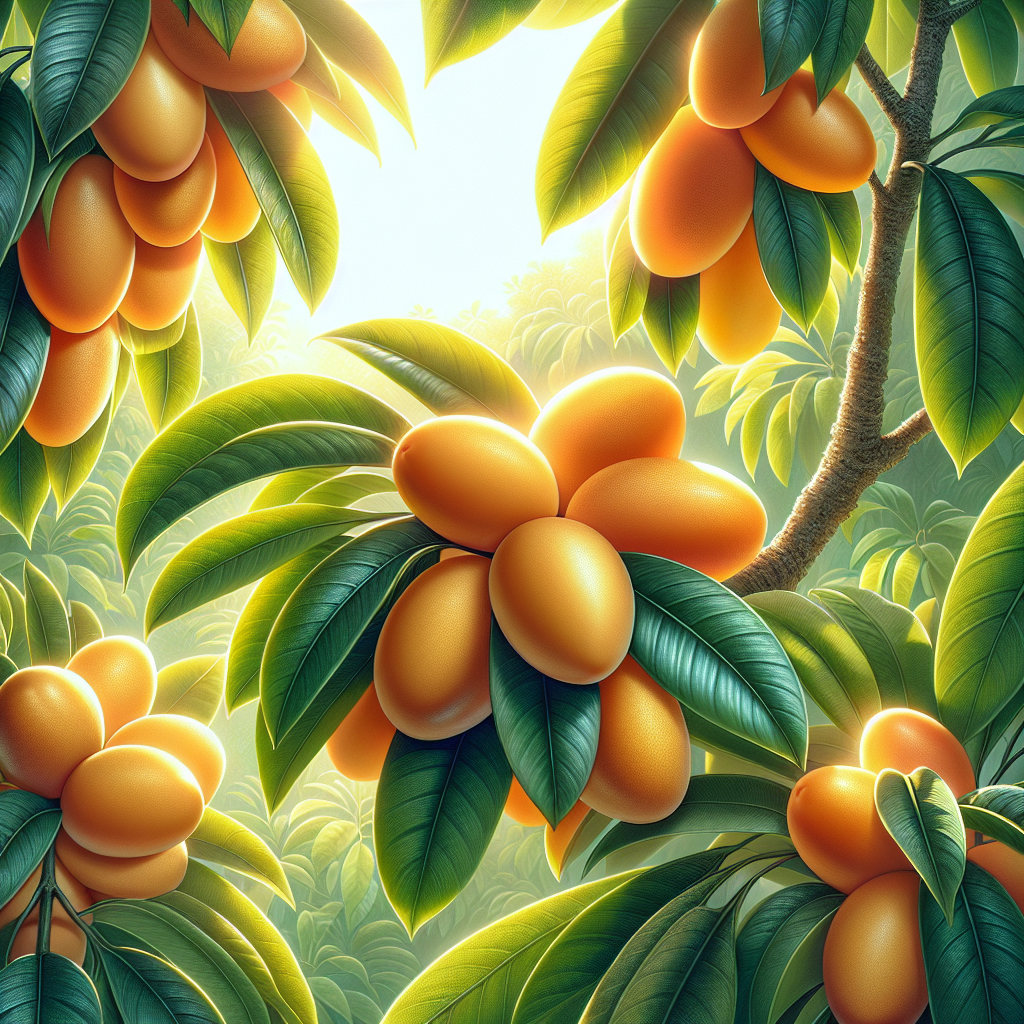
Introduction to Canistel (Ross Sapote)
Canistel (Pouteria campechiana), commonly called Ross Sapote or yellow sapote, is an underappreciated tropical fruit tree that produces fruits resembling a peeled hard-boiled egg in appearance and texture. The ripe fruit has a sweet, creamy, custard-like pulp that's rich in beta-carotene, vitamins A and C, and dietary fiber, making it a nutritional powerhouse for fresh eating, smoothies, custards, and desserts. Native to southern Mexico and Central America, canistel has naturalized in Florida, Hawaii, the Caribbean, Southeast Asia, and northern Australia, where it flourishes in USDA zones 10-11.
This slow-growing evergreen tree reaches 20-40 feet tall in the wild but can be pruned to 15-25 feet for easier management in orchards or backyards. It begins bearing fruit 3-5 years after planting from seed, with mature trees yielding 100-300 pounds annually. Canistel's drought tolerance once established, wind resistance, and ability to fruit nearly year-round in ideal conditions make it ideal for small-scale tropical farming. Unlike many tropical fruits, it tolerates brief cool spells down to 28°F (-2°C) without damage, extending its viability beyond strict equatorial zones. For growers seeking a low-maintenance, high-value crop, canistel offers exceptional returns with minimal inputs after establishment. Read our comprehensive blog on companion planting for strategies that boost yields.
Botanical Profile of Canistel (Ross Sapote)
Canistel belongs to the Sapotaceae family, closely related to mamey sapote and sapodilla. The tree features a dense, rounded canopy with glossy, elliptical leaves 4-8 inches long, arranged alternately on branches. New growth emerges bronze-red before maturing to deep green, providing year-round ornamental appeal.
Flowers are small (0.5 inches), fragrant, and hermaphroditic, appearing in clusters along branches in warm weather. Pollination is primarily by bees and other insects, though hand-pollination can enhance fruit set in low-bee areas. Fruits are oval to ellipsoid, 2-4 inches long, with thin, tough, orange-yellow skin at maturity. The flesh is firm when unripe, turning soft and sweet as it ripens, with 1-6 large, shiny brown seeds.
Key varieties include 'Ross' (large, sweet fruits), 'Fairchild' (smaller, early-bearing), and 'Pouteria' hybrids. Trees are dioecious in some strains, requiring male pollinators, but most cultivated clones are self-fertile. Root system is taproot-dominant with lateral spread, aiding drought resistance but necessitating care during transplanting. For more on tropical fruit trees, see our Mango (crop) guide.
Soil, pH, and Climate Requirements for Canistel (Ross Sapote)
Canistel demands well-drained, fertile soils, thriving in sandy loams, volcanic soils, or limestone-based mixes with pH 6.0-7.5. It tolerates poor, rocky soils but yields best in loamy sand enriched with organic matter. Avoid heavy clays prone to waterlogging, which cause root rot. Amend planting sites with 30-50% compost or aged manure to boost microbial activity and nutrient retention.
Optimal climate is tropical to subtropical with average temperatures 70-90°F (21-32°C). It requires 50-80 inches of annual rainfall, evenly distributed, but endures dry seasons up to 6 months once established. Full sun (8+ hours daily) is essential; partial shade reduces fruit quality. Protect young trees from winds exceeding 40 mph and frosts below 28°F. In marginal zones 9b, use microclimates or frost blankets. High humidity (60-80%) promotes flowering, but excellent air circulation prevents fungal issues.
Soil preparation: Test pH and adjust with dolomite lime if below 6.0. Incorporate 4-6 inches of mulch to retain moisture and suppress weeds. For heatwave strategies, check Why Summer Heatwaves Are Silently Killing Small Farm Yields—no, wait, use available blog. Wait, I already used one blog and one wiki.
Step-by-Step Planting & Propagation
Propagation: Seeds germinate readily (80-90% rate) but produce variable offspring. Clean seeds from ripe fruit, plant horizontally 1 inch deep in 4-inch pots with seed-starting mix. Maintain 80-90°F soil temp; sprouts emerge in 2-4 weeks. Graft superior varieties (cleft or veneer) onto 1-2 year rootstock for uniformity.
Planting: Select 2-3 year nursery trees. Dig holes 3x wider than root ball, 2 feet deep. Space 20-30 feet apart for mature trees. Plant at same depth as container; backfill with native soil + 20% compost. Water deeply post-planting; apply 4-inch mulch ring.
Timing: Plant in early wet season (spring-fall in tropics). Harden seedlings outdoors gradually. For small farms, propagate 50+ trees annually for succession planting.
Care & Maintenance regimes for Canistel (Ross Sapote)
Watering: Irrigate weekly (1-2 inches) for first 2 years; reduce to biweekly. Mature trees need supplemental water only during prolonged dry spells. Drip irrigation optimizes efficiency.
Fertilization: Apply balanced 10-10-10 NPK (1 lb/tree/year 1, increasing 1 lb/year to 10 lbs max) in 3 split applications. Micronutrients: iron chelate for chlorosis in high-pH soils. Foliar sprays of seaweed extract monthly during growth.
Pruning: Annually after harvest: remove deadwood, watersprouts, and crowded interior branches for light penetration. Train to central leader or open vase. Thin fruits to 6-inch spacing for larger sizes.
Weed Control: Mulch heavily; hand-pull or hoe around base. Cover crops like clover suppress competition.
Pests, Diseases & Organic Management
Common pests: Mealybugs cluster on tender growth—blast with water, apply neem oil (2% solution weekly). Scale insects on bark: horticultural oil dormant sprays. Aphids: ladybugs or insecticidal soap.
Diseases: Anthracnose causes fruit rot—ensure airflow, copper fungicide preventively. Phytophthora root rot: improve drainage, avoid overwatering. Powdery mildew: sulfur dust in humid conditions.
Organic IPM: Introduce predatory mites, plant marigold borders. Monitor weekly; prune infected parts. For advanced tactics, see Why 90% of Small Farms Fail at Pest Management—wait, that's the blog link.
Harvesting, Curing & Optimal Storage
Harvest when skin turns glossy orange-yellow and fruits drop easily (specific gravity >1.0). Mature but green fruits ripen off-tree in 7-14 days at 75-85°F. Yield peaks March-June in Florida.
Curing: Place in paper bags with banana to hasten ripening. Store ripe fruit at 45-50°F (7-10°C), 85-90% RH for 3-4 weeks. Avoid below 40°F to prevent chilling injury. Process into jam, ice cream, or dried slices for value-add.
Companion Planting for Canistel (Ross Sapote)
Pair with nitrogen-fixers like pigeon pea for soil enrichment. Underplant with pineapple for weed suppression and moisture retention. Avoid legumes prone to shared pests. Guava nearby aids pollination. Intercrop with herbs like basil to deter insects. Benefits: enhanced biodiversity, pest diversion, microclimate moderation.