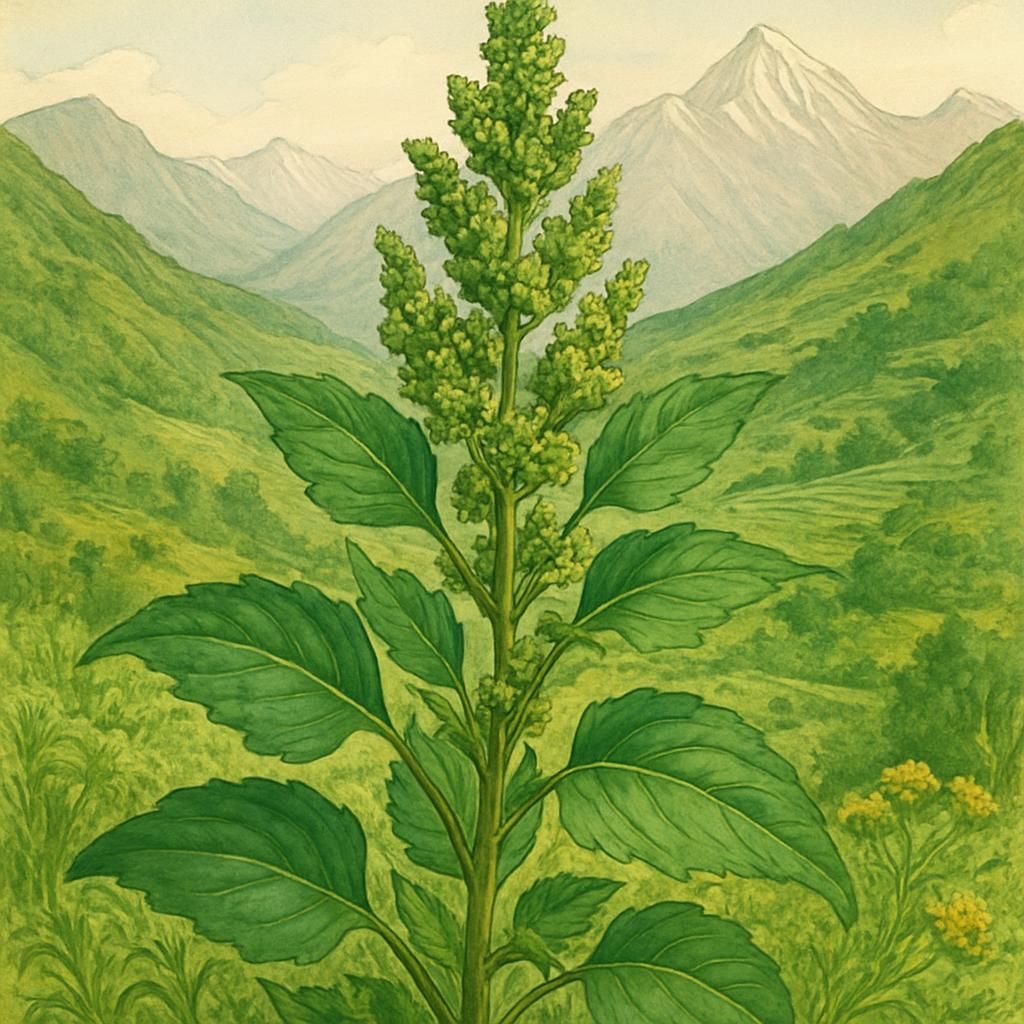
Introduction to Canihua (Chenopodium pallidicaule)
Canihua, often overshadowed by its more famous cousin quinoa, is an ancient grain revered for its nutritional value and adaptability. Native to the Andes mountains, it has been cultivated for thousands of years by indigenous peoples. Canihua is highly esteemed for its protein content and essential amino acids, making it a valuable crop in sustainable agriculture.
Botanical Profile of Canihua (Chenopodium pallidicaule)
Canihua is an annual herbaceous plant reaching heights of 20-60 cm. The plant is characterized by its small, dense clusters of flowers and tiny seeds, similar in appearance to quinoa but significantly smaller. Its leaves are broad and green, akin to Amaranth, with a remarkable capacity to withstand low temperatures and poor soil conditions.
Soil, pH, and Climate Requirements for Canihua (Chenopodium pallidicaule)
Canihua is remarkably resilient and can adapt to a wide range of environmental conditions. However, for optimal growth and yield, certain conditions are preferred:
| Condition | Ideal Range |
|---|---|
| Soil Type | Well-drained, sandy loam |
| Soil pH | 6.0 - 7.5 |
| Temperature | 5°C - 20°C |
| Rainfall | 300 - 800 mm annually |
| Altitude | 1800 - 4500 meters a.s.l. |
Step-by-Step Planting & Propagation
- Seed Selection: Choose high-quality, disease-free seeds for sowing.
- Soil Preparation: Till the soil to a fine texture and ensure proper drainage.
- Sowing: Sow the seeds directly into the field after the last frost. Canihua seeds are tiny and should be sown at a depth of approximately 1 cm.
- Spacing: Maintain rows with 30 cm distance apart to facilitate plant growth and air circulation.
- Thinning: Thin seedlings to maintain a plant spacing of 10 cm, ensuring ample room for development.
- Companion Plants: Consider integrating Nasturtium and Marigold as beneficial companions to deter pests.
Care & Maintenance Regimes for Canihua (Chenopodium pallidicaule)
| Care Aspect | Schedule |
|---|---|
| Watering | Moderate watering every 10-14 days |
| Fertilization | Apply nitrogen-rich fertilizer bi-weekly |
| Pruning | Not necessary; remove weeds regularly |
Pests, Diseases & Organic Management
Canihua is relatively pest-resistant but watch for potential infestations from Spider Mites and possibly Birds. To manage these, employ organic practices such as neem oil application and installing netting to deter birds. Diseases are uncommon due to the crop's resilience, yet ensuring good air circulation and dry conditions can mitigate most concerns.
Harvesting, Curing & Optimal Storage
- Harvesting: Canihua is ready for harvest 4-6 months post-sowing when seeds turn a dark brown or black shade.
- Drying: Allow plants to dry in the field for 5-7 days.
- Threshing: Carefully thresh the dried plants to collect the seeds.
- Storage: Store seeds in airtight containers in a cool, dark place to maintain viability.
Companion Planting for Canihua (Chenopodium pallidicaule)
Companion planting with canihua can enhance growth and deter pests. Ideal companions include Nasturtium, which acts as a pest deterrent, and Marigold due to its nematode-repelling properties.
For more information on companion planting strategies, refer to our blog: Summer Companion Planting: 10 Organic Pairings to Boost Small Farm Resilience.
Discover more about the adaptability of Andean crops through the Wikipedia page on Quinoa.