Introduction to Camellia
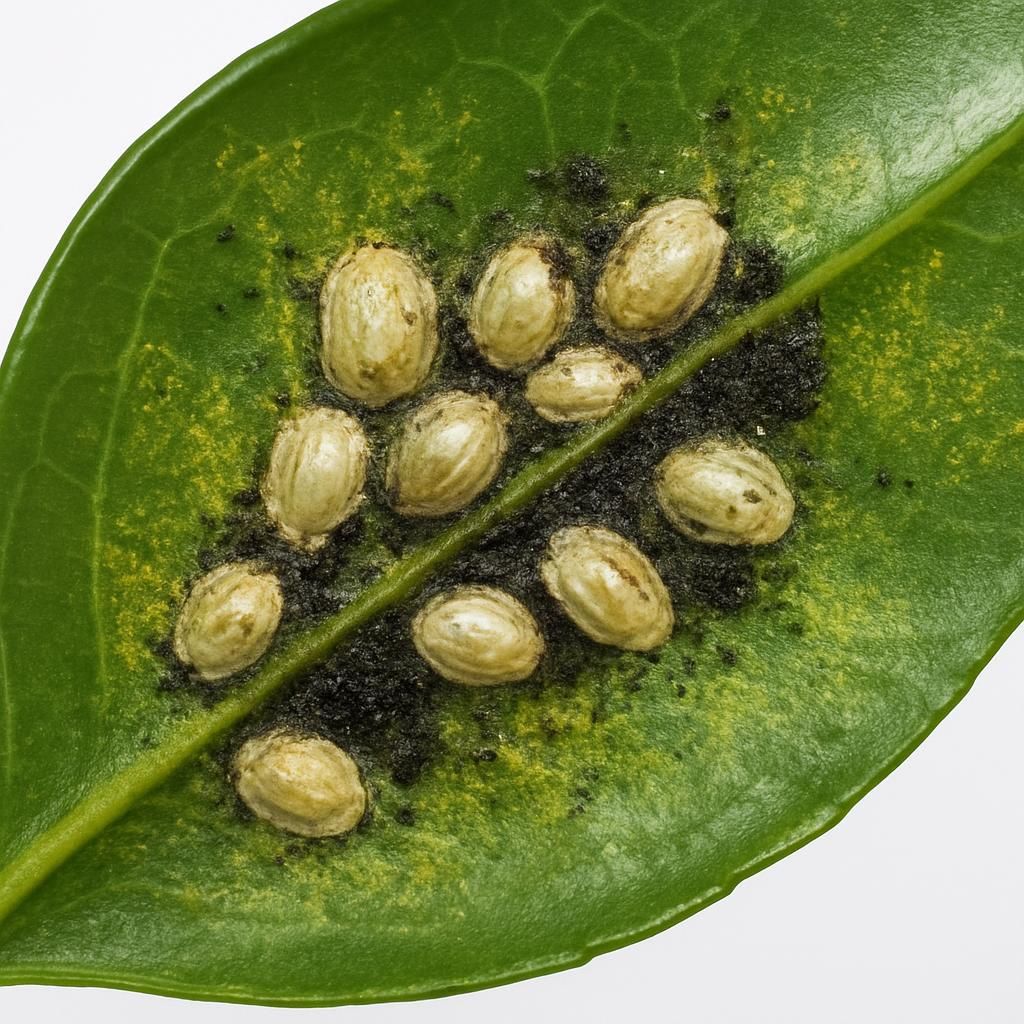
Camellia scale insects are persistent pests of Camellia japonica, Camellia sasanqua, and related woody ornamentals. The most common species include tea scale (Fiorinia theae) and camellia scale (Lepidosaphes camelliae). These tiny, immobile insects feed on plant sap, weakening shrubs over multiple seasons. Infestations often go unnoticed until heavy sooty mold or leaf yellowing appears. Professional growers monitor for early signs because untreated populations spread rapidly through wind, birds, and nursery stock. Tea plantations also suffer similar scale pressure, making cross-crop vigilance essential.
Identifying Symptoms & Damage
Early detection relies on examining the undersides of leaves for small, waxy, oyster-shaped or circular covers. Yellow stippling or chlorotic mottling develops directly above feeding sites. Heavy infestations produce sticky honeydew that supports black sooty mold, reducing photosynthesis. Severe cases cause premature leaf drop, twig dieback, and reduced flowering. Distinguish camellia scale from spider mites by the presence of hard or soft protective covers rather than fine webbing.
Lifecycle and Progression of Camellia
Camellia scales have multiple generations per year in warm climates. Crawlers emerge from beneath the female cover, disperse briefly, then settle and form protective armor. The table below outlines typical stages.
| Stage | Duration | Key Characteristics | Visibility on Plant |
|---|---|---|---|
| Egg | 2–3 weeks | Laid under female cover | Hidden |
| Crawler | 1–3 days | Mobile, yellow to orange, six-legged | Underside of new leaves |
| Nymph/Settled | 4–6 weeks | Begins forming waxy cover | Stationary on leaf veins |
| Adult Female | Several months | Armored, oval or elongate, 1–3 mm | Persistent on stems/leaves |
| Adult Male | 1–2 weeks | Winged, short-lived, rarely seen | Rarely observed |
Populations peak in spring and fall when temperatures favor crawler activity.
Environmental Triggers & Risk Factors
Warm, humid conditions (18–30 °C) accelerate development and crawler survival. Over-fertilization with nitrogen produces succulent growth that scales prefer. Poor air circulation from dense planting or improper pruning increases humidity around foliage. Stressed plants from drought, root compaction, or transplant shock are more susceptible. Introduction via infected nursery stock is the primary route into new landscapes.
Organic Control & Treatment Plans
Integrated management begins with cultural sanitation and progresses to biological and organic chemical options. Always test a small area before full application. The following table summarizes effective organic treatments and recommended frequencies.
| Treatment Option | Application Method | Frequency | Notes |
|---|---|---|---|
| Horticultural oil (dormant) | Thorough spray to all surfaces | Late winter, before bud break | Smothers overwintering scales |
| Neem oil (0.5–1 %) | Foliar spray, focus on undersides | Every 7–10 days for 3 applications | Disrupts crawler settlement |
| Insecticidal soap | Contact spray on crawlers | Repeat every 5–7 days as needed | Safe for beneficial insects once dry |
| Beneficial insects (lacewings, lady beetles) | Release 2–5 per plant or per m² | Spring and early fall | Most effective when crawlers are active |
| Systemic neem drench | Soil drench around root zone | Once in early spring | Provides season-long protection |
Monitor crawler emergence with double-sided tape traps before spraying.
Preventing Camellia in the Future
Purchase only certified pest-free stock and quarantine new plants for 30 days. Maintain proper spacing (minimum 1.5 m between shrubs) and prune for airflow. Apply balanced organic fertilizers to avoid excessive soft growth. Mulch with 5–7 cm of organic material to conserve soil moisture and reduce stress. Rotate companion plants such as Nasturtium to attract beneficial predators. Annual dormant oil sprays before bud swell prevent overwintering populations from establishing.
Crops Most Affected by Camellia
While Camellia species are primary hosts, the same scale complex readily attacks Tea, Citrus, Hass Avocado, and certain Blueberry cultivars. Cross-infestation occurs in mixed landscapes where these plants grow in close proximity.