Introduction to Calamus Root (Sweet Flag)
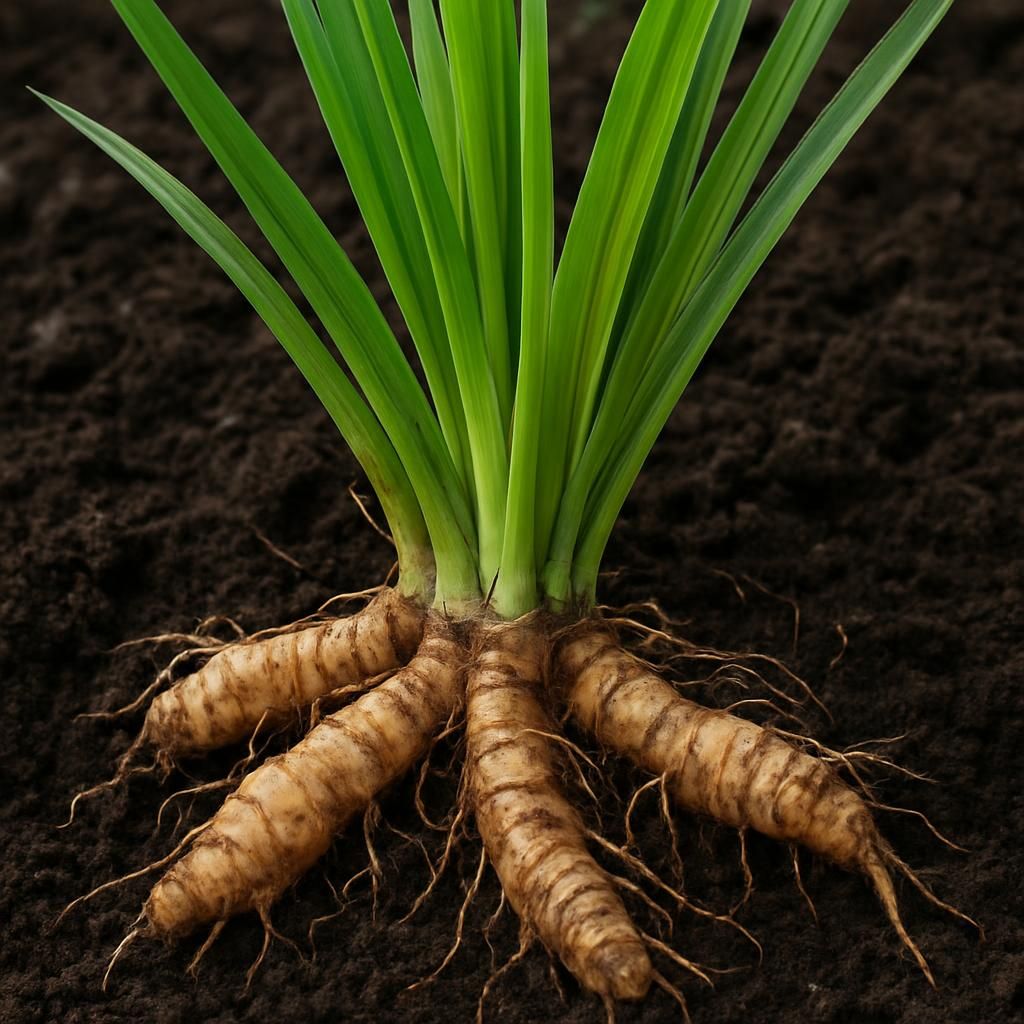
Calamus Root (Sweet Flag), scientifically known as Acorus calamus, is a perennial wetland herb native to temperate and subtropical regions across Asia, Europe, and North America. Valued for its aromatic rhizomes that contain essential oils such as beta-asarone, it has been used for centuries in Ayurvedic, Chinese, and European traditional medicine for digestive support and as an insect repellent. Today, commercial growers cultivate it for the pharmaceutical, cosmetic, and flavor industries, with increasing demand for organically produced rhizomes.
The plant thrives in saturated soils and produces sword-shaped leaves up to 1 meter tall, making it suitable for marginal lands unsuitable for conventional crops. Its cultivation supports biodiversity by providing habitat for wetland species while offering a steady income stream through rhizome sales. Sustainable production practices ensure high-quality essential oil content and long-term soil health.
Botanical Profile of Calamus Root (Sweet Flag)
Acorus calamus belongs to the Acoraceae family and features creeping rhizomes with a spongy, aromatic interior. The leaves are linear, bright green, and emit a cinnamon-like scent when crushed. Small, inconspicuous yellowish-green flowers appear on a spadix in late spring, followed by berry-like fruits in some varieties.
The rhizome is the primary economic part, containing up to 5% essential oil depending on growing conditions and cultivar. Triploid varieties common in Europe produce higher oil yields but are sterile, while diploid Asian types may naturalize more aggressively. The plant spreads via rhizome division and can form dense stands in suitable wetland habitats.
Soil, pH, and Climate Requirements for Calamus Root (Sweet Flag)
Calamus Root performs best in consistently moist to saturated soils with high organic matter. It tolerates periodic flooding but suffers in drought conditions. Optimal pH ranges from slightly acidic to neutral, and the plant prefers full sun to partial shade in temperate climates.
| Parameter | Ideal Range | Notes |
|---|---|---|
| Soil Type | Loamy, clay-loam, or silty | High organic matter; avoid compacted soils |
| Soil pH | 5.5 – 7.0 | Slightly acidic to neutral preferred |
| Temperature Range | 15–30 °C daytime | Frost tolerant to –15 °C when dormant |
| Annual Rainfall | 800–2000 mm or equivalent irrigation | Consistent moisture essential |
| Light | Full sun to partial shade | 6+ hours direct sun maximizes oil content |
| Elevation | 0–1500 m | Thrives in lowland wetlands and riverbanks |
Step-by-Step Planting & Propagation
Propagation is achieved almost exclusively through rhizome division. Select healthy, disease-free rhizomes with visible buds in early spring. Cut sections 10–15 cm long, each containing at least two buds, and plant horizontally 5–8 cm deep in prepared beds.
Site preparation includes removing weeds, incorporating well-rotted compost, and ensuring drainage channels to prevent stagnation. Space plants 30–40 cm apart in rows 60–75 cm wide. Maintain standing water at 2–5 cm depth during establishment. Rhizomes typically sprout within 14–21 days under optimal temperatures.
Care & Maintenance regimes for Calamus Root (Sweet Flag)
Consistent moisture is critical; never allow the soil to dry out completely. Apply a balanced organic fertilizer high in nitrogen during active growth and potassium-rich amendments before rhizome expansion. Mulch with rice straw or leaves to suppress weeds and retain humidity.
| Task | Schedule | Details |
|---|---|---|
| Watering | Daily or as needed | Maintain 2–5 cm standing water; drip irrigation alternative |
| Fertilizer | March (N-rich), June (K-rich) | 5–8 kg well-rotted manure or 2 kg neem cake per 100 m² |
| Pruning | Late winter / early spring | Remove dead foliage to reduce disease pressure |
| Weeding | Every 3–4 weeks | Hand weeding or shallow cultivation |
| Mulching | After planting and mid-season | 5–8 cm organic mulch layer |
Pests, Diseases & Organic Management
Common pests include Aphids, Slugs, and Root-knot nematodes. Diseases such as Rhizoctonia root rot and Pythium can occur in waterlogged conditions. Monitor regularly and maintain proper water levels to reduce incidence.
Organic controls include neem oil sprays for aphids, beer traps or copper barriers for slugs, and solarization or bio-fumigation for nematodes. Crop rotation with upland species every 4–5 years helps break pest cycles. Healthy soil biology supported by compost tea applications strengthens plant resistance.
Harvesting, Curing & Optimal Storage
Harvest rhizomes in late autumn of the second or third year when leaves begin to yellow. Carefully dig with a fork to avoid damage, then wash thoroughly. Cut into 5–10 cm pieces and sun-dry or use low-temperature dehydrators at 35–40 °C until moisture content reaches 10–12%.
Store cured rhizomes in breathable jute bags or airtight containers in a cool, dark place. Properly dried material retains essential oil potency for 12–18 months. For essential oil extraction, process within six months of harvest for maximum yield and quality.
Companion Planting for Calamus Root (Sweet Flag)
Calamus Root pairs well with other wetland species such as Taro and Ginger to maximize space and reduce pest pressure. Its aromatic foliage can deter certain insects when interplanted with Rice paddies. Avoid planting near shallow-rooted crops that compete for surface moisture.
Leguminous cover crops like Clover grown on adjacent dikes improve soil nitrogen and provide mulch material. Marigold borders help repel nematodes and add beneficial insect habitat. Maintain a 1-meter buffer zone between calamus beds and sensitive upland vegetables to prevent waterlogging issues.