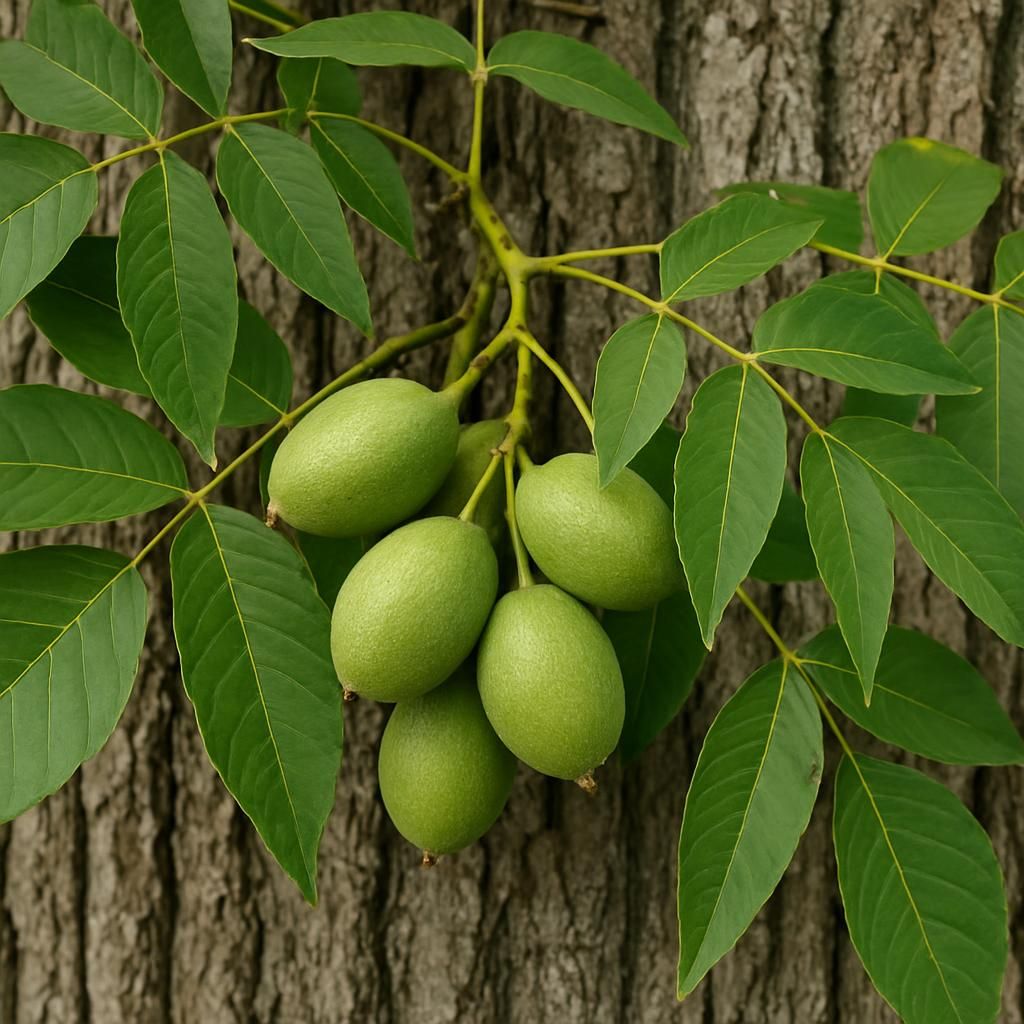
Introduction to Butternut (Juglans cinerea)
Butternut, scientifically known as Juglans cinerea, is a medium-sized deciduous tree native to eastern North America. It produces sweet, oily nuts and valuable timber while supporting biodiversity in forest and farm settings. Growers appreciate its relatively fast growth compared to other nut trees and its tolerance of cooler climates.
Botanical Profile of Butternut (Juglans cinerea)
Juglans cinerea belongs to the Juglandaceae family. Mature trees reach 12–18 meters in height with a spreading crown and compound leaves consisting of 11–17 leaflets. The bark is gray with deep furrows, and the tree produces oblong nuts encased in thick husks. Male catkins and female flowers appear in spring, with wind pollination occurring before leaf-out.
Soil, pH, and Climate Requirements for Butternut (Juglans cinerea)
Butternut thrives in well-drained, fertile soils with consistent moisture. It prefers slightly acidic to neutral conditions and full sun exposure.
| Parameter | Ideal Range | Notes |
|---|---|---|
| Soil Type | Loamy, well-drained | Avoid heavy clay and waterlogged sites |
| Soil pH | 5.5–7.0 | Optimal around 6.0–6.5 |
| Temperature | -30°C to 30°C | Hardy to USDA zones 3–7 |
| Annual Rainfall | 750–1,200 mm | Supplemental irrigation in dry periods |
| Sunlight | Full sun (6+ hours) | Partial shade reduces nut production |
| Elevation | Up to 1,200 m | Performs best on slopes with good airflow |
Step-by-Step Planting & Propagation
- Select disease-free seedlings or grafted stock from reputable nurseries.
- Prepare planting holes twice the width of the root ball and at the same depth.
- Space trees 10–12 meters apart in rows 12–15 meters wide.
- Plant in early spring or late fall when soil is workable.
- Water thoroughly after planting and apply a 5–8 cm layer of organic mulch.
- Stake young trees in windy locations for the first two years.
Care & Maintenance regimes for Butternut (Juglans cinerea)
Regular irrigation, balanced nutrition, and proper pruning maintain tree health and maximize nut yield.
| Task | Schedule | Details |
|---|---|---|
| Watering | Weekly during first 3 years | Deep soak; reduce frequency once established |
| Fertilizer | Early spring & mid-summer | 10-10-10 NPK at 0.5 kg per tree year 1–3; increase gradually |
| Pruning | Late winter (dormant) | Remove dead, crossing, or low branches; maintain central leader |
Pests, Diseases & Organic Management
Common threats include Walnut pests and fungal pathogens. Monitor regularly and use integrated organic practices.
- Aphids: Spray with insecticidal soap or introduce lady beetles.
- Walnut husk fly: Use yellow sticky traps and sanitation.
- Butternut canker: Remove infected branches and improve airflow.
- Codling moth: Apply organic sprays at petal fall and maintain sanitation.
Harvesting, Curing & Optimal Storage
Harvest nuts when husks begin to split in September–October. Collect promptly to avoid mold. Cure in a dry, well-ventilated area for 2–3 weeks. Store cured nuts in mesh bags or airtight containers at 0–4°C with 60–70% humidity for up to one year.
Companion Planting for Butternut (Juglans cinerea)
Butternut releases juglone, which inhibits many plants. Compatible companions include Clover, Thyme, and Yarrow that tolerate juglone. Avoid planting tomatoes, peppers, and potatoes nearby. Interplant with nitrogen-fixing species to improve soil fertility while maintaining spacing to reduce competition.
Walnut trees share similar cultural requirements and can provide comparative insights for management.