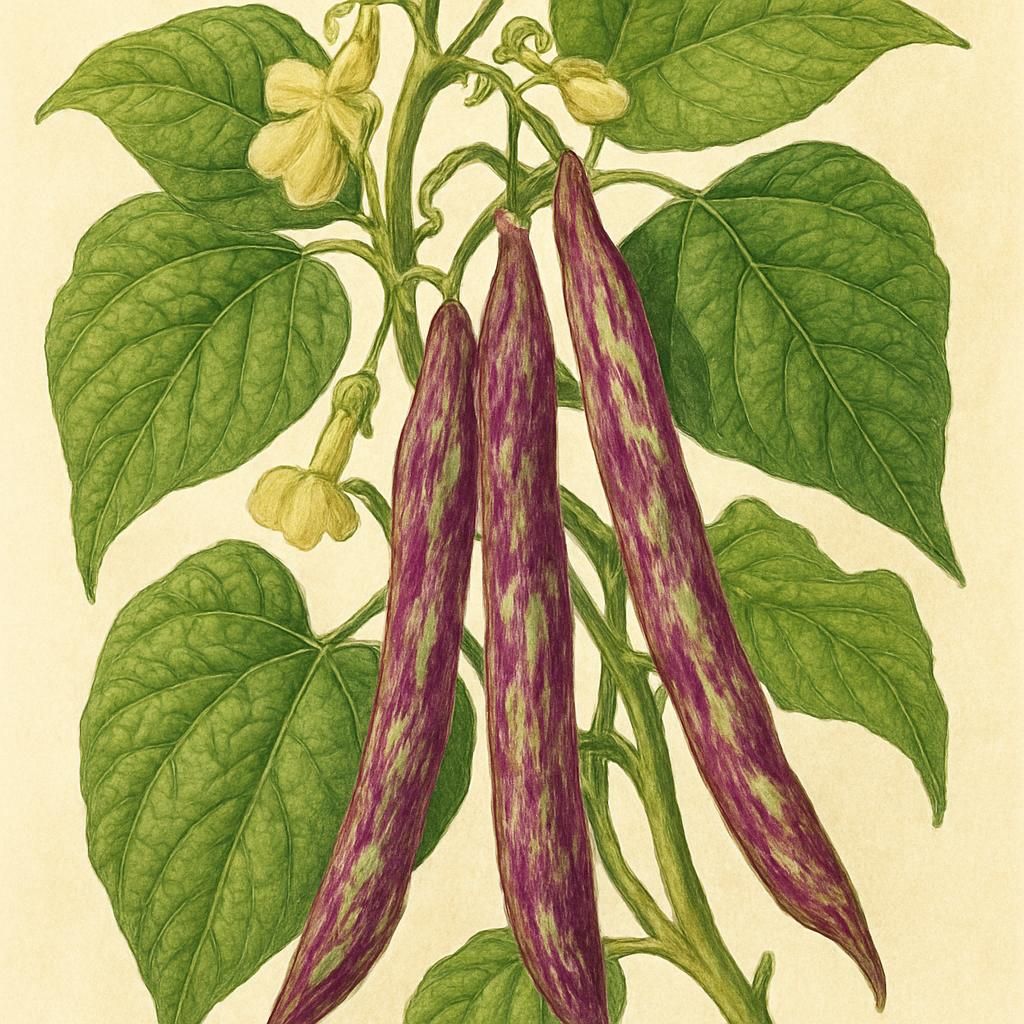
Introduction to Bush Bean (Dragon’s Tongue)
Bush Bean (Dragon’s Tongue) is an heirloom variety of bush bean renowned for its stunning appearance and vibrant flavor. This prolific producer features tender, flat, yellow pods streaked with purple, which are as delicious as they are beautiful. Ideal for gardeners and small-scale farmers, Dragon’s Tongue beans are praised for their versatility and can be consumed fresh, cooked, or dried.
Botanical Profile of Bush Bean (Dragon’s Tongue)
The Dragon’s Tongue variety belongs to the family Fabaceae and is a cultivar of Phaseolus vulgaris. This bushy plant grows to an average height of 18 inches and does not require staking, unlike pole beans. The distinct characteristic of this bean is its striking pods that change to an all-yellow color when cooked.
Soil, pH, and Climate Requirements for Bush Bean (Dragon’s Tongue)
Dragon’s Tongue beans thrive in well-drained, fertile soil, where they can access adequate nutrients and avoid waterlogging. They are warm-season crops that require full sun and do not tolerate frost.
| Requirement | Ideal Conditions |
|---|---|
| Soil Type | Well-drained, loamy soil |
| Soil pH | 6.0 - 6.8 |
| Temperature | 65°F to 85°F (18°C to 29°C) |
| Sun Exposure | Full sun (6-8 hours daily) |
| Planting Season | After the last frost date |
Step-by-Step Planting & Propagation
Site Preparation: Select a location with full sun and amend the soil with organic compost. Remove any weeds and debris to reduce competition for nutrients.
Sowing Seeds: Sow seeds directly in the garden once the threat of frost has passed. Plant seeds about 1 inch deep and 3 inches apart, with rows spaced 18-24 inches apart.
Germination: Keep the soil consistently moist but not waterlogged. Under optimal conditions, germination occurs within 7-14 days.
Thinning: Once seedlings are established, thin them to about 6 inches apart to prevent overcrowding, promoting healthy plant growth.
Care & Maintenance Regimes for Bush Bean (Dragon’s Tongue)
Bush Bean (Dragon's Tongue) requires minimal maintenance but benefits from regular care to ensure bountiful yields.
| Care Regime | Schedule |
|---|---|
| Watering | 1-2 inches per week; more during dry spells |
| Fertilizing | Apply a balanced fertilizer at planting and mid-season |
| Pruning | Remove any damaged or diseased leaves |
Dragon’s Tongue beans benefit from a layer of mulch to retain soil moisture and suppress weeds. Ensure the plants do not stress from drought or excess water.
Pests, Diseases & Organic Management
Bush Bean (Dragon's Tongue) can attract several pests and diseases, but with proper management, these can be minimized.
Common Pests:
- Bean Aphid: Use insecticidal soap or neem oil for control.
- Spider Mites: Improve plant humidity and use predatory mites as a natural solution.
Common Diseases:
- Rhizoctonia Root Rot: Ensure good drainage and crop rotation to prevent occurrence.
- Blight: Use resistant varieties and ensure good air circulation.
Implementing companion planting and crop rotation can significantly enhance pest and disease management.
Harvesting, Curing & Optimal Storage
Dragon’s Tongue beans typically reach harvest maturity in approximately 60 days post-planting. Pick pods when they are young and tender, and the purple streaks are visible. Snap beans can be stored fresh in the refrigerator. For longer storage, blanch and freeze the beans, or allow them to dry on the plant and harvest as dry beans.
Companion Planting for Bush Bean (Dragon’s Tongue)
Dragon’s Tongue beans benefit from companion plants such as corn or squash to enhance growth and deter pests. Avoid planting with garlic or onions as they may inhibit bean growth.
Companion planting strategies can significantly improve your garden’s ecosystem, offering enhanced resilience against pests and disease challenges.