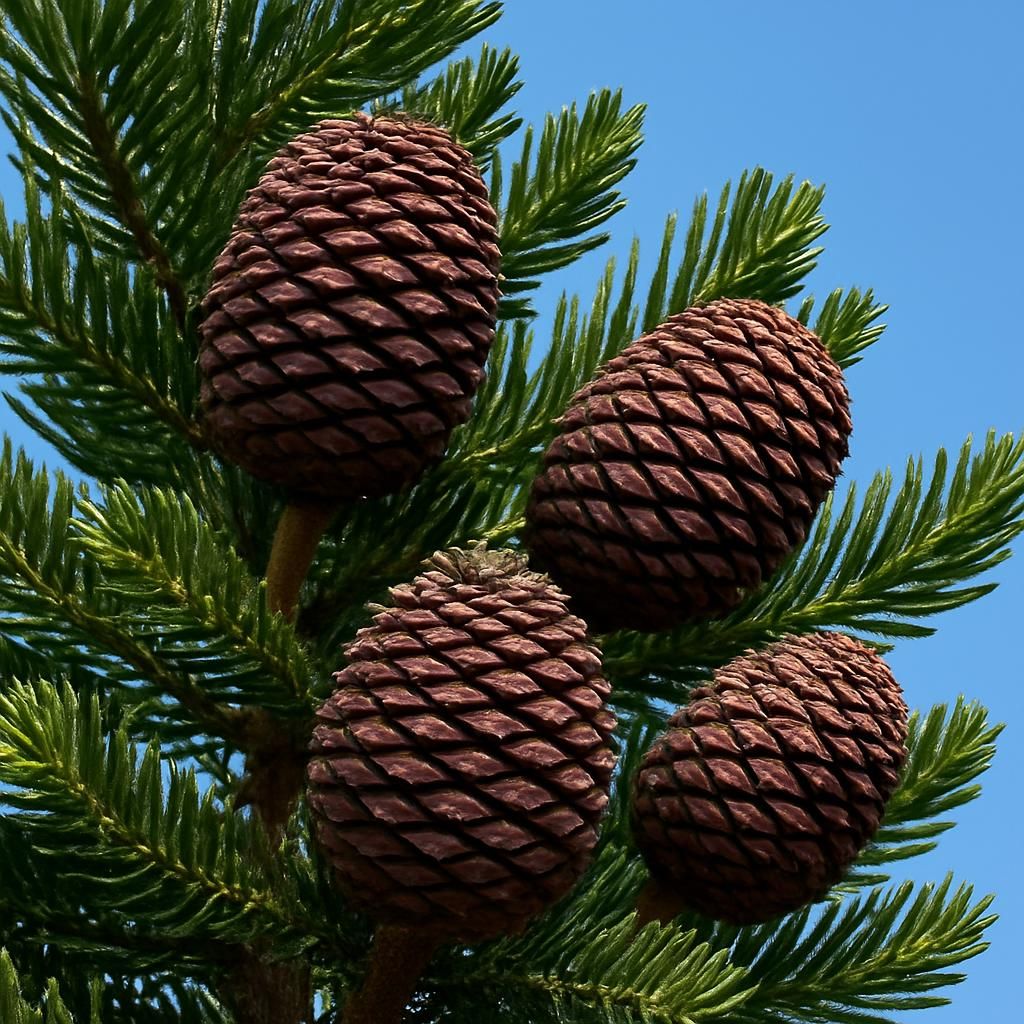
Introduction to Bunya Nut (Araucaria bidwillii)
The Bunya Nut tree, scientifically known as Araucaria bidwillii, is a living relic from the Jurassic period and one of Australia’s most iconic native conifers. Indigenous Australians have harvested its large, nutritious seeds for thousands of years, and modern growers continue to value the tree for both its edible nuts and impressive ornamental qualities. Although slow to mature, a well-tended Bunya Nut can produce abundant crops for centuries.
Commercial and home growers alike appreciate the Bunya Nut’s resilience once established. The tree tolerates drought, moderate frost, and poor soils better than many fruit or nut species. Because of its massive size at maturity, however, it is best suited to large properties, parks, or agroforestry systems rather than small urban gardens.
Botanical Profile of Bunya Nut (Araucaria bidwillii)
Araucaria bidwillii belongs to the ancient Araucariaceae family. It develops a straight, cylindrical trunk that can reach 30–50 meters in height with a spreading, symmetrical crown. The dark green, glossy leaves are lanceolate and arranged spirally along the branches. Bunya trees are dioecious or monoecious, producing separate male and female cones on the same or different trees.
Female cones are enormous—up to 30 cm in diameter and weighing 10 kg—each containing 50–100 large, triangular seeds. Male cones are smaller and release abundant pollen in spring. The seeds are rich in carbohydrates, protein, and healthy fats, making them a valuable traditional food source.
Soil, pH, and Climate Requirements for Bunya Nut (Araucaria bidwillii)
Bunya Nut trees thrive in deep, fertile, well-drained soils. They tolerate a range of textures but perform best in loamy or sandy loam soils with good structure. Avoid heavy clay or waterlogged sites, which promote root rot.
| Parameter | Ideal Range | Notes |
|---|---|---|
| Soil Type | Loam, sandy loam | Well-drained; avoid heavy clay |
| Soil pH | 5.5 – 7.0 | Slightly acidic to neutral |
| Annual Rainfall | 800 – 2000 mm | Supplemental irrigation helpful in dry years |
| Temperature Range | 5 – 30 °C | Tolerates light frost once established |
| USDA Hardiness Zones | 9 – 11 | Protect young trees from severe frost |
| Elevation | Sea level – 1000 m | Performs well on slopes with good drainage |
Step-by-Step Planting & Propagation
- Site Selection: Choose a spacious, sunny location at least 15 m from buildings and power lines. Ensure the site receives full sun for at least six hours daily.
- Soil Preparation: Dig a planting hole twice the width of the root ball and the same depth. Amend heavy soils with coarse sand and compost to improve drainage.
- Propagation: Bunya Nut is primarily grown from fresh seed. Collect ripe cones in late summer, extract seeds, and sow immediately in deep pots with a free-draining mix. Germination takes 4–12 weeks at 20–25 °C.
- Transplanting: Seedlings are ready for field planting when 30–50 cm tall. Plant in autumn or early spring, staking young trees against wind.
- Spacing: Allow 10–15 m between trees for timber or nut production; closer spacing (6–8 m) is acceptable in agroforestry windbreaks.
Care & Maintenance regimes for Bunya Nut (Araucaria bidwillii)
Consistent care during the first decade is critical for long-term success. Mulch heavily around the base to retain moisture and suppress weeds. Young trees benefit from light, balanced fertilization; mature specimens require little additional feeding.
| Task | Frequency | Details |
|---|---|---|
| Watering (Years 1–3) | Weekly during dry spells | 20–30 L per tree; deep soak to encourage deep roots |
| Watering (Mature) | Every 3–4 weeks in drought | Established trees are drought tolerant |
| Fertilizer | Spring & autumn (Years 1–5) | NPK 10-10-10 or organic equivalent at 200 g per tree |
| Fertilizer | Every 3–5 years (Mature) | Light application of compost or aged manure |
| Pruning | As needed | Remove dead or damaged branches; avoid heavy crown reduction |
| Mulching | Annually in spring | 10 cm layer of wood chips or leaf litter extending to drip line |
Pests, Diseases & Organic Management
Bunya Nut is relatively pest-resistant, but young trees can suffer from Aphids and Scale insects. Monitor new growth in spring and apply horticultural oil or insecticidal soap if infestations appear. Root rot caused by Phytophthora can occur in poorly drained soils; improve drainage and avoid overwatering.
Occasional outbreaks of Spider mites may appear during hot, dry periods. Predatory mites and regular hosing of foliage provide effective biological control. Maintain good airflow between trees to reduce fungal pressure.
Harvesting, Curing & Optimal Storage
Female cones mature in late summer to early autumn and fall naturally when ripe. Wear protective gear when collecting cones, as they are heavy and spiny. Extract seeds promptly and allow them to air-dry for 2–3 days. Store seeds in breathable bags or mesh sacks at 4–10 °C for up to six months. For longer storage, freeze seeds in airtight containers after thorough drying.
Companion Planting for Bunya Nut (Araucaria bidwillii)
Bunya Nut trees create deep shade and compete for moisture, so understory planting should be limited to shade-tolerant species once the canopy closes. Early years allow intercropping with Maize, Sweet Potato, or Clover to build soil nitrogen. In mature groves, consider shade-loving herbs such as Thyme or Yarrow along the outer drip line. Avoid shallow-rooted vegetables directly beneath the canopy.
For additional guidance on soil health and seasonal planning, see The Forgotten Art of Fall Soil Revival: 8 Organic Strategies for Small Farm Resilience.