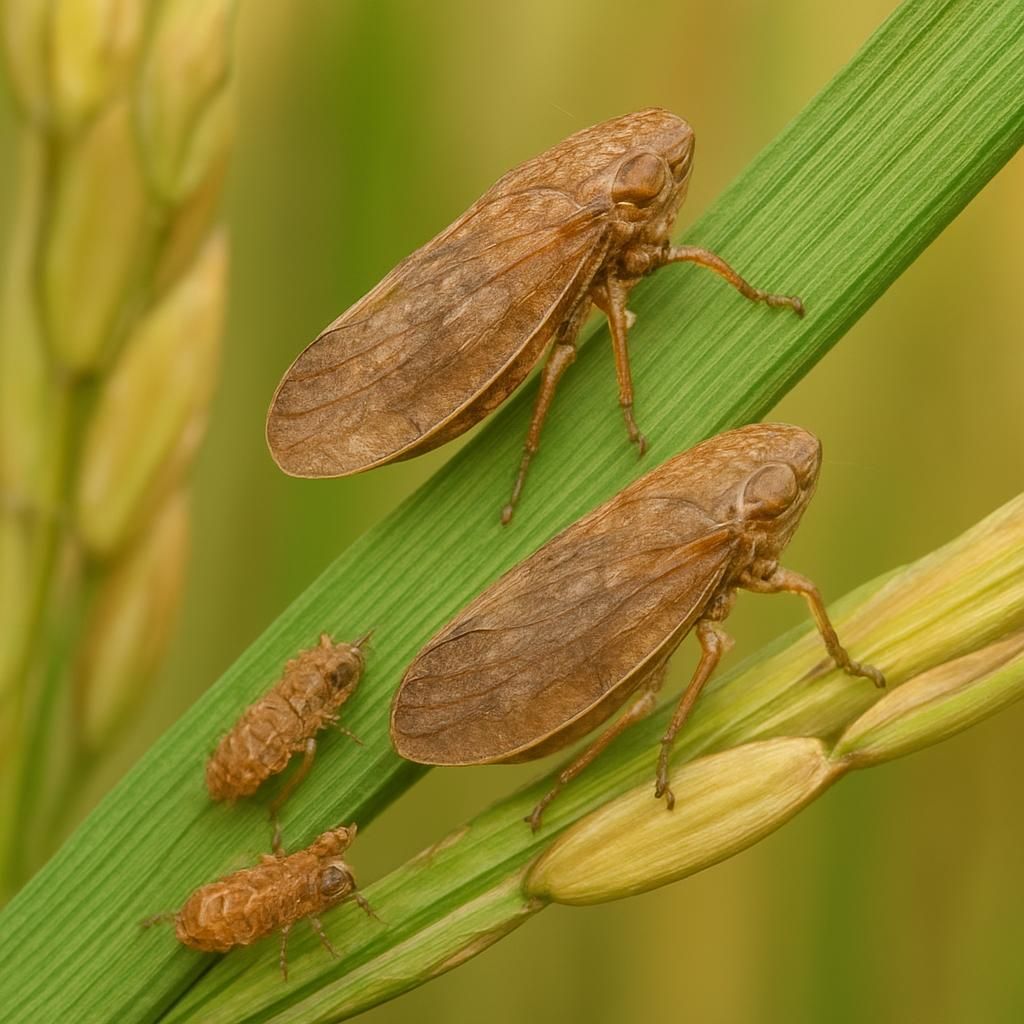
Introduction to brown plant hoppers
Brown plant hoppers (Nilaparvata lugens) are among the most destructive insect pests of Rice worldwide. These small, wedge-shaped insects feed on plant sap from the base of rice stems, weakening plants and transmitting viral diseases such as grassy stunt and ragged stunt. Outbreaks can lead to complete crop failure within weeks when populations explode under favorable conditions. Effective management requires early detection, understanding of their lifecycle, and integrated cultural and biological controls.
Identifying Symptoms & Damage
Initial symptoms include yellowing of lower leaves and stunted plant growth. As feeding continues, plants develop the classic "hopperburn" symptom where leaves turn orange-yellow and eventually dry out from the base upward. Heavy infestations produce black sooty mold from honeydew excretion and cause plants to lodge. In severe cases, entire fields turn brown and die within 7–10 days. Farmers should inspect the base of stems for adults (3–4 mm, brown, with hopping movement) and nymphs (smaller, wingless, creamy white to brown).
Lifecycle and Progression of brown plant hoppers (MUST INCLUDE A MARKDOWN TABLE OF LIFECYCLE STAGES)
The lifecycle of brown plant hoppers is completed in 20–30 days depending on temperature. Females insert eggs into leaf sheaths; nymphs hatch in 6–8 days and undergo five instars before becoming winged adults. Macropterous (long-winged) adults migrate to new fields while brachypterous (short-winged) forms remain for rapid population buildup.
| Stage | Duration | Key Characteristics | Management Window |
|---|---|---|---|
| Egg | 6–8 days | Laid in batches inside leaf sheaths | Destroy egg masses by rogueing |
| Nymph (1st–5th instar) | 12–18 days | Wingless, creamy to brown, highly mobile | Target with early organic sprays |
| Adult (Brachypterous) | 10–20 days | Short-winged, high reproductive rate | Monitor and reduce plant density |
| Adult (Macropterous) | 10–20 days | Long-winged, capable of long-distance flight | Use light traps and barriers |
Environmental Triggers & Risk Factors
High humidity (>80%), temperatures between 25–30°C, and excessive nitrogen fertilization favor rapid population growth. Dense planting and continuous flooding create microclimates ideal for hopper survival. Overuse of broad-spectrum insecticides eliminates natural enemies such as spiders and predatory beetles, triggering resurgence. Fields near weedy areas or with poor drainage experience higher infestation pressure.
Organic Control & Treatment Plans (MUST INCLUDE A MARKDOWN TABLE OF TREATMENT OPTIONS AND FREQUENCIES)
Integrated organic management combines cultural, biological, and botanical methods. Begin with resistant varieties and balanced nutrition. Conserve natural enemies by avoiding broad-spectrum sprays. Use neem-based products and insecticidal soaps at early nymph stages. Deploy light traps and yellow sticky boards for monitoring and mass trapping.
| Treatment Option | Active Ingredient / Method | Application Frequency | Notes |
|---|---|---|---|
| Neem oil emulsion | Azadirachtin 0.03–0.15% | Every 7–10 days at first sign of nymphs | Safe for beneficial insects when diluted |
| Insecticidal soap | Potassium salts of fatty acids | Every 5–7 days during nymph peaks | Thorough coverage of lower stems required |
| Beauveria bassiana | Fungal biopesticide | Every 10–14 days under high humidity | Most effective at 25–30°C |
| Light traps | UV or LED traps | Nightly during migration periods | Reduce adult populations and monitor |
| Yellow sticky traps | Adhesive boards | Weekly replacement | Place at canopy height |
| Resistant rice varieties | Cultural | At planting | Varieties with BPH resistance genes |
Preventing brown plant hoppers in the Future
Implement synchronized planting within a region to break the pest cycle. Use wider row spacing and moderate nitrogen rates to reduce plant succulence. Alternate rice with non-host crops such as Wheat or legumes. Remove stubble and weeds after harvest to eliminate overwintering sites. Maintain field sanitation and encourage natural enemy habitats with flowering borders. Regular scouting from transplanting onward allows intervention before populations reach economic thresholds.
Crops Most Affected by brown plant hoppers
Brown plant hoppers primarily attack Rice but can occasionally infest related grasses. In mixed cropping systems, young Corn seedlings may suffer minor damage. No significant impact has been recorded on Tomato, Potato, or fruit crops such as Mango.