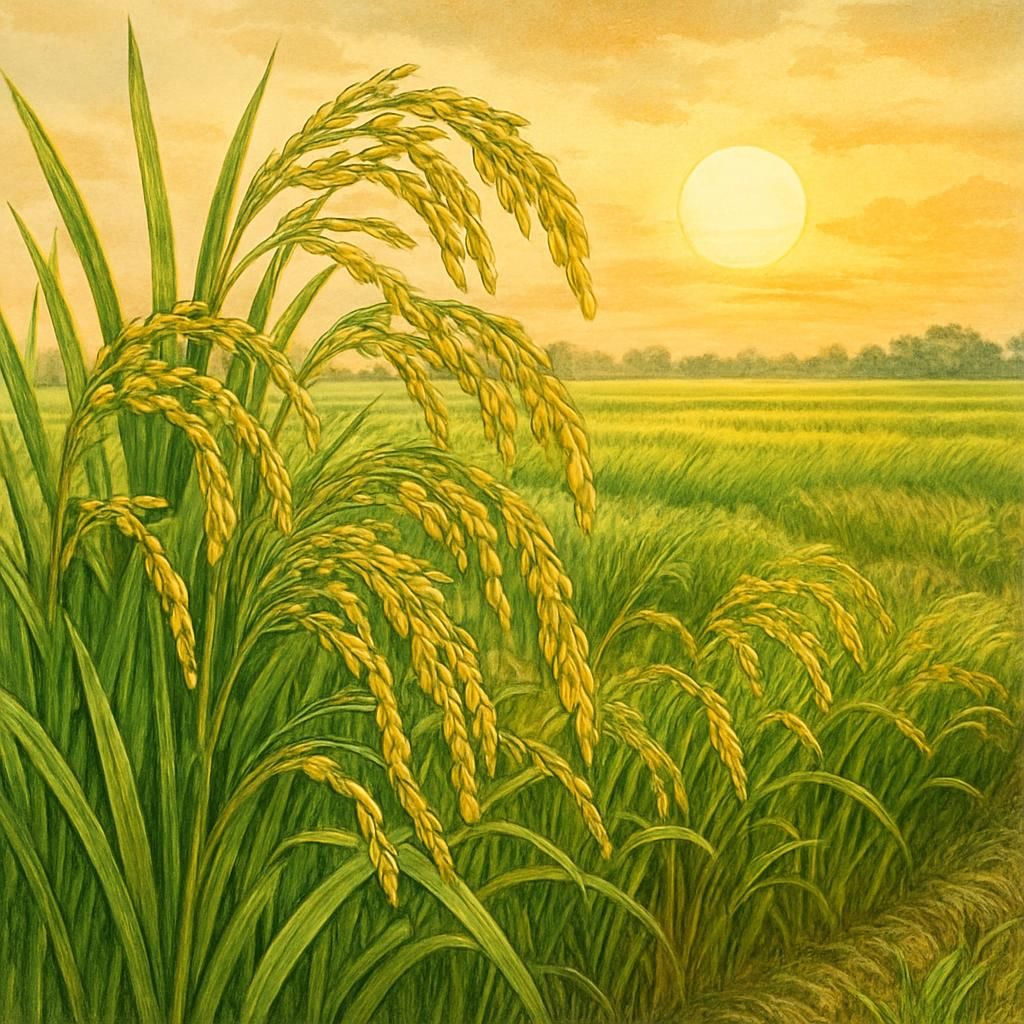
Introduction to Boro Rice
Boro Rice is a cultural and agricultural staple primarily grown in Bangladesh and parts of India. It's typically planted during the dry season, starting in November and harvested around April. This crop thrives in cooler climates and is revered for its adaptability to off-season cultivation, offering a crucial food source from late spring into early summer.
Botanical Profile of Boro Rice
Boro Rice (Oryza sativa var. Boro) is a variety of rice that is grown during the dry season. This variety has unique traits that distinguish it even from other rice types. It is typically characterized by shorter, denser grains and a robust plant structure that supports extensive foliage and increased grain yield.
Soil, pH, and Climate Requirements for Boro Rice
For optimal growth, Boro Rice requires specific soil and climate conditions. Here is a detailed table outlining the requirements:
| Requirement | Ideal Conditions |
|---|---|
| Soil Type | Loamy, alluvial soil rich in organic material |
| Soil pH | 5.5 to 6.5 |
| Temperature Range | 20°C to 25°C |
| Rainfall | 1000 to 1500 mm |
Step-by-Step Planting & Propagation
- Seed Selection: Choose certified, disease-resistant Boro Rice seeds to ensure optimal growth.
- Nursery Preparation: Start by preparing a nursery bed where seedlings can be nurtured for 25-30 days before transplantation.
- Field Preparation: Plough the field thoroughly. Ensure the soil is leveled and free of debris.
- Sowing: Sow the sprouted seeds in the nursery beds, maintaining a distance of 2 cm apart.
- Transplantation: When seedlings reach a height of 15-20 cm, they can be transplanted to the field, spaced 10 cm apart within rows 20 cm apart.
Care & Maintenance Regimes for Boro Rice
Proper care is essential for healthy crop production. Below are critical aspects of care and maintenance:
| Task | Schedule/Frequency |
|---|---|
| Watering | Regular flooding; maintain 5-10 cm of water until flowering |
| Fertilization | Basal: NPK at planting; Topdress: N at tillering and flowering |
| Pruning | Remove diseased or damaged leaves throughout growth |
Pests, Diseases & Organic Management
The primary threats to Boro Rice include:
- Brown Planthopper: Impacted by minimal flooding and stresses. Use neem oil as an organic repellant.
- Stem Borers: Implement pheromone traps and maintain cleanliness.
- Diseases such as Blast: Utilize resistant seed varieties and maintain crop hygiene.
For an exhaustive exploration of crop diseases and management, read this Blog on Organic Fixes for Crop Resilience.
Harvesting, Curing & Optimal Storage
Boro Rice is typically harvested upon full maturity when 80% of the grains turn golden yellow. Post-harvest, the grains should be sun-dried for 3-4 days to ensure moisture content is reduced to around 13% for optimal storage. Properly dried grains can be stored at room temperature in airtight containers or sacks. This minimizes pest infestations and prolongs shelf-life.
Companion Planting for Boro Rice
Boro Rice benefits from companion plants such as Nasturtium and Marigold, which deter pests. Additionally, Clover can help enrich the soil with nitrogen, promoting healthier plant growth. For optimal outcomes, consider integrating principles of Companion Planting Strategies for Productivity.
For more details on general rice cultivation, visit the Rice Entry.