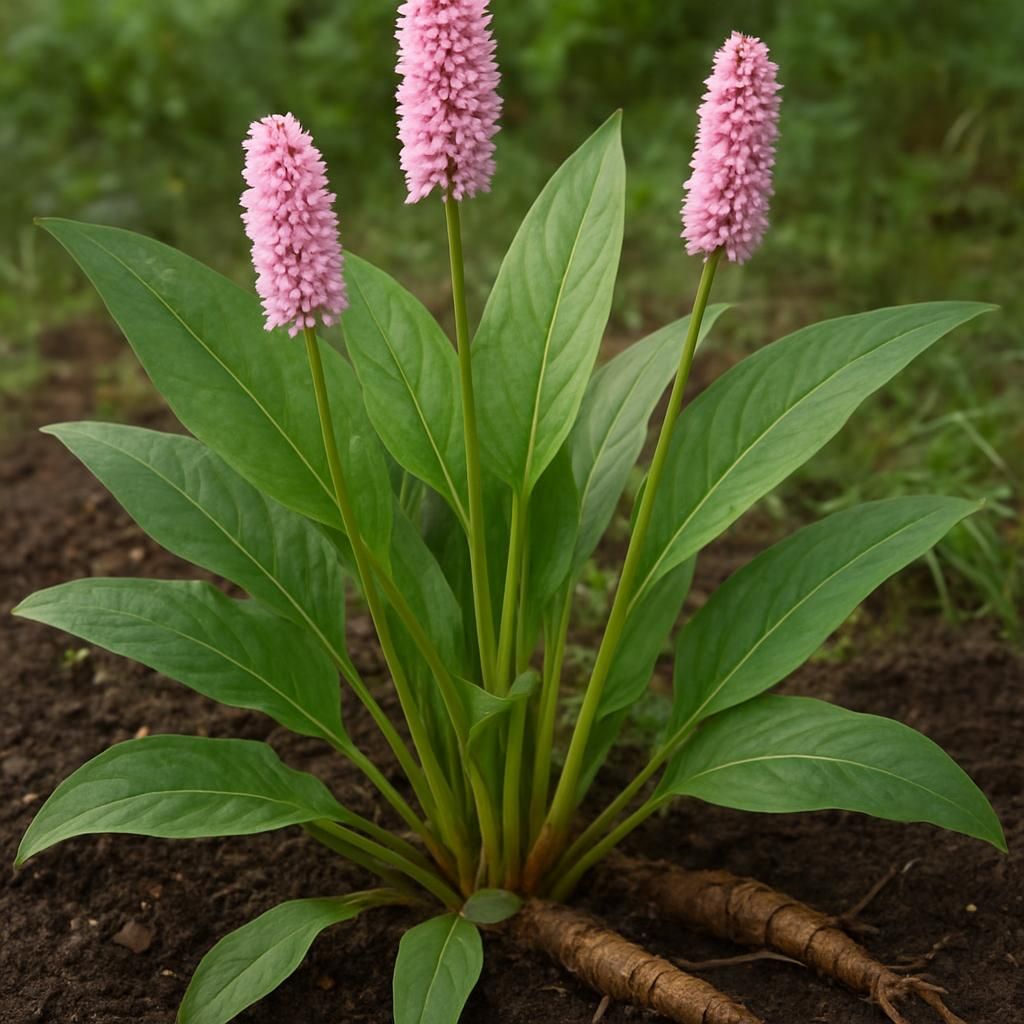
Introduction to Bistort (Persicaria bistorta)
Bistort (Persicaria bistorta), also known as common bistort or snakeweed, is a robust perennial in the Polygonaceae family. Native to Europe and northern Asia, it has been cultivated for centuries as both a medicinal herb and a source of starchy rhizomes used in traditional cuisines. The plant forms dense clumps of broad, lance-shaped leaves and produces tall, cylindrical spikes of pale pink flowers in late spring to early summer. Its ability to tolerate wet soils and partial shade makes it an excellent choice for low-lying or riparian areas where other crops may struggle.
Beyond its culinary uses, bistort plays an ecological role in stabilizing moist soils and providing habitat for pollinators. Modern growers are rediscovering its value as a low-maintenance perennial that returns reliably each year with minimal inputs. Whether grown for its edible parts, ornamental appeal, or soil-improving properties, bistort offers a versatile addition to diverse agricultural systems.
Botanical Profile of Bistort (Persicaria bistorta)
Persicaria bistorta is a rhizomatous perennial reaching 30–90 cm in height. Its thick, creeping rhizomes are rich in starch and have a slightly astringent flavor. The leaves are alternate, broadly lanceolate, and often marked with a dark blotch near the base. Flower stems terminate in dense, cylindrical racemes of small pink flowers that bloom from May to July. The plant spreads slowly via underground rhizomes, forming stable colonies over time.
Bistort prefers cool, temperate conditions and enters dormancy in winter. It is hardy to USDA zones 3–8 and can tolerate brief flooding. The species name “bistorta” refers to the twice-twisted appearance of the rhizome. While primarily valued for its edible rhizomes and leaves, the plant also produces small, triangular seeds that can contribute to natural regeneration in suitable habitats.
Soil, pH, and Climate Requirements for Bistort (Persicaria bistorta)
Bistort performs best in consistently moist, fertile soils with good organic matter content. It tolerates a range of textures from loam to clay but requires adequate moisture retention. The plant is sensitive to prolonged drought and performs poorly in sandy, fast-draining soils unless supplemental irrigation is provided. Full sun to partial shade is acceptable, with afternoon shade beneficial in warmer regions.
| Parameter | Ideal Range | Notes |
|---|---|---|
| Soil Type | Loam to clay loam | High organic matter improves moisture retention |
| Soil pH | 5.5 – 7.0 | Slightly acidic to neutral preferred |
| Temperature Range | 10–25 °C daytime | Cool-season perennial; tolerates light frost |
| Annual Rainfall | 600–1200 mm | Consistent moisture essential |
| Light Requirements | Full sun to partial shade | Afternoon shade recommended in hot climates |
| USDA Hardiness Zones | 3–8 | Extremely cold hardy |
Step-by-Step Planting & Propagation
Bistort is most reliably established from divisions of mature rhizomes. Begin by selecting healthy, disease-free parent plants in early spring or autumn. Dig up clumps and carefully separate sections of rhizome, ensuring each division has at least one growing point and several roots. Replant divisions immediately at the same depth they were growing, spacing plants 30–45 cm apart in prepared beds.
Seed propagation is possible but slower. Fresh seed should be sown in autumn in a cold frame or stratified for 8–12 weeks at 4 °C before spring planting. Germination typically occurs within 3–6 weeks under cool, moist conditions. Seedlings are transplanted once they develop two true leaves. Regardless of method, keep new plantings evenly moist until established.
Care & Maintenance regimes for Bistort (Persicaria bistorta)
Bistort is low-maintenance once established but benefits from consistent moisture and annual organic amendments. Mulching with 5–7 cm of well-rotted compost or leaf mold helps retain soil moisture and suppress weeds. Remove spent flower spikes after blooming to encourage vegetative growth, and divide overcrowded clumps every 4–5 years to maintain vigor.
| Task | Frequency | Details |
|---|---|---|
| Watering | Weekly during active growth | Maintain even soil moisture; avoid waterlogging |
| Fertilizer | Early spring & mid-summer | Apply balanced organic fertilizer (e.g., 5-5-5) at 50 g/m² |
| Pruning | Post-flowering & late autumn | Cut back spent stems; remove damaged foliage |
| Mulching | Annually in spring | 5–7 cm layer of compost or leaf mold |
| Division | Every 4–5 years | Rejuvenate clumps by separating rhizomes |
Pests, Diseases & Organic Management
Bistort is relatively resistant to major pests but can occasionally suffer from Aphids and Slugs. Aphid colonies on young shoots can be controlled with strong water sprays or insecticidal soap. Slugs are attracted to tender foliage in damp conditions; use beer traps or diatomaceous earth barriers. Fungal issues such as Powdery mildew may appear in crowded, poorly ventilated plantings. Improve airflow and avoid overhead irrigation to reduce incidence.
Root rots can occur in persistently waterlogged soils. Ensure adequate drainage while maintaining moisture. Regular removal of plant debris and rotation of planting sites every 5–6 years help prevent buildup of soil-borne pathogens. Organic growers may apply compost tea as a foliar feed to boost plant resilience.
Harvesting, Curing & Optimal Storage
Rhizomes are typically harvested in autumn of the second or third year when starch content peaks. Carefully lift plants with a fork, shake off soil, and trim foliage. Wash rhizomes gently and allow them to air-dry in a shaded, well-ventilated area for 3–5 days. Store cured rhizomes in perforated paper bags or crates at 4–10 °C with 85–90% humidity; they remain viable for 4–6 months.
Young leaves can be harvested throughout the growing season for culinary use. Cut outer leaves at the base to encourage regrowth. Fresh leaves are best used immediately but can be blanched and frozen for later use. Avoid harvesting more than one-third of the foliage at any time to maintain plant health.
Companion Planting for Bistort (Persicaria bistorta)
Bistort pairs well with other moisture-loving perennials and herbs. Compatible companions include Yarrow, Thyme, and Nasturtium, which help deter pests and improve biodiversity. Avoid planting near aggressive spreaders that may outcompete bistort for space. In wetland or riparian systems, it integrates effectively with Rice and sedges, contributing to soil stabilization and nutrient cycling.
For more insights on building resilient planting schemes, see Summer Companion Planting: 10 Organic Pairings to Boost Small Farm Resilience.