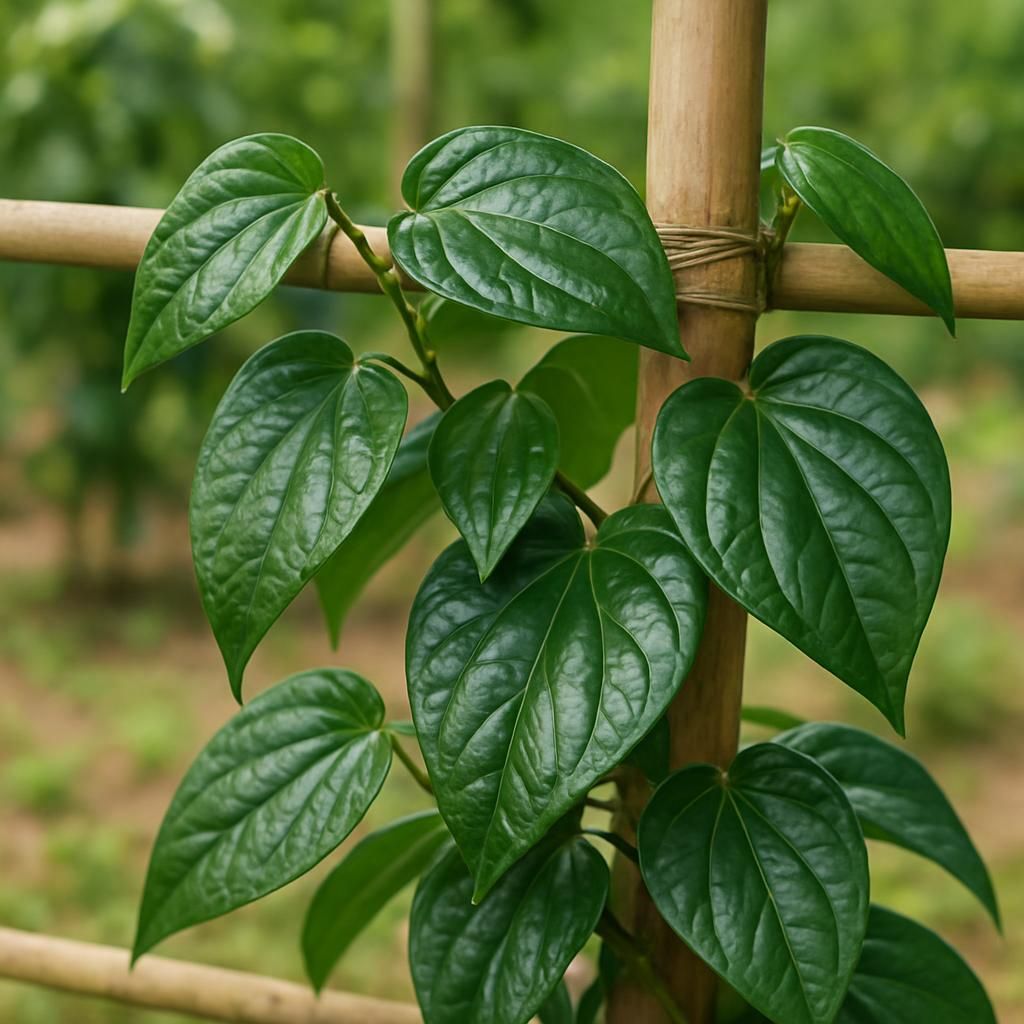
Introduction to Betel Leaf
Betel leaf (Piper betle) is a climbing perennial vine belonging to the Piperaceae family, widely grown across South and Southeast Asia for its glossy, heart-shaped leaves. The leaves are harvested year-round and hold significant cultural, medicinal, and economic value. In many regions, fresh betel leaves are chewed with areca nut and lime as part of traditional practices, while the plant is also valued in Ayurvedic and folk medicine for its antimicrobial and digestive properties.
Commercial cultivation has expanded due to steady demand from paan (betel quid) vendors, herbal industries, and export markets. The crop performs best when grown under partial shade with consistent moisture, making it suitable for both smallholder backyard systems and larger commercial setups with support structures. Successful growers focus on soil health, proper spacing, and integrated pest management to maintain leaf quality and yield.
Botanical Profile of Betel Leaf
Piper betle is a dioecious evergreen climber that can reach 3–5 meters in length when provided with suitable support. The leaves are alternate, ovate-cordate, 10–20 cm long, with a shiny upper surface and prominent veins. Stems are slender, jointed, and produce adventitious roots at nodes that help the plant climb. Flowers are small, unisexual, and borne on axillary spikes, though flowering is uncommon in commercial cultivation because leaves are the primary economic product.
The plant prefers warm, humid conditions and grows vigorously during the monsoon season. Leaf quality is influenced by genetics, light intensity, and nutrient availability; darker green leaves with higher essential oil content command premium prices. Several cultivars exist, differing in leaf size, aroma, and disease resistance.
Soil, pH, and Climate Requirements for Betel Leaf
Betel leaf performs best in well-drained, fertile loamy soils rich in organic matter. Heavy clay soils should be amended with sand and compost to improve aeration and drainage. The following table summarizes ideal growing conditions:
| Parameter | Ideal Range | Notes |
|---|---|---|
| Soil Type | Sandy loam to clay loam | High organic matter content preferred |
| Soil pH | 5.5 – 7.0 | Slightly acidic to neutral |
| Temperature | 20 – 35 °C | Optimal 25–30 °C; sensitive to frost |
| Relative Humidity | 70 – 90 % | High humidity essential for leaf quality |
| Annual Rainfall | 1500 – 2500 mm | Well-distributed; supplemental irrigation needed in dry periods |
| Light | Partial shade (30–50 %) | Full sun causes leaf scorch |
| Elevation | Up to 900 m | Best below 600 m in tropics |
Step-by-Step Planting & Propagation
Betel leaf is most commonly propagated vegetatively using stem cuttings. Select healthy, disease-free vines from 1–2 year old plants. Cuttings should be 30–45 cm long with 3–5 nodes. Remove lower leaves and plant cuttings at a 45-degree angle in nursery beds or polybags filled with a 1:1:1 mix of soil, sand, and well-rotted manure.
Maintain nursery beds under 50 % shade with daily light watering. Roots typically emerge within 15–25 days. Once cuttings develop 4–6 new leaves and a strong root system (usually 6–8 weeks), they are ready for field transplanting. Field preparation includes deep plowing, incorporation of 20–25 tons/ha of farmyard manure, and installation of support structures such as bamboo poles, trellises, or living standards like Gliricidia.
Transplant cuttings during the onset of monsoon or cooler months at 1.5 m × 1.5 m spacing. Plant two cuttings per pit and provide immediate irrigation. Mulch the base with dry leaves or straw to conserve moisture and suppress weeds.
Care & Maintenance regimes for Betel Leaf
Consistent care is essential to maintain leaf quality and prevent disease. The following table outlines recommended schedules for irrigation, fertilization, and pruning:
| Operation | Frequency | Details |
|---|---|---|
| Watering | Every 2–3 days in dry season | Maintain soil moisture at 60–70 % field capacity; avoid waterlogging |
| Fertilizer | Basal: 20 t/ha FYM + 50:30:50 kg NPK/ha; Top dressing: 20 kg N/ha every 45 days | Use well-decomposed organic manure; split nitrogen applications |
| Pruning | Every 60–75 days | Remove old, diseased, or overcrowded vines; train new shoots on supports |
| Mulching | Renew every 3–4 months | 5–7 cm layer of organic mulch around base |
| Weeding | Monthly until canopy closes | Hand weeding or shallow cultivation; avoid deep roots disturbance |
Regular monitoring of leaf color and vine vigor helps adjust nutrient programs. Foliar sprays of diluted cow urine or neem-based preparations can supplement nutrition and provide mild pest deterrence.
Pests, Diseases & Organic Management
Common pests include Aphids, Mealybugs, Spider mites, and Thrips. These sap-sucking insects cause leaf curling, yellowing, and reduced market value. Weekly scouting and release of predatory mites or application of neem oil (0.5 %) at early infestation stages provide effective control.
Major diseases are Phytophthora leaf blight, Anthracnose, bacterial leaf spot, and root rot. Improve drainage, avoid overhead irrigation, and maintain plant spacing to reduce humidity around foliage. Bordeaux mixture (1 %) or copper-based organic fungicides applied at 15-day intervals during monsoon can limit spread. Remove and destroy infected leaves promptly.
Harvesting, Curing & Optimal Storage
Leaves are ready for harvest 6–8 months after planting when they reach full size and dark green color. Harvest by hand, selecting mature leaves from the middle portion of the vine. Avoid harvesting during midday heat to prevent wilting. Yield ranges from 15–25 tons of fresh leaves per hectare annually under good management.
Fresh leaves should be cleaned, sorted, and bundled in moist cloth or banana leaves. For longer storage, pack in perforated polythene bags at 10–12 °C and 85–90 % relative humidity; leaves remain usable for 7–10 days. Sun-drying or shade-drying produces cured leaves for herbal use, though market preference is overwhelmingly for fresh leaves.
Companion Planting for Betel Leaf
Betel leaf benefits from association with nitrogen-fixing and shade-providing species. Gliricidia serves as both a living trellis and green manure source. Intercropping with Ginger or Turmeric in the first year provides additional income while the betel canopy develops. Marigold borders help repel nematodes and certain insects. Avoid planting near solanaceous crops that share common soil-borne pathogens.
Crop rotation with legumes every 3–4 years improves soil structure and breaks pest cycles. Maintaining biodiversity around the plantation supports natural enemies and overall farm resilience.