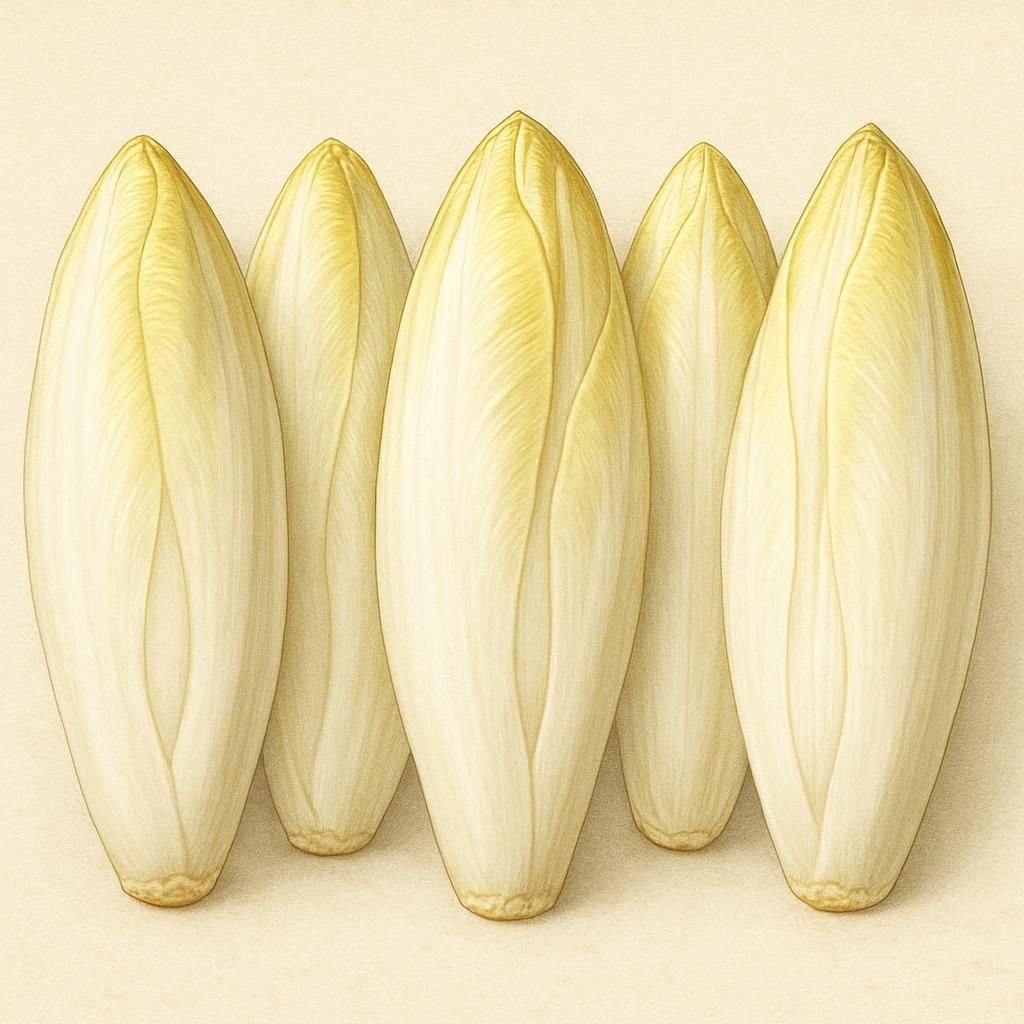
Introduction to Belgian Endive (Witloof)
Belgian Endive, commonly referred to as Witloof, has a long history and a unique cultivation process making it a luxurious and sought-after salad component. This chicory-relative stands out for its tightly packed, pale, elongated shoots grown under special conditions to preserve its characteristic color and flavor.
Botanical Profile of Belgian Endive (Witloof)
Scientifically named Cichorium intybus var. foliosum, Belgian Endive belongs to the Asteraceae family. It's not just the blanched, torpedo-shaped heads that get attention—the chicory root, from which endive is forced, can also be utilized, contributing to its diverse harvesting allure.
Soil, pH, and Climate Requirements for Belgian Endive (Witloof)
Belgian Endive grows best under specific environmental conditions to ensure the characteristic white, dense heads. Here's an overview of its ideal growing conditions:
| Factors | Ideal Conditions |
|---|---|
| Soil Type | Loamy, well-drained |
| pH Level | 6.0 - 7.5 |
| Temperature | 10°C - 24°C (field), 10°C - 16°C (forcing) |
| Sunlight | Partial to full shade |
Step-by-Step Planting & Propagation
The growth of Belgian Endive is quite particular, involving a two-phase process:
- Seed Sowing: Sow seeds in well-prepared, fertile soil in the spring after the last frost.
- Root Cultivation: Allow plants to grow until the end of the season; thick taproots should be harvested after first frost.
- Forcing: Roots are stored until winter, trimmed, and replanted in darkness to force the growth of white endive heads over a 3-4 week period.
Care & Maintenance Regimes for Belgian Endive (Witloof)
Maintaining consistent care regimes throughout the stages of the crop's growth ensures a successful yield:
| Regime | Schedule/Details |
|---|---|
| Watering | Regular, keep soil consistently moist |
| Fertilizer | Compost or balanced NPK fertilizer every 3-4 weeks before harvest |
| Pruning | Not critical during root cultivation |
Pests, Diseases & Organic Management
Belgian Endive is susceptible to common pests and diseases like Aphids and Powdery Mildew. Organic management is key, including the use of neem oil and beneficial insects for pest control, and maintaining clean environments to prevent disease spread.
Harvesting, Curing & Optimal Storage
Belgian Endive heads are harvested once they reach 12-15 cm. Heads should be kept cold and moist until use to maintain freshness and can be stored at around 1°C with high humidity for a few weeks.
Companion Planting for Belgian Endive (Witloof)
Endive can benefit from certain companion plants, as they improve the soil conditions and deter pests. Consider Tomato, Onion, and Chickpeas as beneficial companions to increase resilience and yield potential.
For further insights into strategic planting tactics, check out Summer Companion Planting: 10 Organic Pairings to Boost Small Farm Resilience.
Additionally, refer to the wiki about Lettuce for other related crops you can cultivate alongside Belgian Endive.