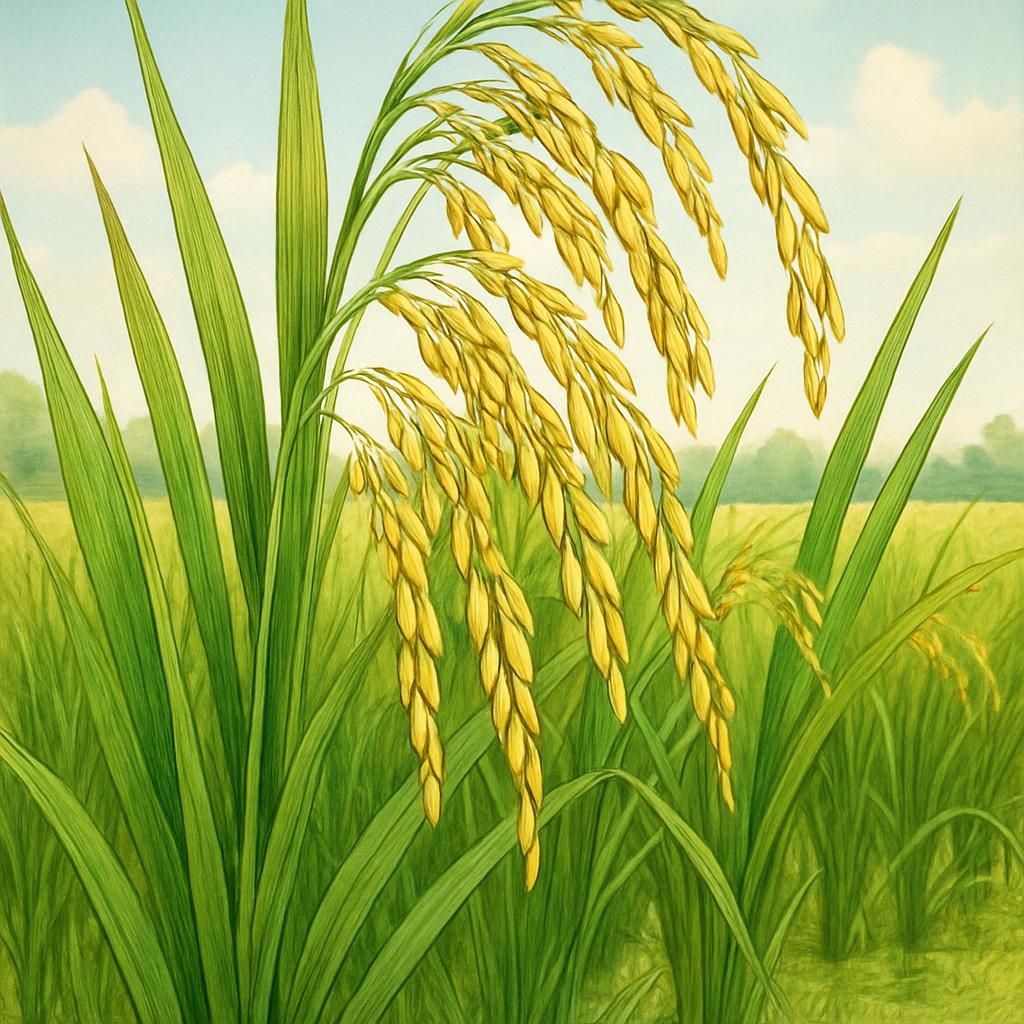
Introduction to Basmati Rice (Taraori)
Basmati Rice (Taraori) is renowned worldwide for its unique aroma, long grains, and delectable taste. Originating from the fertile plains of northern India, notably the Taraori region of Haryana, this variety is celebrated for its century-old heritage and cultural importance. Basmati Rice (Taraori) is not just a staple, but an integral part of traditional cuisines, offering nutritional benefits and requiring specific growing conditions for optimal yield.
Botanical Profile of Basmati Rice (Taraori)
Basmati Rice (Taraori), scientifically known as Oryza sativa, belongs to the family Poaceae. This rice variety is characterized by its slender, elongated grains and a natural aroma that intensifies upon cooking. The plant itself is typically about 3-4 feet tall, with long, slender leaves and distinct panicles housing the grains.
Soil, pH, and Climate Requirements for Basmati Rice (Taraori)
Basmati Rice (Taraori) thrives in specific environmental conditions. It requires deep, fertile, well-drained loamy soil with good water retention capacity. The table below outlines the ideal conditions for cultivating this crop:
| Factor | Requirement |
|---|---|
| Soil Type | Loamy, clay loam |
| Soil pH | 5.0 - 8.5 |
| Climate | Subtropical |
| Temperature | 20-37°C (68-98°F) |
| Rainfall | 1000-1500 mm annually |
Step-by-Step Planting & Propagation
- Seed Selection: Choose high-quality, certified seeds to ensure better germination and yield.
- Land Preparation: Plowing should be thorough to achieve a fine tilth for facilitating proper root penetration.
- Sowing: Direct seeding or transplanting are common methods. For transplanting, seeds are sown in nurseries and then planted in fields after 20-35 days.
- Spacing: Maintain a spacing of 20 cm between rows and 15 cm between plants to ensure proper growth and air circulation.
- Watering: Establish a shallow flood in fields after transplantation for optimal rice growth.
Care & Maintenance Regimes for Basmati Rice (Taraori)
Effective crop management practices are crucial for Basmati Rice (Taraori) to thrive. The table below provides a comprehensive maintenance schedule:
| Aspect | Schedule/Frequency |
|---|---|
| Watering | Flooding; 1-2 cm water depth weekly |
| Fertilizer | NPK (Nitrogen-Phosphorus-Potassium) at 50:30:20 kg/ha rate |
| Weeding | Manual weeding at 20 and 40 days after planting |
Pests, Diseases & Organic Management
Basmati Rice (Taraori) is susceptible to pests like Brown Planthopper and diseases such as Blast. Organic management strategies include:
- Neem Oil: Use as an organic pesticide for pest control.
- Companion Planting: Integrate with Marigold to naturally repel pests.
- Crop Rotation: Implement with legumes like Soybeans to maintain soil health and reduce pest buildup.
For more insights, explore Crop Diseases Under the Microscope: 9 Organic Fixes for Small Farm Resilience.
Harvesting, Curing & Optimal Storage
- Harvesting: Typically takes place around 120-150 days post-sowing. Grains should be harvested when they attain straw-yellow color.
- Curing: Allows harvested rice to dry (at 18-22% moisture) before threshing.
- Storage: Ensure storage in cool, dry, and pest-free conditions to maintain grain quality.
Companion Planting for Basmati Rice (Taraori)
Effective companion plants for Basmati Rice include Legumes and Aromatic herbs, which enhance growth, repel pests, and improve soil nutrients.
For successful strategies, read Summer Companion Planting: 10 Organic Pairings to Boost Small Farm Resilience.