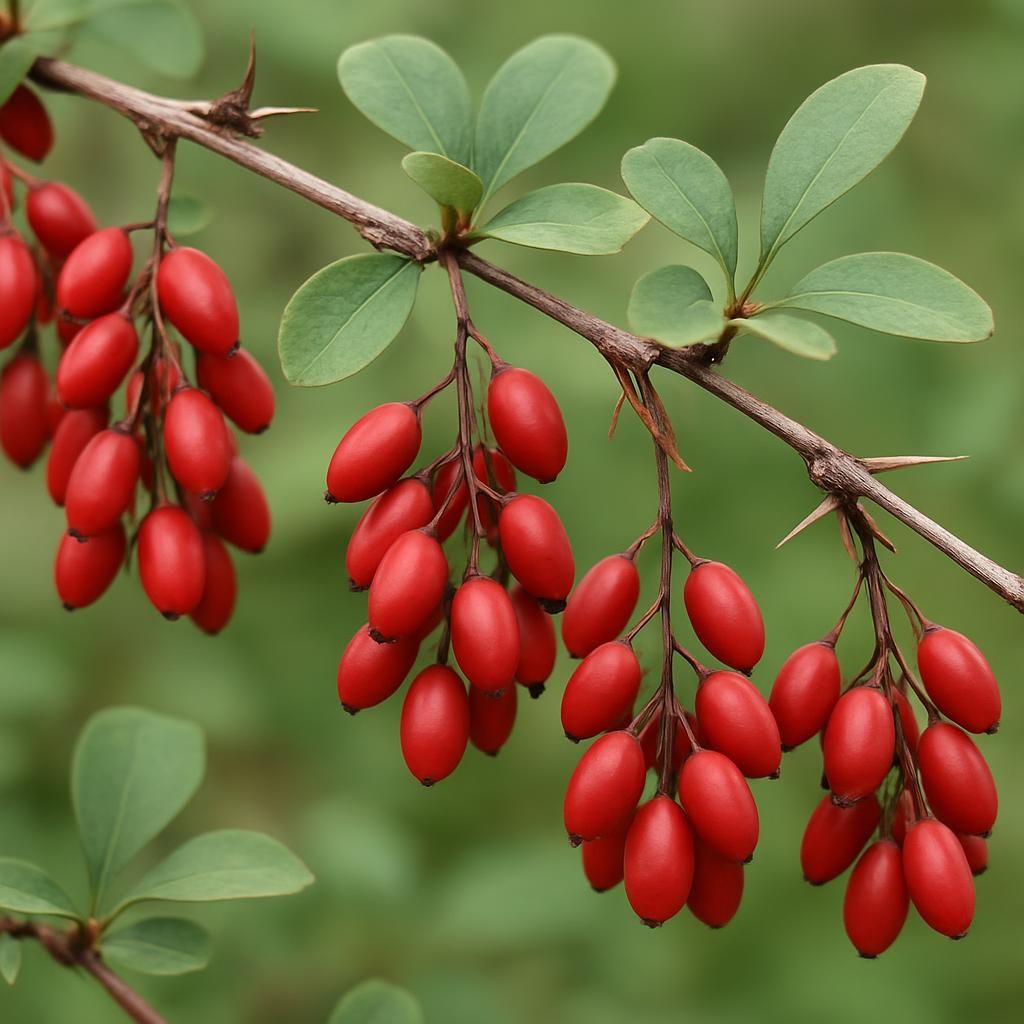
Introduction to Barberry
Barberry (Berberis vulgaris) is a hardy, deciduous shrub native to central and southern Europe, western Asia, and northwest Africa. Valued for its bright red berries, brilliant autumn foliage, and dense thorny habit, barberry has been cultivated for centuries both as an ornamental hedge plant and for its culinary and medicinal properties. The berries are rich in vitamin C and have been traditionally used to make jams, sauces, and herbal remedies. Modern growers appreciate barberry for its low maintenance requirements, drought tolerance once established, and ability to thrive in poor soils where other crops struggle.
Botanical Profile of Barberry
Barberry belongs to the Berberidaceae family and typically reaches 1–3 meters in height with an equal spread. The plant features arching, spiny branches with simple, oval to obovate leaves that turn vivid shades of red and purple in autumn. Small, fragrant yellow flowers appear in drooping racemes during late spring, followed by oblong, scarlet berries that ripen in late summer to early autumn. The shrub’s extensive root system and ability to sucker make it useful for erosion control but also require careful management in garden settings.
Soil, pH, and Climate Requirements for Barberry
Barberry is remarkably adaptable but performs best under specific conditions that promote healthy growth and abundant fruiting.
| Parameter | Ideal Range | Notes |
|---|---|---|
| Soil Type | Well-drained loam, sandy loam | Tolerates clay if amended; avoid waterlogging |
| Soil pH | 6.0–7.5 | Slightly acidic to neutral; tolerates up to 8.0 |
| Temperature Range | -20°C to 30°C (-4°F to 86°F) | Fully hardy in USDA zones 3–8 |
| Annual Rainfall | 400–800 mm | Drought tolerant once established |
| Sun Exposure | Full sun to partial shade | Full sun maximizes berry production |
| Spacing | 1.0–1.5 m between plants | 2.0–2.5 m between rows for commercial plantings |
Step-by-Step Planting & Propagation
Barberry is most commonly propagated from semi-hardwood cuttings taken in summer or from seed sown in autumn after cold stratification. For cuttings, select healthy 10–15 cm shoots, remove lower leaves, and dip in rooting hormone before placing in a well-draining propagation mix. Seeds require 60–90 days of cold moist stratification at 4°C before sowing in spring. Transplant seedlings or rooted cuttings into prepared beds in early spring or autumn when soil temperatures are moderate. Dig planting holes twice the width of the root ball and incorporate compost to improve drainage. Water thoroughly after planting and apply a 5–8 cm layer of organic mulch to conserve moisture and suppress weeds.
Care & Maintenance regimes for Barberry
Consistent care ensures vigorous plants and reliable harvests. Focus on balanced nutrition, proper irrigation, and annual pruning to maintain shape and productivity.
| Season | Watering Schedule | Fertilizer Application | Pruning Schedule |
|---|---|---|---|
| Spring | 25–40 mm per week if rainfall insufficient | Apply balanced NPK (10-10-10) at 50 g/m² | Remove dead wood; shape after flowering |
| Summer | Deep watering every 10–14 days | Light compost tea or fish emulsion monthly | Light tip pruning to encourage bushiness |
| Autumn | Reduce to 15–20 mm per week | Apply 30 g/m² potassium-rich fertilizer | Remove suckers; thin crowded branches |
| Winter | Minimal; ensure good drainage | None | Dormant pruning for structure |
Pests, Diseases & Organic Management
Barberry is relatively pest-resistant but can be affected by Aphids, Spider Mites, and Scale insects. Monitor new growth in spring and use strong water sprays or insecticidal soap for early infestations. Powdery mildew and Leaf spot diseases may occur in humid conditions; improve air circulation through proper spacing and prune affected branches. Rust fungi can occasionally appear—remove and destroy infected leaves. Encourage beneficial insects such as ladybugs and lacewings to maintain biological control. Avoid overhead irrigation to minimize fungal pressure.
Harvesting, Curing & Optimal Storage
Barberries are typically harvested when fully colored and slightly soft in late summer. Pick clusters by hand wearing gloves to avoid thorns. For fresh use, rinse gently and store in the refrigerator for up to two weeks. To dry, spread berries in a single layer on screens in a warm, well-ventilated area or use a dehydrator at 40°C until leathery. Store dried berries in airtight containers in a cool, dark place for up to one year. For longer preservation, freeze whole berries on trays before transferring to freezer bags.
Companion Planting for Barberry
Barberry pairs well with nitrogen-fixing species such as Clover and Peas that improve soil fertility while the thorny shrub provides protective habitat for beneficial insects. Aromatic herbs including Thyme and Rosemary help deter pests. Avoid planting near grain crops to prevent cross-infection with rust fungi. Nasturtium can be grown as a trap crop for aphids, drawing them away from the main planting. Yarrow attracts predatory insects that help control soft-bodied pests naturally.