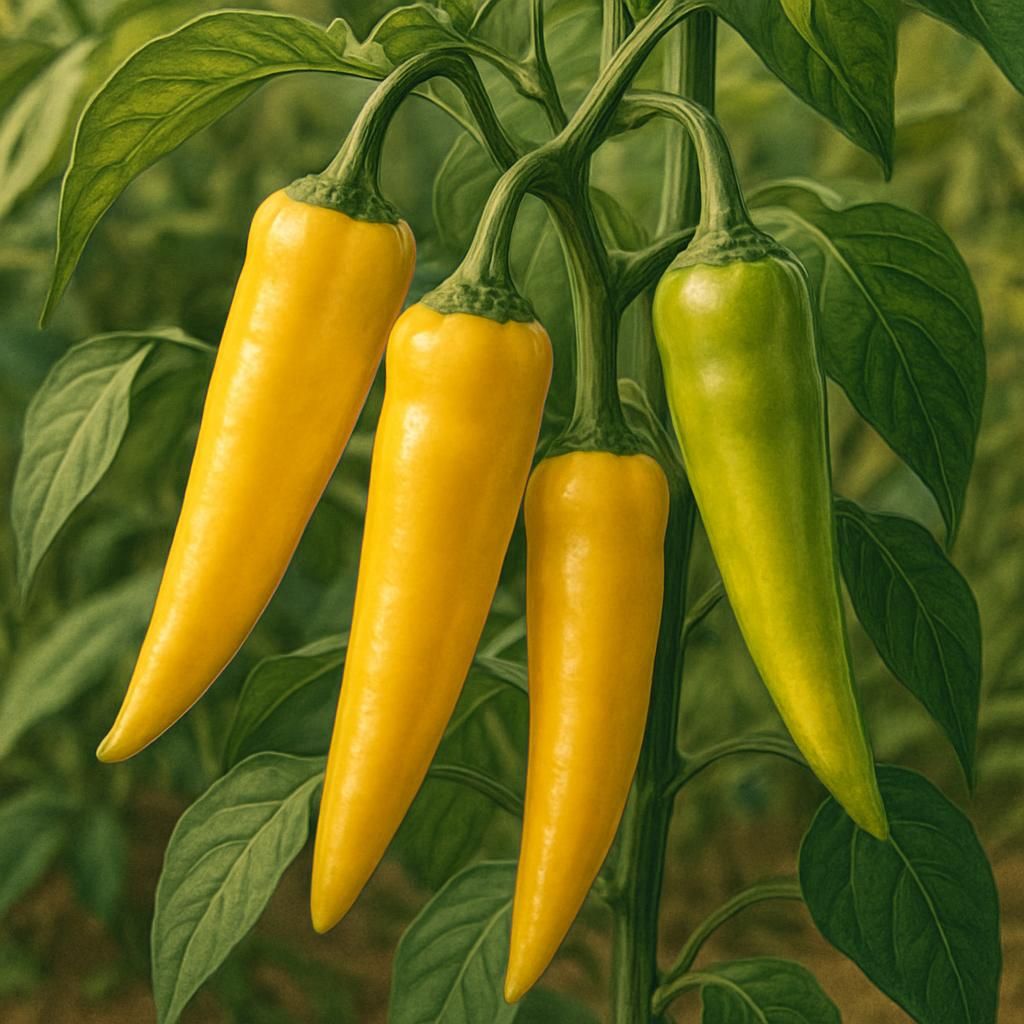
Introduction to Banana Pepper (Hot)
Banana peppers, particularly the hot variant, are renowned for their piquant flavor and versatility in numerous dishes. Whether enjoying them raw, fried, or pickled, their mild heat adds a pleasant zing without overwhelming the palate. These peppers are a member of the Capsicum annuum family, sharing lineage with both bell peppers and hotter chili varieties.
Botanical Profile of Banana Pepper (Hot)
The banana pepper, a cultivar of Capsicum annuum, is characterized by its elongated, banana-like shape and bright yellow to orange hue at maturity. While the Scoville ratings for banana peppers can vary significantly, hot banana peppers typically range from 5,000 to 10,000 Scoville Heat Units.
Soil, pH, and Climate Requirements for Banana Pepper (Hot)
To thrive, hot banana peppers demand specific soil, pH, and climate conditions that mirror their native environment.
| Aspect | Ideal Condition |
|---|---|
| Soil Type | Well-draining, sandy loam |
| Soil pH | 6.0 - 6.8 |
| Climate | Warm, temperate |
| Temperature | 70°F - 85°F (21°C - 30°C) |
Step-by-Step Planting & Propagation
- Seed Starting: Begin indoors 8-10 weeks before the last frost date. Use a seed starting mix and maintain a warm temperature of around 70-80°F.
- Transplanting: Harden seedlings off for a week before transplanting outdoors after the last frost. Space plants 18-24 inches apart.
- Direct Sowing: In warmer climates, sow seeds directly once the soil warms to at least 70°F.
Care & Maintenance regimes for Banana Pepper (Hot)
Proper care is crucial to maximize yield and ensure healthy plants.
| Task | Frequency | Notes |
|---|---|---|
| Watering | Weekly (1-2 inches) | Ensure consistent moisture; avoid sogginess |
| Fertilizing | Bi-weekly | Use a balanced formula high in phosphorus |
| Pruning | As needed | Encourage air circulation and sunlight |
Pests, Diseases & Organic Management
Banana peppers are susceptible to common pests such as Aphids, Spider Mites, and Whiteflies. Employing organic management strategies is critical:
- Neem Oil: Effective against aphids and mites.
- Companion Planting: Incorporate pest-repelling plants like Marigold.
- Insecticidal Soap: Utilized for immediate infestations.
Diseases such as bacterial leaf spot and powdery mildew can affect growth. Routine inspection and maintenance of hygiene around planting areas can help prevent outbreaks.
Harvesting, Curing & Optimal Storage
Banana peppers should be harvested while firm and vibrant. Snip with scissors to avoid damaging the plant. Post-harvest, they can be kept at room temperature for several days or refrigerated for longer periods. For long-term storage, pickling is highly recommended.
Companion Planting for Banana Pepper (Hot)
Companion planting can greatly benefit banana peppers by enhancing growth and reducing pest issues. Ideal companions include:
- Tomato: Shares similar growth conditions.
- Basil: Deters pests with its aromatic properties.
- Onion: Natural pest-repelling properties.
For more on companion planting, refer to the blog post on Summer Companion Planting: 10 Organic Pairings to Boost Small Farm Resilience.