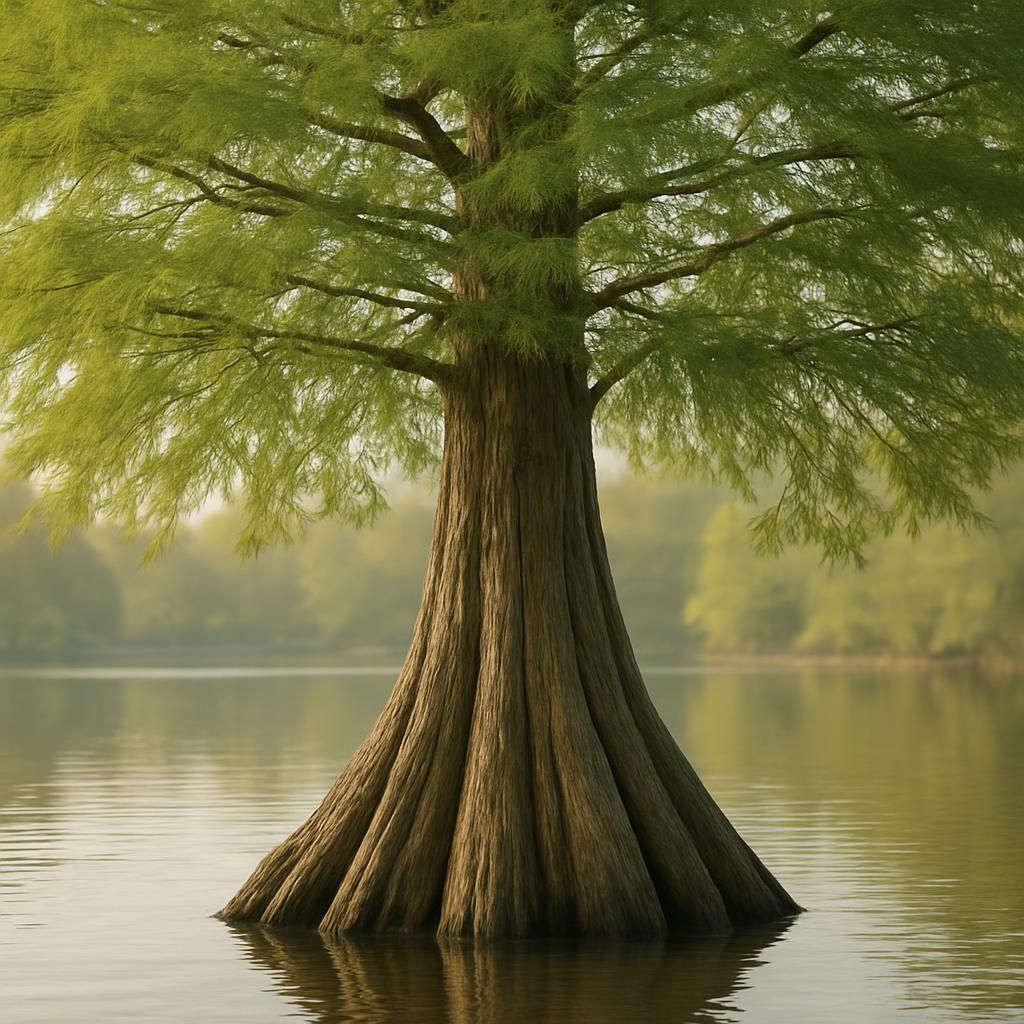
Introduction to Bald Cypress
Bald Cypress (Taxodium distichum) is one of the few conifers that sheds its needles each winter, thriving in saturated soils where most trees fail. Native to the southeastern United States, it forms majestic, buttressed trunks in swamps yet adapts readily to upland sites when irrigation is consistent. Professional growers value its decay-resistant heartwood for outdoor construction and its ecological role in stormwater management.
Botanical Profile of Bald Cypress
Taxodium distichum belongs to the cypress family (Cupressaceae). Mature specimens reach 100–120 feet with a trunk diameter of 3–6 feet. The tree produces soft, feathery, alternate leaves arranged in two flat rows along branchlets. In autumn the foliage turns copper-orange before abscising, revealing a distinctive silhouette of upright branches. Cones are globe-shaped, ¾–1 inch across, ripening from green to brown. The species is monoecious, wind-pollinated, and long-lived, often exceeding 500 years in protected bottomlands.
Soil, pH, and Climate Requirements for Bald Cypress
Bald Cypress tolerates a wide range of conditions but performs best in deep, fertile soils with reliable moisture.
| Parameter | Ideal Range | Notes |
|---|---|---|
| Soil Type | Loam to clay loam, high organic matter | Avoid compacted or saline soils |
| Soil pH | 5.5–7.0 | Tolerates 4.5–8.0 but growth slows outside ideal |
| Drainage | Poor to moderate; tolerates seasonal flooding | Thrives in 3–6 months of inundation |
| USDA Hardiness Zones | 5–10 | Protect young trees in zone 5 winters |
| Temperature Range | −20 °F to 105 °F | Heat tolerant once established |
| Annual Rainfall | 40–70 inches | Supplemental irrigation needed below 40 in |
Step-by-Step Planting & Propagation
- Site Selection: Choose full sun with at least six hours of direct light. Avoid power lines and structures given the tree’s mature size.
- Soil Preparation: Incorporate 2–3 inches of well-rotted compost into the top 12 inches of soil. On heavy clay, create a 3-foot-wide raised mound to improve early root development.
- Propagation: Collect ripe cones in late autumn, extract seeds, and stratify 60–90 days at 35–40 °F. Sow in early spring at ¼-inch depth; germination occurs in 30–45 days.
- Transplanting: Plant bare-root or container stock in early spring before bud break. Space 20–30 feet apart for timber stands or 35–50 feet for specimen trees.
- Initial Watering: Provide 1 inch of water weekly for the first two growing seasons to encourage deep rooting.
Care & Maintenance regimes for Bald Cypress
Consistent moisture and minimal intervention produce the healthiest specimens.
| Task | Schedule | Details |
|---|---|---|
| Watering | Weeks 1–8 after planting: 2× weekly | Deep soak to 12 inches; reduce to monthly once established |
| Fertilizer | Early spring, year 2 onward | Apply ½ lb 10-10-10 per inch of trunk diameter; skip if growth exceeds 12 in/year |
| Mulching | Renew every spring | 3–4 inch layer of pine bark extending to drip line, keep 6 in from trunk |
| Pruning | Dormant season (Dec–Feb) | Remove only dead, diseased, or crossing branches; avoid topping |
| Pest Monitoring | Monthly May–September | Scout for spider mites and bagworms |
Pests, Diseases & Organic Management
Bald Cypress is relatively pest-resistant but can suffer occasional attacks. Bagworm larvae defoliate branch tips; hand-pick or apply Bacillus thuringiensis (Bt) in early summer. Spider mites cause stippling during drought—mitigate with overhead irrigation and predatory mites. Phytophthora root rot is rare but occurs in poorly drained, over-irrigated containers; improve drainage and apply beneficial Trichoderma. Maintain biodiversity by planting clover ground covers to support predatory insects.
Harvesting, Curing & Optimal Storage
Timber harvest typically occurs at 40–60 years when heartwood diameter exceeds 18 inches. Fell during winter dormancy to minimize sap stain. Immediately limb and buck logs to length. Air-dry 1-inch-thick boards for 12–18 months under cover with good airflow until moisture content reaches 12–15 %. Store finished lumber indoors on stickers, protected from direct sun and insect infestation.
Companion Planting for Bald Cypress
In wetland restoration, pair Bald Cypress with rice and cattails to stabilize saturated soils and enhance biodiversity. Upland plantings benefit from understory thyme and yarrow, which attract beneficial insects and suppress weeds. Avoid shallow-rooted competitors such as maple within 15 feet of the trunk to prevent moisture competition.