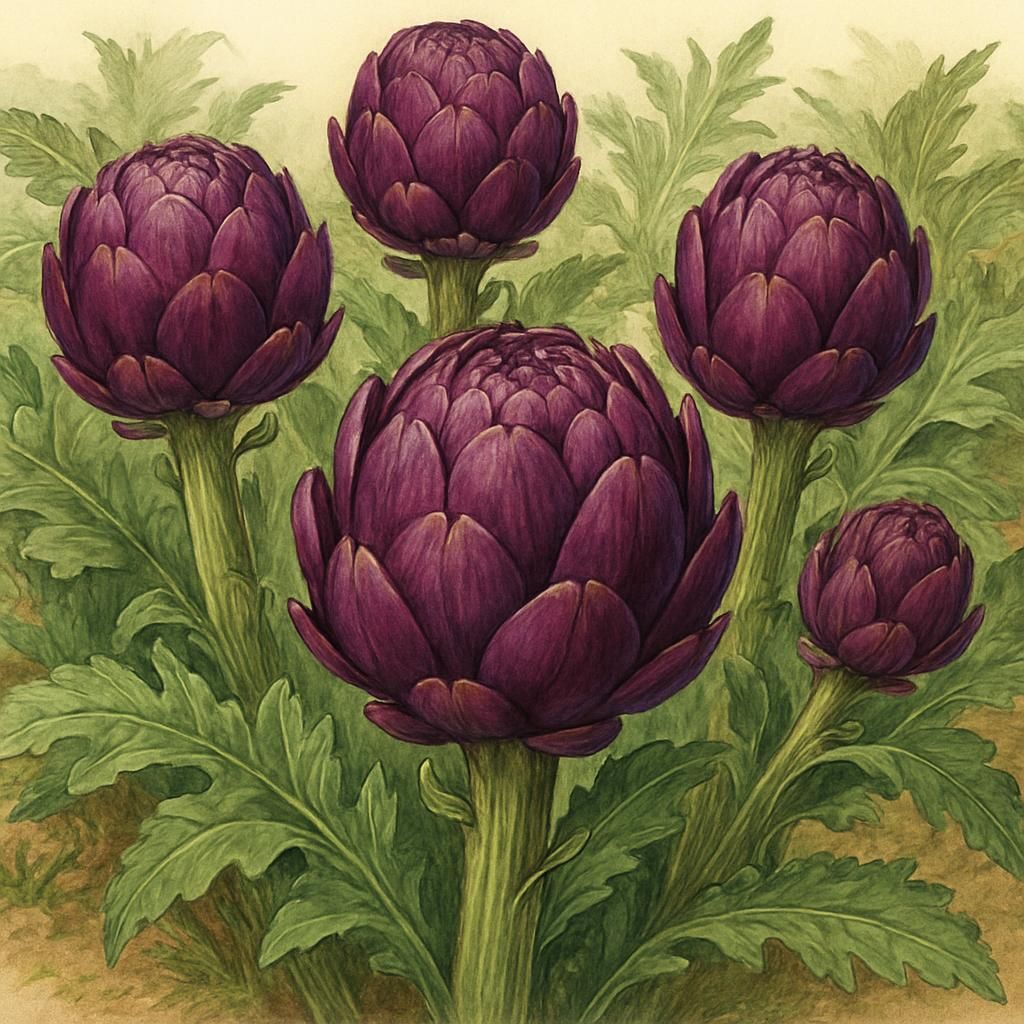
Introduction to Artichoke (Violetta di Chioggia)
Artichoke (Violetta di Chioggia) is a heirloom variety renowned for its exquisite purple hue and succulent taste. Originating from the Chioggia region of Italy, this variety stands out for both its aesthetic and culinary appeal. Farmers and home gardeners alike value it for its robust flavor and striking appearance. Known scientifically as Cynara scolymus, artichokes are part of the daisy family, making them relatives of other Mediterranean flowers like sunflowers and marigolds.
Botanical Profile of Artichoke (Violetta di Chioggia)
Artichokes are thistle-like perennials characterized by their flowering buds, which are harvested before they bloom. The Violetta di Chioggia variety boasts a unique purple shade that matures into a tender heart. This plant can grow up to 1.5 meters in height and 1 meter in diameter, featuring silvery-green leaves and thorny bracts. It thrives within USDA hardiness zones 7 to 11, preferring well-drained soil and full sun exposure.
Soil, pH, and Climate Requirements for Artichoke (Violetta di Chioggia)
This variety demands specific growing conditions to flourish. The ideal soil conditions, pH levels, and climate factors are critical for maximizing yield and quality.
| Factor | Ideal Condition |
|---|---|
| Soil Type | Well-drained, sandy loam |
| Soil pH | 6.5 - 7.5 |
| Temperature | 60-65°F (15-18°C) |
| Sun Exposure | Full Sun |
| Precipitation | Moderate, with good drainage |
Step-by-Step Planting & Propagation
- Site Selection: Choose a plot with full sun and well-drained soil.
- Soil Preparation: Enrich the soil with organic matter and ensure a pH of 6.5 to 7.5.
- Propagation: Use seeds or root divisions. Seeds should be started indoors 8-10 weeks before the last frost.
- Transplanting: After the danger of frost has passed, transplant seedlings outdoors, maintaining a spacing of about 4 feet apart.
- Watering: Establish a consistent watering schedule, ensuring the soil remains moist but not waterlogged.
Care & Maintenance Regimes for Artichoke (Violetta di Chioggia)
Proper care and maintenance are essential to ensure healthy growth and prolific yields.
| Task | Frequency |
|---|---|
| Watering | Weekly, approx 1-1.5 inches |
| Fertilizing | Every 6-8 weeks with 10-10-10 |
| Pruning | Annually post-harvest |
Pests, Diseases & Organic Management
Artichokes are susceptible to several pests and diseases. Common issues include attacks by Artichoke Plume Moth, Spider Mites, and Powdery Mildew. Implementing organic management strategies, such as introducing natural predators and utilizing neem oil, can mitigate these issues.
Harvesting, Curing & Optimal Storage
Artichokes are typically ready for harvest in late spring to early summer. Cut the bud with a sharp knife when the leaves are still tightly closed. After harvesting, store artichokes in a cool environment, ideally between 32-34°F (0-1°C), with high humidity to maintain freshness for up to 2 weeks.
Companion Planting for Artichoke (Violetta di Chioggia)
Artichokes grow well when paired with crops like Beans, Peas, and Sunflowers. These companions can help deter pests, improve soil health, and foster a healthier growing environment. To further optimize your garden, consult our guide on Summer Companion Planting: 10 Organic Pairings to Boost Small Farm Resilience.
For comprehensive information, check out the Artichoke Wikipedia Page.