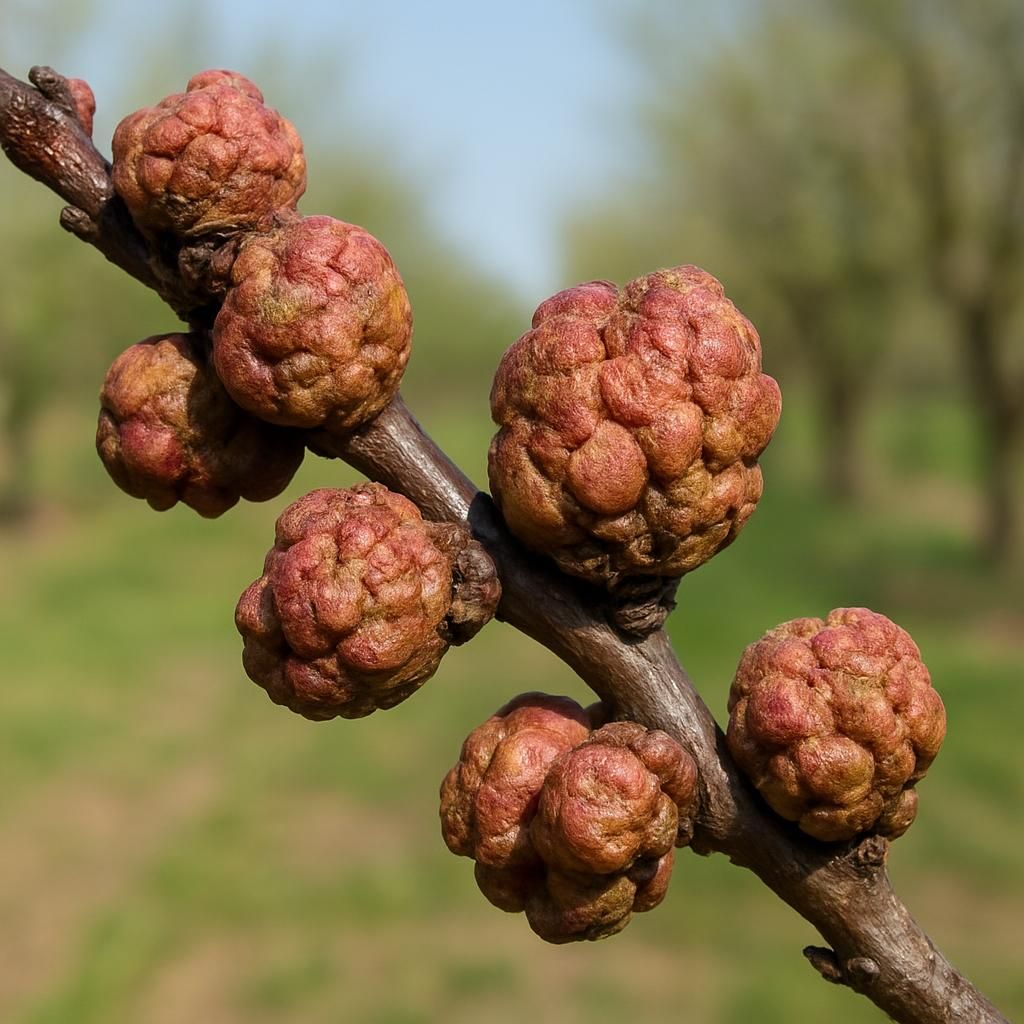
Introduction to Apricot Bud Gall Mite
The Apricot Bud Gall Mite (Acalitus phloeocoptes) is a specialized eriophyid mite that targets stone fruit trees, particularly apricots. These microscopic pests invade dormant buds during late winter and early spring, feeding on internal tissues and inducing the formation of swollen, deformed galls. Over time, heavily infested trees produce fewer flowers and fruits, resulting in substantial economic losses for growers. Effective long-term control requires a combination of cultural practices, monitoring, and timely interventions.
Botanical Profile of Apricot Bud Gall Mite
Acalitus phloeocoptes belongs to the family Eriophyidae and measures approximately 0.2 mm in length. The mite possesses two pairs of legs and a worm-like body adapted for living within plant tissues. Females overwinter inside buds and begin migrating to new growth as temperatures rise in spring. Their feeding stimulates abnormal cell proliferation, creating characteristic galls that protect subsequent generations. The species is highly host-specific to Prunus armeniaca and closely related stone fruits.
Soil, pH, and Climate Requirements for Apricot Bud Gall Mite
While the mite itself does not grow in soil, orchard conditions strongly influence its life cycle and population dynamics. Apricot trees thrive in well-drained loamy soils with moderate fertility. Soil pH should be maintained between 6.0 and 7.5 to optimize tree health and reduce stress that can make trees more susceptible to mite damage.
| Parameter | Ideal Range | Notes |
|---|---|---|
| Soil Type | Sandy loam to loam | Excellent drainage prevents root stress |
| Soil pH | 6.0 – 7.5 | Slightly acidic to neutral |
| Temperature Range | 15–28 °C daytime | Mild winters favor mite survival |
| Annual Rainfall | 400–700 mm | Supplemental irrigation in dry periods |
| Relative Humidity | 40–60 % | Lower humidity reduces mite spread |
| Elevation | 200–1200 m | Good air drainage reduces disease pressure |
Step-by-Step Planting & Propagation
- Select certified disease-free apricot nursery stock from reputable suppliers. 2. Choose a planting site with full sun exposure and protection from strong winds. 3. Dig planting holes twice the width of the root ball and amend with compost if soil is low in organic matter. 4. Space trees 4–5 meters apart in rows 5–6 meters wide to allow adequate airflow. 5. Plant at the same depth as the nursery container, backfill, and water thoroughly. 6. Apply a 5–8 cm layer of organic mulch around the base, keeping it 10 cm away from the trunk. 7. Stake young trees if necessary and install drip irrigation lines. 8. Monitor buds for early signs of gall formation during the first dormant season.
Care & Maintenance regimes for Apricot Bud Gall Mite
Consistent cultural care strengthens tree resistance and reduces mite pressure. Focus on balanced nutrition, proper pruning, and irrigation scheduling to maintain vigorous growth.
| Season | Watering Schedule | Fertilizer Application | Pruning Schedule |
|---|---|---|---|
| Spring | 25–40 mm per week via drip | Apply balanced NPK (10-10-10) at bud break | Remove dead or crossing branches |
| Summer | 30–50 mm per week; increase in heat | Light potassium boost post-harvest | Light summer pruning for airflow |
| Autumn | Reduce to 15–20 mm per week | Compost tea or aged manure | Remove water sprouts and suckers |
| Winter | Minimal; ensure soil moisture | None; apply dormant oil for mite control | Dormant pruning to open canopy |
Pests, Diseases & Organic Management
The Apricot Bud Gall Mite is often accompanied by secondary issues such as Aphids and Powdery mildew. Regular scouting during dormancy is essential. Apply dormant horticultural oil in late winter to smother overwintering mites. Introduce predatory mites such as Neoseiulus californicus where populations are established. Remove and destroy severely galled buds during dormant pruning. Maintain orchard sanitation by clearing fallen leaves and debris that can harbor mites. Avoid excessive nitrogen fertilization, which promotes succulent growth attractive to pests.
Harvesting, Curing & Optimal Storage
Harvest apricots when they reach full color and yield slightly to gentle pressure. Pick fruit in the cool morning hours to preserve quality. Sort and remove any damaged or mite-affected fruit immediately. Cool fruit rapidly to 0–2 °C within four hours of harvest. Store at 90–95 % relative humidity for up to two weeks. For longer storage, consider controlled atmosphere conditions or quick-freezing after pitting. Proper post-harvest handling minimizes secondary infections and maintains market value.
Companion Planting for Apricot Bud Gall Mite
Strategic companion planting can deter mite populations and improve overall orchard biodiversity. Interplant rows with Garlic and Onion to repel eriophyid mites through sulfur compounds. Include Nasturtium as a trap crop that attracts beneficial predatory insects. Understory plantings of Clover improve soil nitrogen and support beneficial mite predators. Avoid planting apricots near Peach or Plum orchards without strict quarantine measures, as these hosts can serve as reservoirs for the mite.