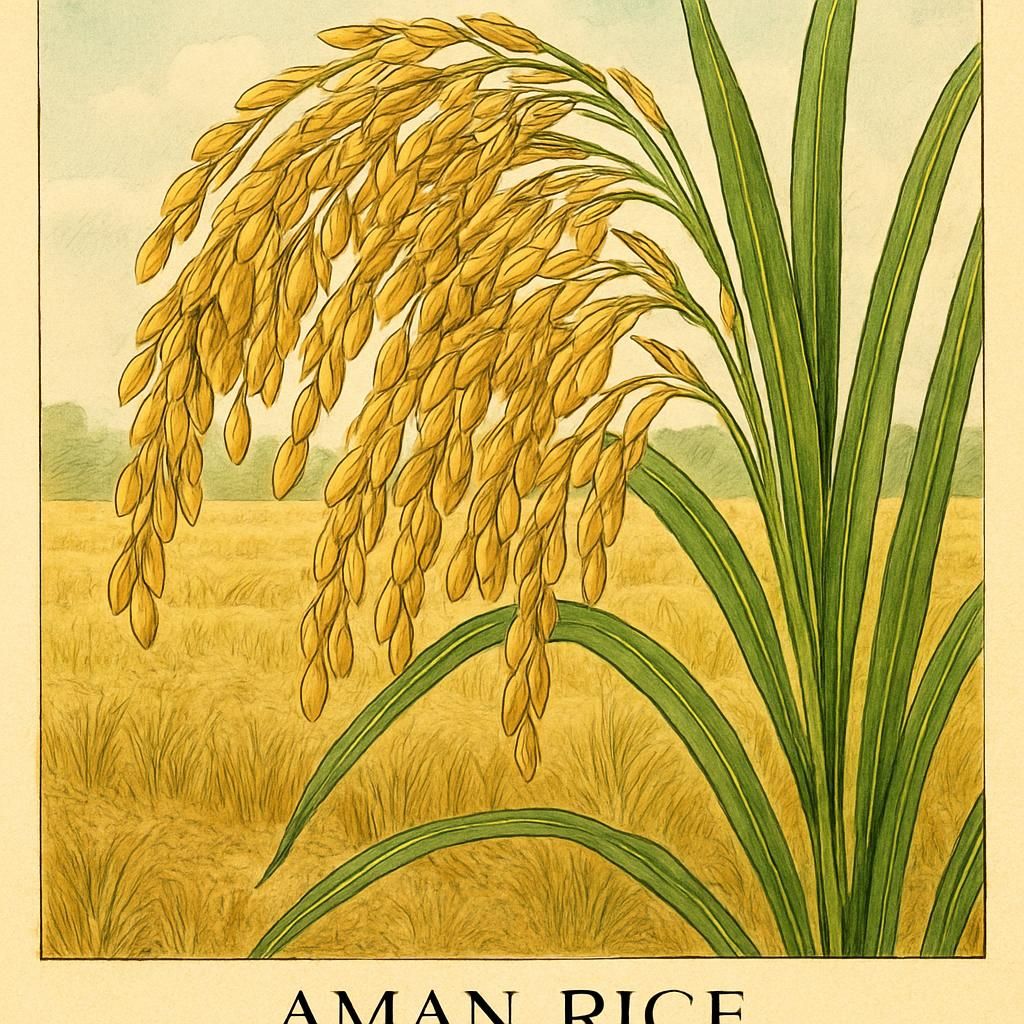
Introduction to Aman Rice (Nizershail)
Aman Rice, specifically the Nizershail variant, is a widely valued rice crop in Southeast Asia, particularly in Bangladesh. Known for its fine quality and aromatic essence, Nizershail rice holds a special place in traditional Bengali cuisine. This variety is cultivated during the monsoon season, which aligns with the natural flood cycles of the region, making it a sustainable choice for local farmers.
Botanical Profile of Aman Rice (Nizershail)
Aman rice pertains to the species Oryza sativa, which is categorized under the cereals or grain category. Nizershail is a traditional local variety known for its long grains and fragrance. Typically, it can grow to a height of approximately 1-1.5 meters and matures in about 150-160 days.
Soil, pH, and Climate Requirements for Aman Rice (Nizershail)
Successful cultivation of Nizershail rice depends on specific soil and climate conditions. Here is a detailed table of these ideal conditions:
| Condition | Requirement |
|---|---|
| Soil Type | Clay-loam, Silty |
| Soil pH | 5.5 - 6.5 |
| Temperature (°C) | 25 - 35 |
| Rainfall Requirement | 1500mm - 3000mm/year |
| Altitude | 0 - 1000 meters |
Step-by-Step Planting & Propagation
- Seed Selection: Choose high-quality Nizershail seeds from a reliable source to ensure genetic authenticity and high yield potential.
- Field Preparation: Plough the fields properly to break up clods and promote aeration. Level the field for uniform water distribution.
- Sowing: The broadcast method is commonly used for direct seeding; however, transplanting can also be adopted if precision and supervision are preferred.
- Spacing: Maintain a row spacing of 20-30 cm between plants to promote optimal growth and minimize pest attacks.
- Water Management: Ensure adequate water supply during the critical phases of germination, flowering, and grain filling.
Care & Maintenance regimes for Aman Rice (Nizershail)
Regular care and maintenance are crucial for maximizing the yield of Nizershail rice. Use the following schedule for an effective routine:
| Activity | Frequency |
|---|---|
| Watering | Daily during dry spells |
| Fertilizing | Start of season, mid-season |
| Pruning/Thinning | As necessary to remove diseased plants |
Pests, Diseases & Organic Management
Aman rice is susceptible to pests such as leafhoppers and diseases including blast. An integrated pest management strategy using organic methods is recommended:
- Neem oil: Regular applications can deter common pests.
- Trichoderma: Helps prevent soil-borne diseases like stem rot and can be applied during the seedling stage.
- Companion Plants: Use marigolds to naturally repel nematodes and aphids.
Harvesting, Curing & Optimal Storage
Harvesting Aman rice involves:
- Timing: Wait until 80% of the grains have turned golden yellow.
- Curing: Post-harvest, drying must be conducted immediately to reduce grain moisture content to about 14%.
- Storage: Store in cool, dry conditions to maintain quality, preferably in jute sacks that allow air circulation.
Companion Planting for Aman Rice (Nizershail)
Utilizing companion planting can significantly enhance the health and yield of Nizershail rice crops. Consider planting with Nasturtium and Yarrow to improve pest resistance and soil health.
For more detailed understanding on rice and its various types, you can visit the Rice Wikipedia page.
To learn more about creating a resilient small farm system, consider reading The Truth About Weather Patterns and Small Farm Resilience.