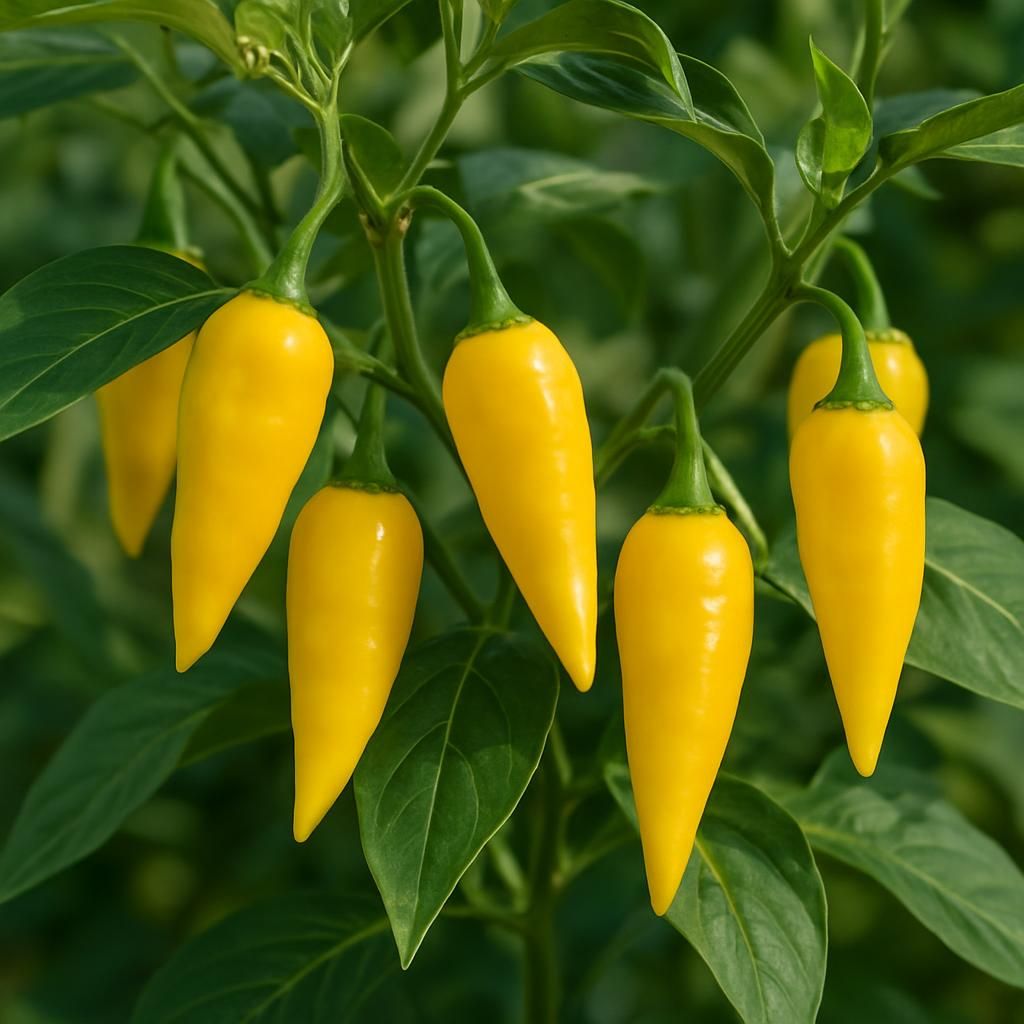
Introduction to Aji Limon (Lemon Drop)
Aji Limon (Lemon Drop) is a distinctive member of the Capsicum baccatum species originating in the Andean valleys of Peru. The small, elongated, golden-yellow pods deliver a bright, citrus-forward flavor with a clean lemon zest note and a moderate Scoville rating of 15,000–30,000. Farmers and chefs value the pepper for both fresh salsas and fermented hot sauces. The plants are vigorous, productive, and relatively disease-resistant when grown under optimal conditions.
Botanical Profile of Aji Limon (Lemon Drop)
Aji Limon belongs to the Solanaceae family and exhibits the classic baccatum growth habit: tall, upright bushes reaching 90–120 cm with multiple branching stems. Leaves are lanceolate, medium-green, and slightly pubescent. Flowers are small, creamy-white with yellow-green anthers. Fruits are 5–7 cm long, conical, and taper to a sharp point; they ripen from pale green to brilliant lemon-yellow. The thin-walled pods contain 20–30 small, cream-colored seeds.
Soil, pH, and Climate Requirements for Aji Limon (Lemon Drop)
Successful production begins with well-drained, fertile soil enriched with organic matter. The crop performs best in full sun with consistent warmth and moderate humidity.
| Parameter | Ideal Range | Notes |
|---|---|---|
| Soil Type | Sandy loam to loam | High organic matter; avoid heavy clay |
| Soil pH | 6.0–6.8 | Slightly acidic to neutral |
| Temperature (day) | 24–30 °C | Optimal fruit set |
| Temperature (night) | 18–22 °C | Below 15 °C slows growth |
| Frost Tolerance | None | Protect below 10 °C |
| Sunlight | 8+ hours direct | Full sun maximizes capsaicin and flavor |
| Spacing | 45–60 cm between plants | 75–90 cm between rows |
| Growing Season | 90–110 days to maturity | From transplant to first ripe fruit |
Step-by-Step Planting & Propagation
- Start seeds indoors 8–10 weeks before the last frost date. Sow 0.5 cm deep in sterile seed-starting mix at 24–27 °C.
- Provide 16 hours of supplemental light; thin to one seedling per cell once true leaves appear.
- Harden off seedlings for 7–10 days when nighttime temperatures remain above 15 °C.
- Transplant into prepared beds or containers (minimum 10 L) after soil reaches 18 °C. Plant at the same depth as the nursery cell.
- Water immediately after transplanting and apply a light organic mulch to conserve moisture.
Care & Maintenance regimes for Aji Limon (Lemon Drop)
Consistent moisture, balanced nutrition, and strategic pruning keep plants healthy and productive throughout the long season.
| Growth Stage | Water Schedule | Fertilizer Schedule | Pruning Schedule |
|---|---|---|---|
| Transplant–Flowering | 2–3 cm/week; keep soil evenly moist | Side-dress with compost tea every 14 days | Remove lower leaves up to first branch |
| Flowering–Fruit Set | Maintain 2 cm/week; avoid overhead | Apply balanced organic 5-5-5 at 3-week intervals | Pinch first flower to encourage branching |
| Fruiting–Harvest | Reduce slightly to 1.5 cm/week | Switch to high-potassium organic fertilizer | Remove damaged or crossing branches weekly |
Pests, Diseases & Organic Management
Common threats include Aphids, Spider Mites, and Whiteflies. Monitor undersides of leaves weekly. Deploy yellow sticky traps and release beneficial insects such as lady beetles and lacewings. For fungal issues, practice crop rotation, ensure good airflow, and apply neem oil or potassium bicarbonate sprays at the first sign of Powdery Mildew.
Harvesting, Curing & Optimal Storage
Harvest pods when they reach full lemon-yellow color and firm texture, typically 90–110 days after transplant. Use clean pruners to cut stems, leaving a short calyx. For fresh use, store at 7–10 °C with 85–90 % humidity for up to two weeks. To dry, spread single-layer on screens in a warm, shaded area with good airflow until brittle (5–7 days). Store dried pods in airtight glass jars away from light; they retain flavor for 12 months. For long-term preservation, freeze whole pods or ferment into hot sauce.
Companion Planting for Aji Limon (Lemon Drop)
Pair Aji Limon with Tomato and Basil to deter pests and improve flavor. Marigold and Nasturtium provide additional pest-repellent benefits while attracting pollinators. Avoid planting near Fennel or members of the Brassica family, which can compete for nutrients or attract shared pests.