How to Master Garden Design for Beginners: Fix Common Mistakes and Create Stunning Landscapes
Introduction
Feeling like your garden looks chaotic or uninspiring? You're not alone--many beginners struggle with garden design, ending up with mismatched plants, overcrowded beds, or spaces that feel lifeless. Poor design often stems from jumping in without a plan, leading to frustration and wasted effort. The good news? With a structured approach focused on organic principles, you can transform your yard into a thriving, visually appealing oasis.
This guide breaks down why gardens fail aesthetically and functionally, then provides actionable steps to create balanced, sustainable designs. Whether you're designing a small backyard veggie patch, a pollinator-friendly border, or a lush ornamental bed, these expert tips emphasize native plants, natural mulches, and harmonious layouts. By the end, you'll have the tools to avoid pitfalls and build gardens that bloom beautifully with minimal maintenance. Expect to cover everything from site assessment to plant selection, tailored for organic gardeners.
Common Causes of Poor Garden Design
Garden design mishaps often boil down to a few repeatable errors. Recognizing these helps you sidestep them from the start.
1. Lack of Planning and Site Analysis
Many gardeners skip assessing sunlight, soil type, wind patterns, and drainage. Result? Plants die or underperform, creating patchy looks. For instance, placing sun-loving Tomato plants in shade leads to leggy growth and low yields.
2. Ignoring Scale and Proportion
Planting giants next to miniatures causes overcrowding. Tall Sunflower varieties can overshadow delicate Lettuce, stunting growth and blocking views.
3. Color and Texture Mismatches
Random plant choices lead to clashing colors or monotonous textures. A bed of all green foliage feels flat, while jarring reds and purples overwhelm the eye.
4. Neglecting Focal Points and Flow
Gardens without a central feature--like a birdbath or specimen tree--feel aimless. Poor pathways create awkward navigation, disrupting harmony.
5. Overlooking Soil and Organic Health
Synthetic shortcuts ignore soil biology. Compacted, nutrient-poor dirt fails to support roots, causing wilting and disease susceptibility.
6. Seasonal Blind Spots
Focusing on summer blooms ignores winter interest, leaving bare soil or drab sticks.
Here's a quick comparison table of common mistakes vs. ideal fixes:
| Mistake | Impact | Quick Fix Example |
|---|---|---|
| No sun map | Plant stress, low yields | Track light for 3 days |
| Random plant spacing | Overcrowding, competition | Use 12-18" for veggies like Kale |
| All same-height plants | Flat, boring view | Layer tall, medium, low growers |
| Ignoring hardscape | No structure | Add organic mulch paths |
| Synthetic fertilizers | Soil degradation | Compost amendments |
These issues compound over time, turning enthusiasm into discouragement. Addressing them organically builds resilient, eye-catching gardens.
Step-by-Step Organic Solutions for Stunning Garden Design
Follow this proven process to design gardens that wow. Each step prioritizes organic methods for health and sustainability.
Step 1: Assess Your Site (1-2 Days)
Sketch your space, noting sun exposure (full sun: 6+ hours; part shade: 4-6), soil pH (test with a kit), drainage (dig a hole; water should drain in 1-2 hours), and microclimates. Measure dimensions. For sloped areas, use terraces with logs or stones.
Step 2: Define Your Goals and Style
Decide on purpose: edible, pollinator, relaxation? Choose themes like cottage (soft curves, Nasturtium edibles), modern (clean lines, gravel mulch), or woodland (shade lovers). Budget for organics: compost ($5/bag), mulch ($4/bag).
Step 3: Create a Base Plan with Layers
Draw a scaled plan (1 inch = 5 feet). Use the "thriller-filler-spiller" rule:
- Thrillers: Tall focal points (e.g., Yarrow at 3-4 ft).
- Fillers: Mid-layer texture (e.g., Thyme herbs).
- Spillers: Trailing edges (Clover groundcover).
Incorporate curves for flow--straight lines feel rigid.
Step 4: Select Organic Plants and Companions
Prioritize natives and perennials for low maintenance. Match to conditions:
| Light/Soil | Veggie Examples | Ornamental Examples |
|---|---|---|
| Full Sun, Well-Drained | Tomato, Pepper | Sunflower, Lavender |
| Part Shade, Moist | Lettuce, Kale | Ferns, Hostas |
| Full Shade, Rich | Beets, Spinach | Clover, Moss |
Group companions: Thyme deters pests from brassicas. Space properly--e.g., 24" for mature Tomato.
Step 5: Prep Soil Organically
Till lightly or no-dig: Add 2-4" compost, aged manure. Test pH; amend with lime (acidic) or sulfur (alkaline). Mulch with straw or wood chips to retain moisture and suppress weeds.
Step 6: Install Hardscape and Pathways
Use permeable materials: gravel, flagstone, or organic bark paths. Add focal points like a compost tumbler or trellis for climbers.
Step 7: Plant and Mulch
Plant in layers: tallest back, shortest front. Water deeply post-planting. Top with 3" organic mulch.
Step 8: Add Seasonal Interest
Mix evergreens, bulbs, and succession bloomers. Winter: Bark, berries. Spring: Crocus.
Step 9: Maintain and Edit
Weekly checks: Prune, weed, feed with compost tea. Adjust annually based on performance.
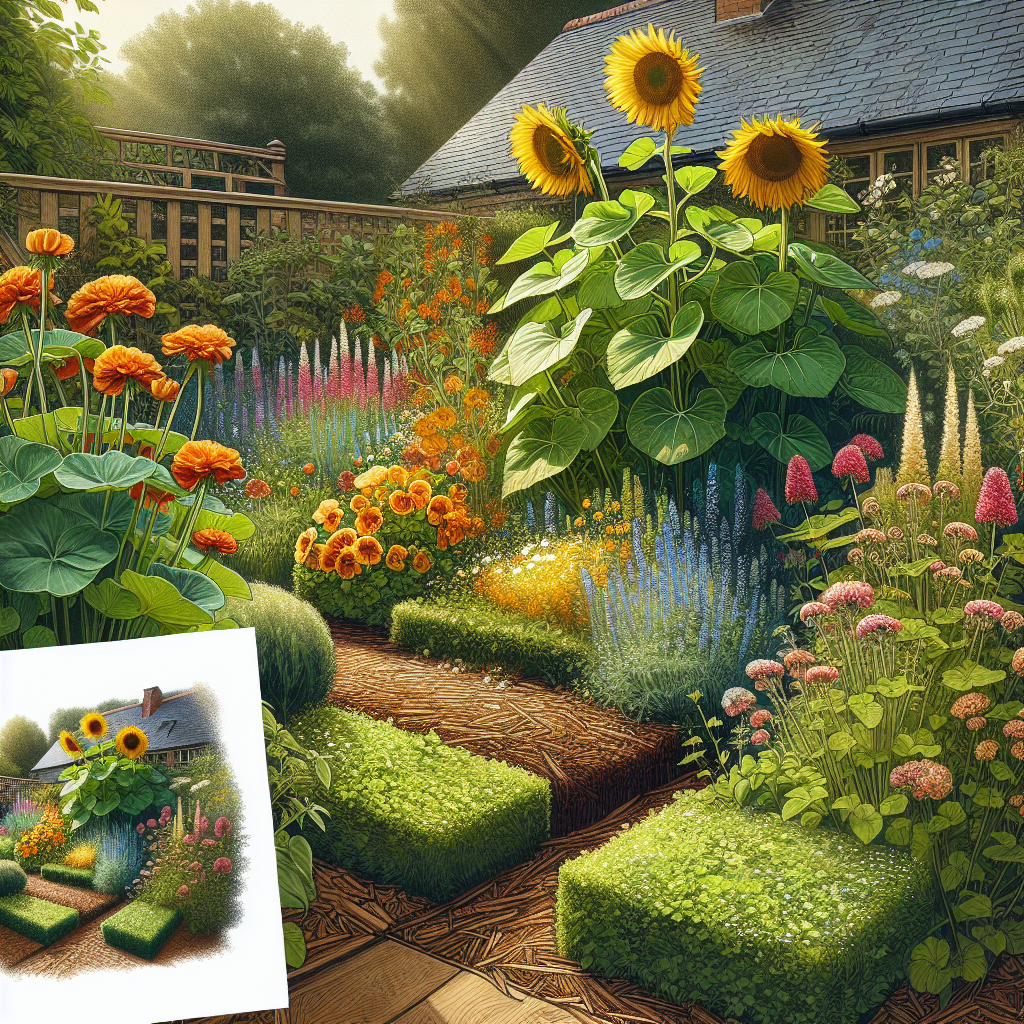
This process yields balanced designs. A 10x10 ft bed might feature back-row Sunflower, mid-Yarrow and Thyme, front Nasturtium--vibrant and productive.
Prevention Tips for Long-Term Garden Success
Annual Review: Sketch changes each season; rotate crops to prevent soil depletion.
Record Keeping: Note what works (e.g., Kale loves your clay loam).
Diversity Rule: 60% perennials, 30% annuals, 10% structures.
Water Wisely: Drip irrigation under mulch saves 50% water.
Pollinator Boost: Include Clover and natives.
Scale Models: Use pots to test layouts.
Organic designs evolve beautifully, rewarding patience with abundance. Start small--one bed--and expand confidently.
(Word count: 912)