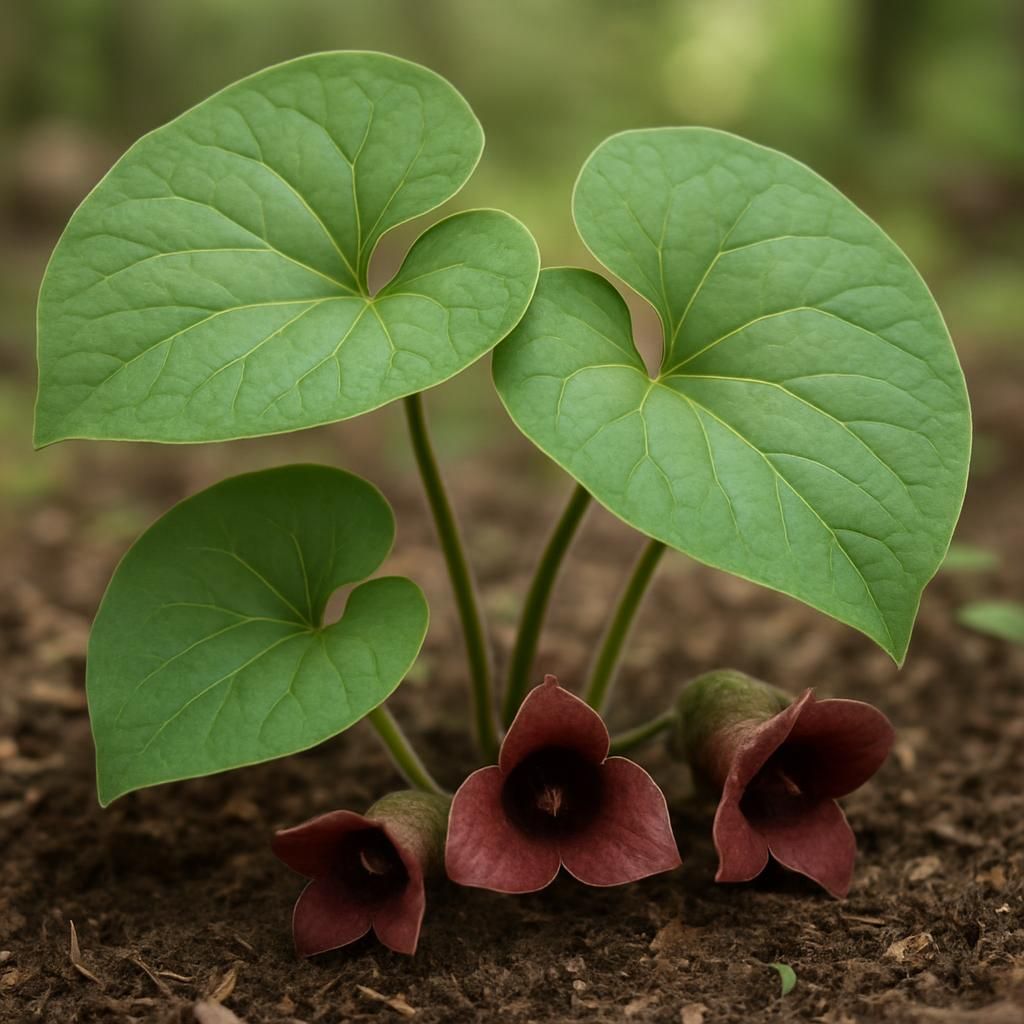
Introduction to wild ginger (Asarum canadense)
Wild ginger (Asarum canadense) is a low-growing native perennial that forms dense, evergreen-like carpets in deciduous woodlands across eastern North America. Its heart-shaped leaves and hidden maroon flowers make it a favorite for naturalized shade gardens and forest farming systems. The plant is valued for its spicy, ginger-like rhizomes that have been used traditionally for flavoring and herbal preparations.
Botanical Profile of wild ginger (Asarum canadense)
Asarum canadense belongs to the Aristolochiaceae family and spreads via creeping rhizomes that produce new shoots each spring. The plant reaches 6–12 inches in height with paired, kidney- to heart-shaped leaves up to 6 inches wide. Hidden beneath the foliage, three-lobed maroon flowers appear in early spring and are primarily pollinated by flies and beetles. The thick, aromatic rhizomes contain essential oils that give the plant its characteristic scent and flavor.
Soil, pH, and Climate Requirements for wild ginger (Asarum canadense)
Wild ginger performs best in cool, moist woodland conditions with consistent organic matter. The following table outlines ideal growing parameters:
| Parameter | Ideal Range | Notes |
|---|---|---|
| Soil Type | Loamy, rich in humus | Well-drained yet moisture-retentive |
| Soil pH | 5.5 – 6.8 | Slightly acidic to neutral |
| Temperature | 55–75 °F (13–24 °C) | Cool woodland microclimates preferred |
| USDA Hardiness | Zones 3–8 | Tolerates cold winters with snow cover |
| Light | Deep to partial shade | Avoid direct afternoon sun |
| Moisture | Consistently moist | Mulch helps retain humidity |
Step-by-Step Planting & Propagation
- Site Selection: Choose a shaded area with existing leaf litter or forest duff.
- Soil Preparation: Incorporate 2–3 inches of well-rotted leaf mold or compost into the top 6 inches of soil.
- Rhizome Division: In early spring or fall, dig established clumps and divide rhizomes into 3–4 inch sections, each with at least one growing bud.
- Planting Depth: Set rhizomes horizontally 1–2 inches deep and 8–12 inches apart.
- Watering: Water thoroughly after planting and maintain even moisture until new growth appears.
- Mulching: Apply 2 inches of shredded leaves or pine needles to conserve moisture and suppress weeds.
Care & Maintenance regimes for wild ginger (Asarum canadense)
Consistent moisture and annual organic amendments keep plantings vigorous. Use the schedule below for optimal results:
| Season | Watering Schedule | Fertilizer | Pruning/Maintenance |
|---|---|---|---|
| Spring | 1 inch per week if rainfall low | Top-dress with ½ inch compost | Remove winter-damaged leaves |
| Summer | Maintain even soil moisture | Light fish emulsion monthly | Weed by hand; avoid disturbing roots |
| Fall | Reduce to ½ inch per week | Apply 1 inch leaf mold | Cut back yellowing foliage |
| Winter | Natural precipitation sufficient | None required | Protect with extra mulch in exposed sites |
Pests, Diseases & Organic Management
Wild ginger is relatively pest-resistant but can suffer from slugs and snails in overly wet conditions. Occasional damage from leaf miners may occur. Improve air circulation and remove debris to prevent Botrytis. Organic controls include beer traps for slugs, hand-picking, and neem oil sprays for leaf miners. Avoid chemical pesticides that disrupt woodland soil biology.
Harvesting, Curing & Optimal Storage
Harvest rhizomes in early fall after the second or third growing season. Carefully lift plants, wash rhizomes, and trim foliage. Air-dry for 24–48 hours in a shaded, well-ventilated area. Store dried rhizomes in airtight glass jars away from light and heat. For fresh use, keep rhizomes in damp sphagnum moss inside a refrigerator crisper for up to three weeks.
Companion Planting for wild ginger (Asarum canadense)
Pair wild ginger with other shade-loving natives such as mayapple, trillium, and ferns to create a biodiverse woodland understory. The plant also benefits from proximity to thyme and yarrow for natural pest deterrence. Avoid planting near aggressive spreaders that may outcompete its shallow rhizomes.