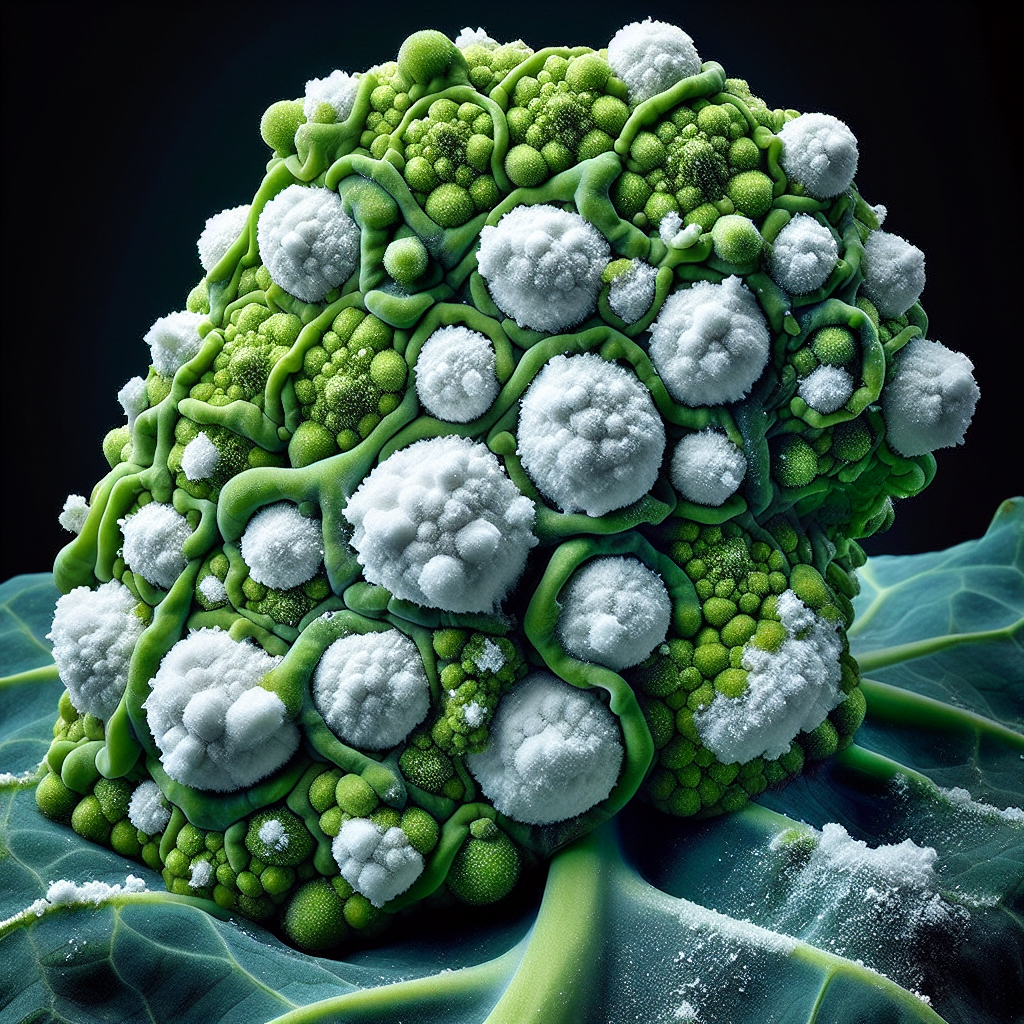
Introduction to white rust
White rust, caused by the oomycete pathogen Albugo spp. (most commonly Albugo candida), is one of the most destructive foliar diseases impacting cruciferous crops worldwide. Unlike true fungi, oomycetes like white rust are water molds that require free moisture on plant surfaces for spore germination and infection. First identified in the 19th century, white rust has become a persistent threat to commercial and small-scale agriculture, particularly in temperate regions with high humidity.
The disease manifests as chalky-white pustules on the undersides of leaves, stems, and sometimes petioles, often accompanied by leaf curling and hypertrophy. In severe cases, infected tissues become brittle, leading to premature defoliation and reduced photosynthesis. Yield losses can exceed 90% in susceptible crops like broccoli, cauliflower, and radish under optimal conditions for the pathogen. Understanding white rust is crucial for growers, as early detection and integrated management can prevent outbreaks. This guide provides professional-grade diagnostic criteria, lifecycle insights, and proven organic strategies to protect your fields. For related foliar issues, see downy mildew.
White rust spreads rapidly via wind-dispersed sporangia, surviving as oospores in crop debris or volunteer plants. It favors brassicas but also attacks beets, spinach, and ornamentals. Climate change may exacerbate its incidence with increased wet springs. Proactive scouting and sanitation form the backbone of control.
Identifying Symptoms & Damage
Accurate diagnosis begins with recognizing white rust's distinctive signs. Initial symptoms appear 5-7 days after infection as small, pale yellow spots on upper leaf surfaces. These enlarge into raised, blister-like galls or pustules filled with white sporangia on the lower surfaces—hence the name "white rust."
Affected leaves exhibit upward curling, thickening, and chlorosis around lesions. In advanced stages, pustules rupture, releasing powdery white masses that resemble rust fungi but lack reddish tones. Stems may develop cankers, leading to girdling and plant collapse. Flowers and siliques can show hypertrophy, producing malformed, enlarged structures that fail to set seed.
Damage varies by crop stage: seedlings suffer damping-off-like death, while mature plants face defoliation, reducing marketable yield by 50-100%. Differentiate from powdery mildew, which produces superficial white powder without galls, or leaf spot diseases, lacking pustules. Use a hand lens to confirm sporangia (20-40 μm diameter). Economic thresholds: remove plants if >10% foliage affected early season.
Secondary infections compound damage, weakening plants to aphids or bacterial opportunists. In storage, infected roots like radish develop soft rots. Scouting tip: Check undersides of lower leaves weekly during cool, wet weather.
Lifecycle and Progression of white rust
White rust's polycyclic lifecycle enables multiple infection cycles per season. Primary inoculum consists of thick-walled oospores surviving 2-5 years in soil or debris. These germinate in wet soil (above 10°C), producing sporangia that infect cotyledons or lower leaves.
Under moist conditions (leaf wetness >8 hours, 10-25°C), sporangia release zoospores that encyst and penetrate stomata within hours. Incubation lasts 4-10 days, yielding pustules with chain-like sporangia. These aerial sporangia spread to new hosts, completing cycles every 7-14 days.
Progression accelerates in dense canopies: early infections (seedling stage) cause systemic distortion; mid-season outbreaks defoliate; late infections scar pods. Overwintering oospores ensure recurrence without rotation. Interrupt cycles by removing debris and timing planting to avoid peak sporulation (spring/fall).
Environmental Triggers & Risk Factors
White rust thrives at 15-20°C with 90-100% relative humidity and prolonged leaf wetness. Cool nights followed by dewy mornings favor zoospore release. High nitrogen promotes succulent growth, enhancing susceptibility. Poor air circulation in dense plantings traps moisture, multiplying risk 10-fold.
Soil factors include pH 6.0-7.5 and high organic matter harboring oospores. Overhead irrigation splashes inoculum; volunteer brassicas serve as bridges. Monoculture exceeds 50% infection risk versus diverse rotations. Monitor forecasts for >12-hour wet periods—initiate protectants preemptively.
Regional hotspots: Pacific Northwest (broccoli), Midwest (cabbage), India (mustard). Climate shifts may extend ranges northward.
Organic Control & Treatment Plans
Organic management emphasizes prevention, but curative options exist. Cultural: Rotate 3-4 years away from brassicas; destroy volunteers. Space plants 12-18 inches for airflow; avoid overhead water—drip irrigate.
Resistant varieties: Select hybrids like 'Consul' broccoli or 'Snow Crown' cauliflower. For spinach, 'Tyee' resists A. candida.
Biologicals: Apply Bacillus subtilis (Serenade) or Trichoderma pre-emergence to suppress soil oospores. Compost teas with milk (1:9 dilution) boost SAR (systemic acquired resistance).
Organic fungicides: Copper octanoate (Bonide Liquid Copper) at 7-day intervals post-scout. Potassium bicarbonate for contact kill. Neem oil deters sporulation. Alternate modes to prevent resistance.
Treatment timeline: Scout weekly; apply at first yellow spots. Reapply after rain. Integrate with reflective mulches to reduce spore deposition 30%. For outbreaks, rogue infected plants; flame-weed borders. See Spring Pest Patrol: Organic AI Strategies to Shield Your Crops from Common Invaders for scouting tech.
IPM plan: Threshold 5% incidence triggers action; monitor with sticky traps for vectors.
Preventing white rust in the Future
Long-term prevention builds resilient systems. Sanitation: Tillage buries debris; solarize soil summer-fallow (kills 80% oospores). Crop rotation: Alternate with grains like wheat or corn—non-hosts starve inoculum.
Site selection: Choose well-drained fields; raised beds improve drainage 25%. Forecasting: Use models tracking leaf wetness hours. Seed treatment: Hot water (50°C, 25 min) or bio-priming eradicates surface spores.
Cover cropping: Mustard biofumigants release isothiocyanates suppressing oospores. Monitor adjacent fields—buffer zones reduce spread. Annual soil tests guide balanced fertility, avoiding excess N. Resistant cultivars + rotation yield 20-40% less incidence.
Crops Most Affected by white rust
Brassicas dominate: broccoli, cauliflower, cabbage, kale, Brussels sprouts, radish, turnip, mustard. A. candida hits Brassica spp. hardest, causing staghead in mustard (95% loss). Spinach (Albugo occidentalis) suffers leaf blistering. Beets show petiole galls.
Others: Arabidopsis, sweet alyssum, shepherd's purse (weeds bridge infections). Non-hosts include solanaceae like tomato, legumes. Global impact: $100M+ annual losses in cole crops. Prioritize in rotation planning.