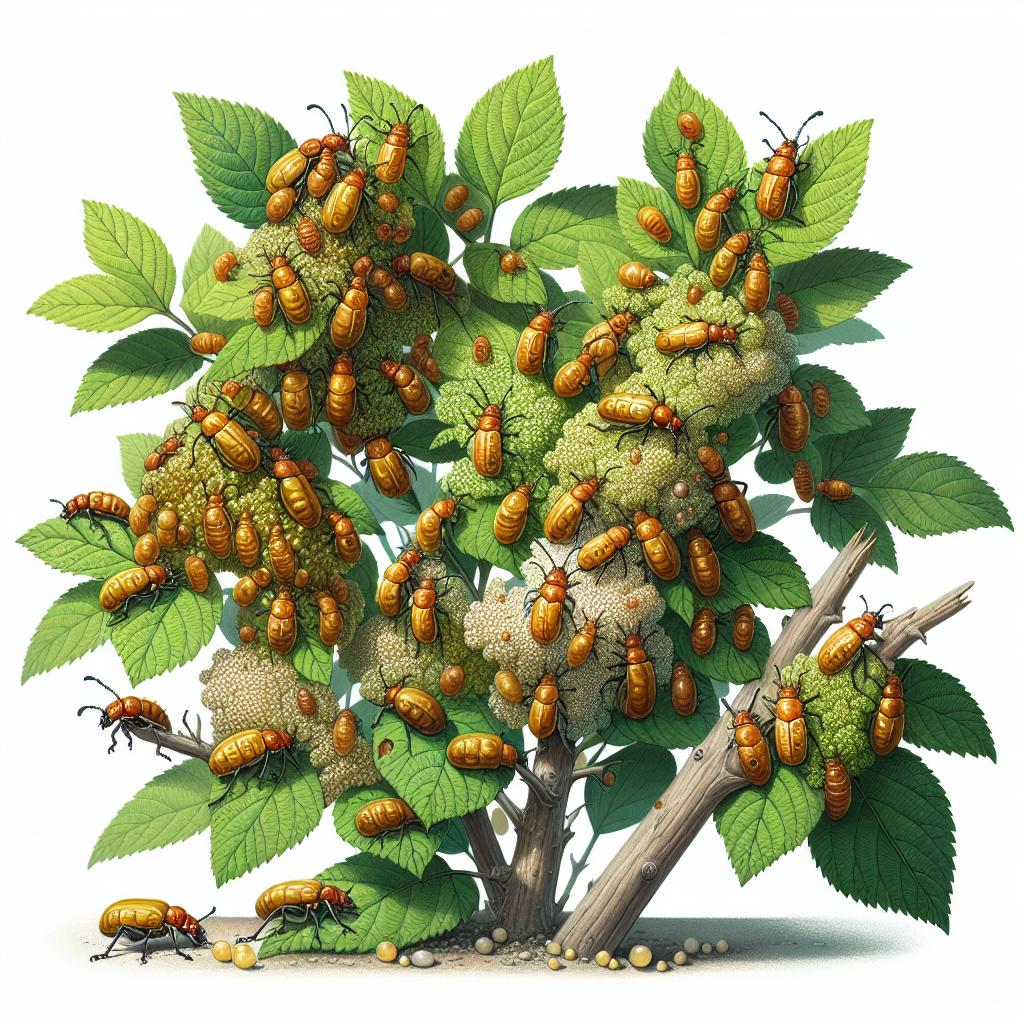
Introduction to viburnum
Viburnum beetle, scientifically known as Pyrrhocita viburni, represents one of the most significant threats to viburnum shrubs in home gardens, landscapes, and commercial nurseries. This pest has gained notoriety for its ability to rapidly defoliate plants, particularly species like arrowwood viburnum and European cranberrybush, leading to weakened growth, reduced flowering, and in severe cases, plant death. First identified in Europe, it arrived in North America around 1947 and has since spread across the United States and Canada, thriving in temperate climates.
As a professional botanist and entomologist, I've observed that viburnum beetles can complete multiple generations per year, amplifying their damage potential. Adults are chunky, yellowish-brown beetles about 4-6 mm long, while larvae are smaller, grublike creatures with a distinctive 'humpbacked' appearance. Early detection is crucial, as unchecked infestations can strip plants bare by midsummer. This guide provides definitive diagnostic tools, lifecycle insights, and proven organic management strategies to protect your viburnums effectively. For small farms integrating viburnum hedges or ornamentals, timely intervention can prevent losses exceeding 50% of plant vigor in a single season.
Understanding viburnum beetle biology is key to control. Females lay eggs in characteristic rows on twigs in late summer, hatching the following spring. This predictable pattern allows for targeted treatments. With rising interest in sustainable landscaping, organic methods are prioritized here, aligning with IPM (Integrated Pest Management) principles recommended by agricultural extensions worldwide.
Identifying Symptoms & Damage
Diagnosing viburnum beetle damage starts with visual inspection. The most obvious sign is complete leaf skeletonization, where larvae chew away all green tissue between veins, leaving only a lacy framework. This often begins at the top of the shrub and progresses downward, typically from April to June. Affected leaves turn brown and drop prematurely, giving plants a sparse, unhealthy appearance.
Look for clusters of tiny, humpbacked larvae (3-11 mm long, rusty-brown with black heads) feeding gregariously on new leaves. Adults cause similar but less severe damage in late summer, feeding on foliage and sometimes flowers. Egg masses appear as 10-30 pale yellow ovoids stacked in rows along one-year-old twigs, covered by a slightly ribbed cap that darkens over winter.
Secondary symptoms include sooty mold growing on honeydew excreted by feeding larvae, and stunted growth or dieback in heavily infested plants. Differentiate from other pests like aphids (which cause curling leaves) or leafminers (visible trails inside leaves). Use a hand lens to confirm: viburnum beetle larvae lack prolegs and move in a looping motion. Severe infestations may mimic powdery mildew due to defoliation, but close inspection reveals chew marks, not fungal growth.
Conduct weekly scouting from bud break through July. Shake branches over white paper; dislodged larvae confirm active infestation. Threshold: 10% leaf loss warrants action. For small farms, document damage with photos for trend analysis, as repeated defoliation over 2-3 years can reduce yields in fruiting viburnums by up to 70%.
Lifecycle and Progression of viburnum
The viburnum beetle lifecycle spans one year, with distinct stages optimized for viburnum exploitation. Adults emerge in July-August, feeding briefly before females oviposit 20-30 eggs per mass on smooth, one-year-old twigs. Eggs overwinter, protected by a cap, hatching in early spring (April-May) as temperatures exceed 10°C (50°F).
Larvae progress through three instars over 4-6 weeks: first-instar (1-2 mm, pale), second (4 mm, humpbacked), and third (11 mm, voracious feeders). They skeletonize leaves gregariously before dropping to pupate in soil 5-10 cm deep. Pupae remain 2-3 weeks until adults eclose. In warmer regions, a partial second generation may occur in late summer.
Progression ties to host phenology: egg hatch aligns with bud swell, larval peak with leaf expansion, adult activity with fruit set. Overwinter survival exceeds 80% in protected sites. Population booms every 3-5 years without intervention, as seen in outbreaks across the UK and eastern US. For precise timing, track degree-days (base 10°C): eggs hatch at 100 DD, larvae mature at 300 DD.
Environmental Triggers & Risk Factors
Viburnum beetles thrive in USDA zones 5-8, preferring moist, sheltered sites with dense viburnum plantings. Key triggers include mild winters (above -15°C), wet springs promoting larval survival, and stressed plants from drought or poor drainage. Monocultures amplify spread; hedges over 1m tall facilitate adult dispersal via flight (up to 500m).
Risk factors: planting susceptible natives like Viburnum dentatum near infested areas, or introducing eggs on nursery stock. Soil pH 6.0-7.0 and organic matter >5% boost host vigor, indirectly supporting pest populations. Companion crops like lilac can harbor predators, but weeds like dandelions shelter pupae. Climate change extends generations northward, with models predicting 20% range expansion by 2050.
High-risk scenarios for small farms: new viburnum borders adjacent to woodlands, or post-pruning flushes attracting egg-laying adults. Avoid planting in low-lying frost pockets, as delayed bud break desynchronizes with egg hatch.
Organic Control & Treatment Plans
Organic management emphasizes prevention and biological controls. Cultural: Prune and destroy egg masses in February-March (wear gloves; burn or bag). Handpick larvae daily during peaks—effective for <50 plants. For larger scales, use a strong water jet to dislodge larvae into soapy buckets.
Biological: Introduce nematodes (Heterorhabditis bacteriophora) in late May (soil drench, 10^9/m²); 70-90% larval mortality. Encourage birds like chickadees with nest boxes. Parasitic wasps (Pratylenchus spp.) target eggs naturally.
Organic Sprays: Apply neem oil (0.5-2%) at egg hatch and larval instars (7-10 day intervals, 3 apps). Spinosad (OMRI-listed) at 0.2 ml/L targets larvae effectively (80% control). Horticultural oil smothers eggs in dormant season. Rotate modes to prevent resistance. Check Spring Pest Patrol: Organic AI Strategies to Shield Your Crops from Common Invaders for timing tips.
Treatment Plan: 1) Scout weekly. 2) Prune eggs pre-hatch. 3) Nematodes + spinosad at 100 DD. 4) Neem through June. 5) Monitor adults July. Expect 85% reduction first year, 95% by year 2. Avoid broad-spectrum sprays to preserve ladybugs.
Preventing viburnum in the Future
Long-term prevention hinges on resistant varieties (V. rhytidophyllum, V. carlesii) and diversification. Plant in full sun with good airflow; space 1.5m apart. Mulch to 5cm (not against trunks) to deter pupae. Annual dormant oil + pruning reduces eggs by 90%.
IPM blueprint: Monitor with pheromone traps for adults. Soil solarization in off-season kills pupae. Interplant with marigolds to repel via nematodes. For small farms, rotate viburnum sites every 5 years. Quarantine new plants 2 years. Check Soil Health Mastery: 5 Proven Strategies for Small Farms to Build Fertile Ground Without Breaking the Bank for resilience building.
Crops Most Affected by viburnum
Primarily viburnum shrubs (Viburnum opulus, V. trilobum, V. dentatum), used ornamentally and for fruit. Ornamental nurseries suffer 30-50% losses; fruiting types like highbush cranberry yield drops 60%. Occasionally attacks elderberry or arrowwood, but viburnum-specific. Landscapes with mixed hedges see secondary spread to snowball bush. Commercial impact: $5M+ annual US losses.