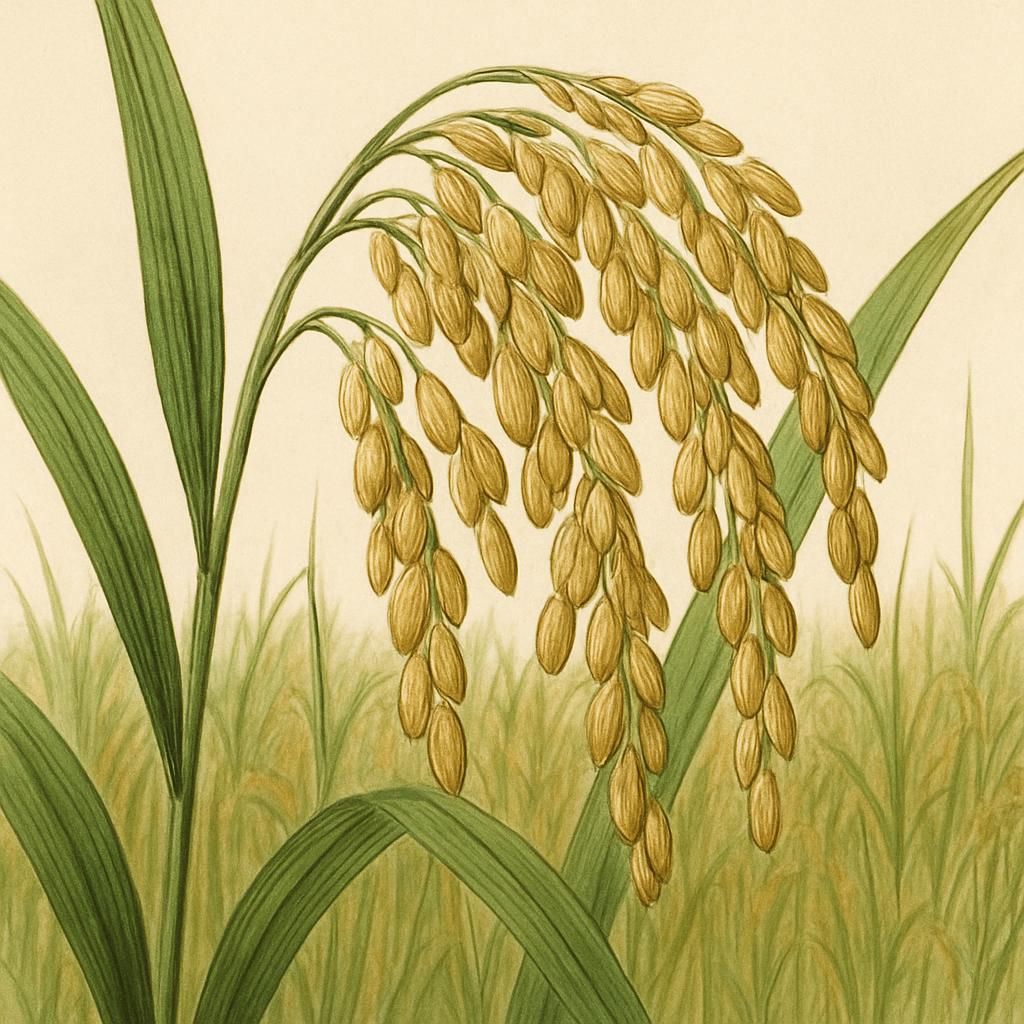
Introduction to Viand Rice
Viand Rice is a distinct variety primarily grown for its resilience and high yield. Known for its adaptability, it is suitable for environments with water abundance, making it an ideal choice for rice cultivation in tropical and subtropical regions.
Botanical Profile of Viand Rice
Viand Rice belongs to the species Oryza sativa, a significant staple across the globe. Characterized by its elongated grain, it thrives under flooded conditions, supporting a symbiotic relationship with aquatic organisms that facilitate nutrient availability.
Soil, pH, and Climate Requirements for Viand Rice
Viand Rice requires specific environmental conditions to flourish optimally.
| Condition | Ideal Range |
|---|---|
| Soil Type | Loamy, silty loam, or clayey |
| Soil pH | 5.5 to 7.0 |
| Temperature | 22°C to 33°C (72°F to 91°F) |
| Annual Rainfall | 1,000 to 2,000 mm |
| Humidity | Above 60% |
Step-by-Step Planting & Propagation
- Seed Selection: Choose high-quality seeds from certified suppliers to ensure uniform growth and disease resistance.
- Soil Preparation: Plow the field deeply and level it to prevent waterlogging or drought stress in specific field areas.
- Sowing Time: Plant seeds at the onset of the wet season to benefit from natural irrigation.
- Direct Seeding: Broadcast pre-soaked seeds evenly to promote consistent germination.
- Transplanting: Alternatively, start seeds in a nursery bed and transplant seedlings when they reach 15 cm (6 inches) in height.
Care & Maintenance regimes for Viand Rice
Proper care and maintenance are crucial for maximum yield.
| Regime | Frequency | Notes |
|---|---|---|
| Irrigation | Weekly | Prefer flooded fields to immerse roots |
| Fertilization | Bi-monthly | Use NPK ratios like 15-15-15 or 16-16-18 |
| Weeding | Every 2-3 weeks | Ensure fields are weed-free for optimal growth |
| Pest Control | As required | Monitor for Spider Mites |
Pests, Diseases & Organic Management
Viand Rice is susceptible to several pests and diseases. Key ones include:
- Spider Mites: These pests thrive in warmer climates. Use natural predatory mites as a biological control.
- Blast: A fungal disease managed by using resistant varieties and proper field sanitation.
For sustainable practices, integrating crop rotations with legumes and organic mulching can enhance soil health and suppress pest populations, as discussed in Crop Diseases Under the Microscope: 9 Organic Fixes for Small Farm Resilience.
Harvesting, Curing & Optimal Storage
- Harvesting: Done when grains reach 20-24% moisture content.
- Threshing: Use mechanical threshers to separate grain from the chaff efficiently.
- Curing: Dry harvested grains under the sun to achieve 14% moisture content, which is optimal for storage.
- Storage: Store in clean, airtight containers to prevent pest infestations.
Companion Planting for Viand Rice
Companion planting with crops like Legumes and Nasturtium can boost soil fertility through nitrogen fixation and offer pest control. Additionally, refer to insights in Summer Companion Planting: 10 Organic Pairings to Boost Small Farm Resilience for effective strategies.