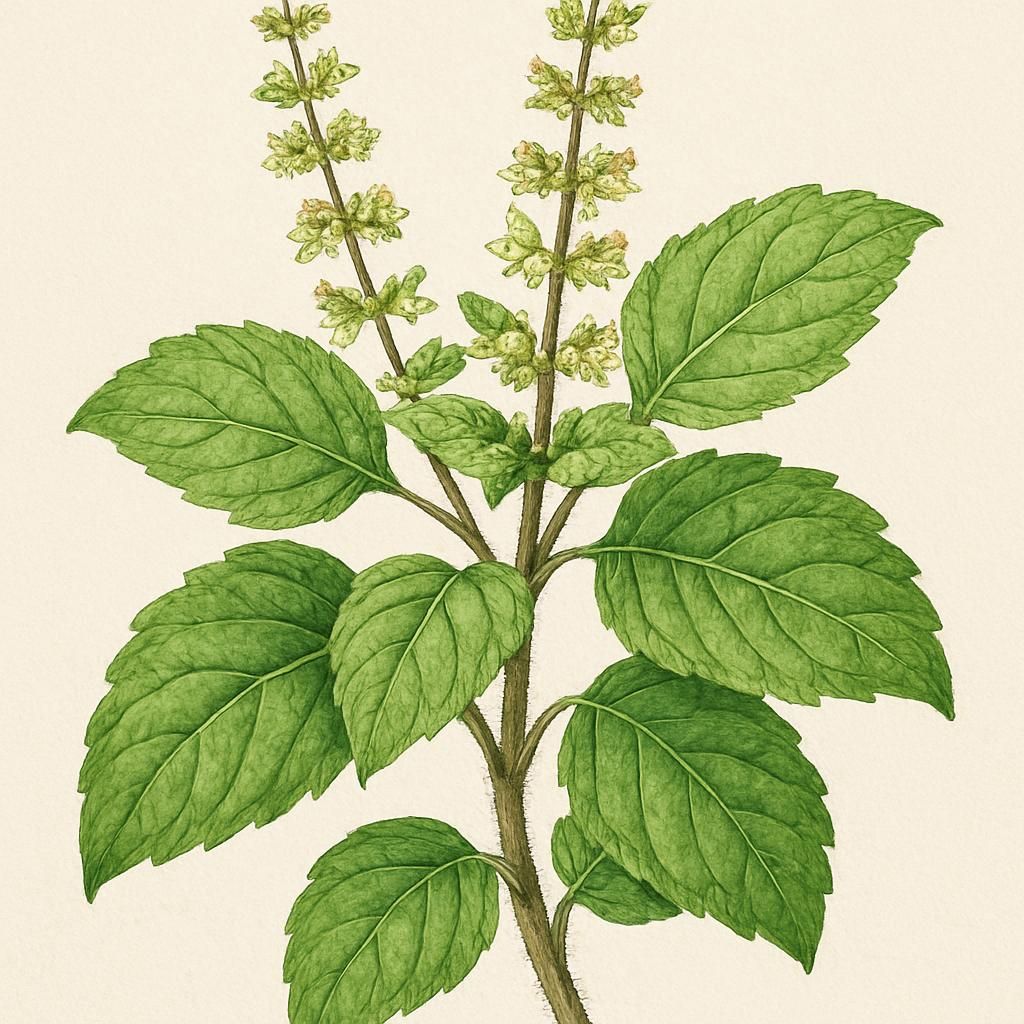
Introduction to Tulsi (Vana)
Tulsi, commonly referred to as Vana Tulsi or Wild Basil, is an indigenous herb that holds a special place in Ayurveda for its therapeutic properties. Known for its aromatic leaves, Vana Tulsi is not only cultivated for its health benefits but also as a sacred plant in many Hindu households.
Botanical Profile of Tulsi (Vana)
Scientific Name: Ocimum gratissimum
Common Names: Vana Tulsi, Wild Basil
Family: Lamiaceae
Origin: Native to Africa and parts of India
Growth Habit: An annual or short-lived perennial shrub reaching heights of 1-2 meters.
Soil, pH, and Climate Requirements for Tulsi (Vana)
Tulsi plants are quite adaptable to various environmental conditions, but they thrive best when certain soil and climatic conditions are met. Here is a detailed overview:
| Condition | Ideal Range |
|---|---|
| Soil Type | Well-draining, sandy loam |
| pH Level | 5.5 - 7.5 |
| Temperature | 21°C - 30°C (70°F - 86°F) |
| Sunlight | Full sun |
| Water Requirement | Moderate, ensure good drainage |
Step-by-Step Planting & Propagation
- Seed Selection: Choose quality seeds from a reputable supplier.
- Soil Preparation: Ensure the soil is well-aerated and amend with organic compost.
- Sowing: Plant seeds 1/4 inch deep in trays or directly into the soil after the last frost.
- Spacing: Allow at least 18 inches between plants to ensure adequate growth space.
- Germination: Maintain soil moisture. Seeds typically germinate within 7-14 days.
- Transplanting: Transplant seedlings when they have 4-6 true leaves and the threat of frost has passed.
Care & Maintenance regimes for Tulsi (Vana)
Consistent care will ensure a healthy and bountiful Tulsi plant.
| Task | Schedule & Notes |
|---|---|
| Watering | Water weekly or when the top inch of soil feels dry. |
| Fertilizing | Apply a balanced organic fertilizer every 4-6 weeks. |
| Pruning | Prune regularly to encourage bushier growth. |
| Mulching | Use organic mulch to retain soil moisture and suppress weeds. |
Pests, Diseases & Organic Management
Tulsi is generally resilient, but it can be prone to pests and diseases like spider mites, aphids, and powdery mildew. For pest control, introduce beneficial insects and apply neem oil as needed. Ensure good air circulation to mitigate fungal infections.
Harvesting, Curing & Optimal Storage
- Harvesting: Begin harvesting leaves when the plant has plenty of foliage; regular harvesting encourages constant growth.
- Curing: Dry the leaves in a shaded, well-ventilated area to preserve their aromatic oils.
- Storage: Store dried leaves in an airtight container in a cool, dark place for maximum shelf life.
Companion Planting for Tulsi (Vana)
Tulsi serves as an excellent companion plant to tomatoes and peppers due to its pest-repellent properties. For more insights into effective companion planting, explore our resource on Summer Companion Planting: 10 Organic Pairings to Boost Small Farm Resilience.