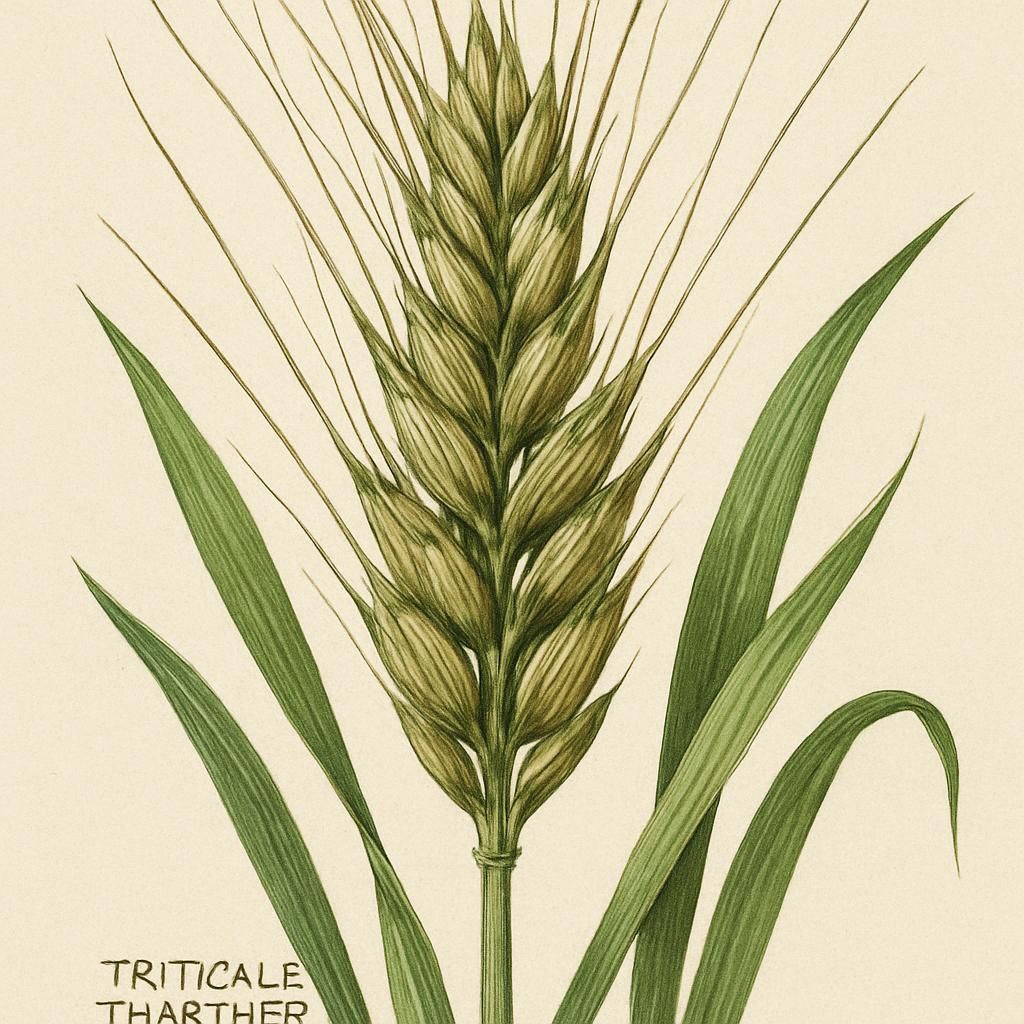
Introduction to Triticale (Thatcher)
Triticale 'Thatcher' is a dynamic hybrid cereal derived by crossing wheat (Triticum) and rye (Secale). Designed to merge the robustness of rye with the productivity of wheat, Triticale 'Thatcher' is celebrated for its impressive adaptability and resilience. As a staple crop, it's primarily cultivated for pasture, forage, and grain in climates where traditional cereals may struggle.
Botanical Profile of Triticale (Thatcher)
This cultivar of Triticale exhibits characteristics that make it distinguishable from its parental species. Growing efficiently in lesser arable conditions, Triticale 'Thatcher' produces tall plants with a strong stalk, bearing spikelets that ensure higher yields. The plant thrives in winter and spring forms, offering flexibility to farmers concerning planting schedules.
Soil, pH, and Climate Requirements for Triticale (Thatcher)
The adaptability of Triticale (Thatcher) makes it suitable for a wide range of conditions, but optimal growth is facilitated by mimicking its native environment as closely as possible.
| Attribute | Ideal Conditions |
|---|---|
| Soil Type | Loam, Sandy, Clay |
| Soil pH | 5.5 to 7.5 |
| Temperature | 5°C to 25°C |
| Rainfall | 600-1200 mm annually |
Step-by-Step Planting & Propagation
To cultivate Triticale (Thatcher) successfully, heed the following planting guidelines:**
- Seed Selection: Use certified 'Thatcher' seeds to ensure genetic purity and disease resistance.
- Soil Preparation: Test soil pH and amend accordingly. Add organic matter to improve moisture retention and fertility.
- Planting Time: Based on the region, sow in late fall for winter types or early spring for spring types.
- Sowing Depth: Plant seeds at a depth of approximately 1.5 to 2 inches.
- Row Spacing: Maintain 6 to 8 inches between rows for optimal sunlight exposure and air circulation.
Care & Maintenance Regimes for Triticale (Thatcher)
Regular maintenance will optimize Triticale yields and minimize pest invasions or disease occurrence.
| Regime | Schedule |
|---|---|
| Irrigation | Moderate, especially during flowering |
| Fertilization | Apply NPK 10-20-10 pre-sowing and at mid-season |
| Pruning | Not applicable for cereal crops |
Pests, Diseases & Organic Management
Triticale (Thatcher) faces similar threats as wheat and rye, including pests like aphids and diseases such as rusts.
- Pests: Use companion plants like nasturtium to repel common pests.
- Diseases: Rotate crops annually and apply neem oil and organic fungicides to manage fungal issues. For a detailed study on organic pest management, consider exploring Crop Diseases Under the Microscope: 9 Organic Fixes for Small Farm Resilience.
Harvesting, Curing & Optimal Storage
Harvest when grain moisture levels reach approximately 12% to 15%.
- Harvesting: Use combine harvesters adapted for cereals.
- Curing: Air dry the grains further to maintain quality during storage.
- Storage: Seal grains in moisture-proof containers. Store in a dry, cool place to prevent infestations and spoilage.
Companion Planting for Triticale (Thatcher)
Companion planting plays a pivotal role in enhancing triticale crop yield and deterring pests naturally. Suitable companions include:
- Clover: Improves soil fertility through nitrogen fixation.
- Yarrow: Attracts beneficial insects.
- Soybeans: Acts as a cover crop, suppressing weeds. For enriching insights into organic pairings, check Spring Companion Planting: 8 Organic Pairings to Maximize Small Farm Yields.