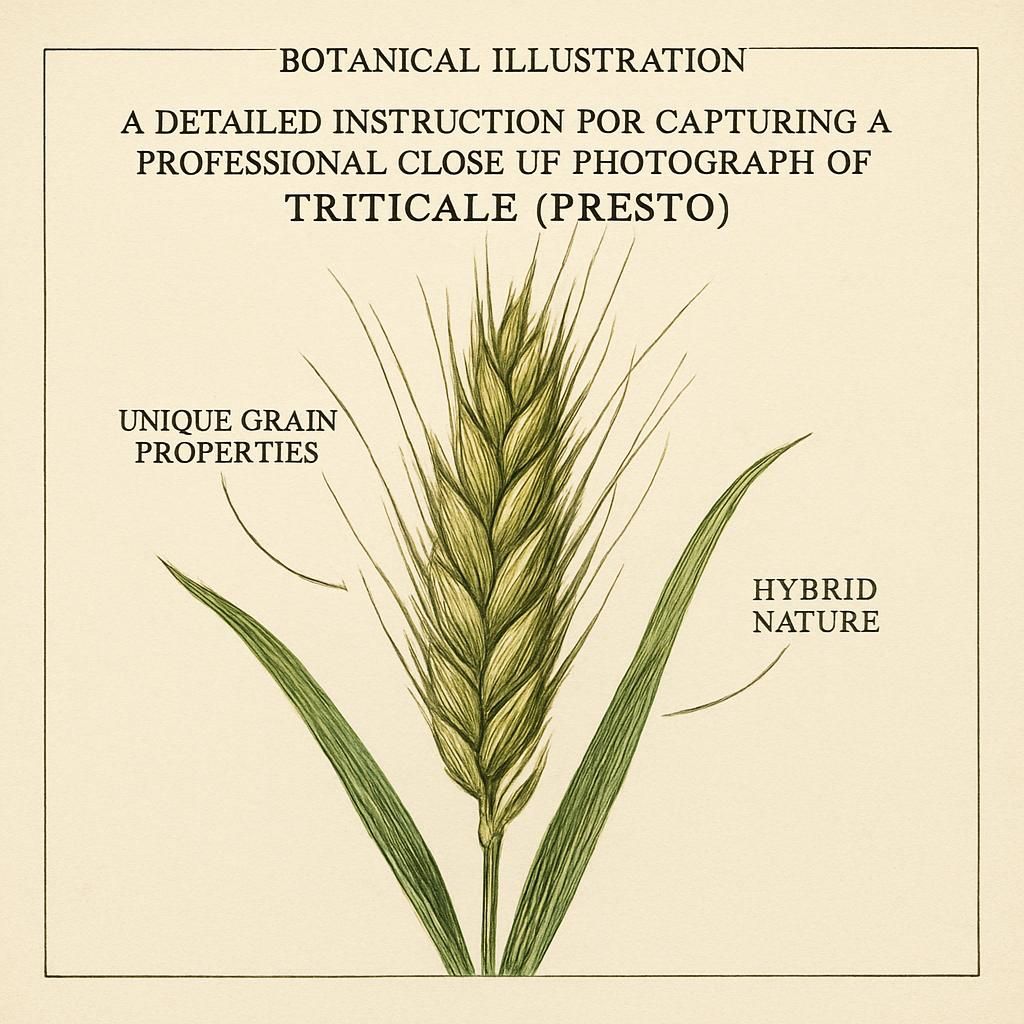
Introduction to Triticale (Presto)
Triticale (Presto) is a specially developed hybrid cereal crop known for its impressive adaptability to various environmental conditions. This variety is celebrated for striking a balance between the productivity of wheat and the hardiness of rye, making it an ideal choice for regions facing harsh climates.
Botanical Profile of Triticale (Presto)
Triticale is a complex hybrid that primarily involves the crossbreeding of wheat (Triticum) and rye (Secale). The resulting grain features characteristics from both parent species, including robust yield potential, resistance to diseases, and tolerance to marginal soils. Triticale's physical appearance often mirrors a blend of both wheat and rye with a grain head more similar to wheat.
Soil, pH, and Climate Requirements for Triticale (Presto)
Ensuring ideal growing conditions is crucial for maximizing the yield and quality of Triticale (Presto).
| Condition | Ideal Range |
|---|---|
| Soil Type | Loamy, well-drained |
| Soil pH | 5.5 - 7.5 |
| Temperature | 7°C to 25°C |
| Rainfall | 300-600 mm annually |
Triticale thrives in a variety of soils but prefers those that drain well to prevent root diseases and other complications.
Step-by-Step Planting & Propagation
- Seed Selection: Choose certified Triticale (Presto) seeds to ensure disease resistance and high yield potential.
- Soil Preparation: Triticale requires a well-prepared seedbed. Till the soil thoroughly and ensure adequate pH levels between 5.5 and 7.5.
- Sowing: Plant seeds at a depth of 2.5 to 4 cm. Ensure row spacing of about 15-20 cm for optimal plant development.
- Irrigation: Immediately after sowing, irrigate lightly to support germination. Adjust irrigation based on rainfall.
Care & Maintenance Regimes for Triticale (Presto)
Careful maintenance ensures healthy growth and optimal yields.
| Aspect | Schedule and Notes |
|---|---|
| Watering | Moderate; ensure soil remains moist during droughts |
| Fertilization | Initial nitrogen application at planting, followed by split applications before tillering and boot stages |
| Pruning | Not applicable as Triticale does not require pruning |
Pests, Diseases & Organic Management
Triticale (Presto) is relatively resistant to diseases; however, monitoring is crucial.
- Common Pests: Spider Mites and aphids can affect growth. Introduce natural predators like ladybugs and spray neem oil as organic pest control.
- Diseases: Monitor for rusts and leaf spot diseases, which can be controlled with crop rotation and organic fungicides.
- Integrated Pest Management: Encourage biodiversity with companion plants and beneficial insects.
Harvesting, Curing & Optimal Storage
Triticale matures in approximately 110 to 130 days post sowing.
- Harvest Timing: Complete harvest when grains are golden and moisture content is about 14%.
- Curing: Post-harvest, grains should be dried till moisture content drops to an optimal 12%.
- Storage: Use airtight containers in a cool, dry place to prevent infestations and grain spoilage.
Companion Planting for Triticale (Presto)
Companion planting could enhance Triticale growth by repelling pests and reducing the competition for resources.
- Best Companions: Clover for nitrogen fixation and Marigold for pest deterrence.
- Avoid planting near other cereal crops like Rye to minimize disease spread.
Explore more about effective soil and companion planting strategies in our blog on Summer Companion Planting: 10 Organic Pairings to Boost Small Farm Resilience. Additionally, for an in-depth understanding of Triticale, visit the Triticale wiki page.