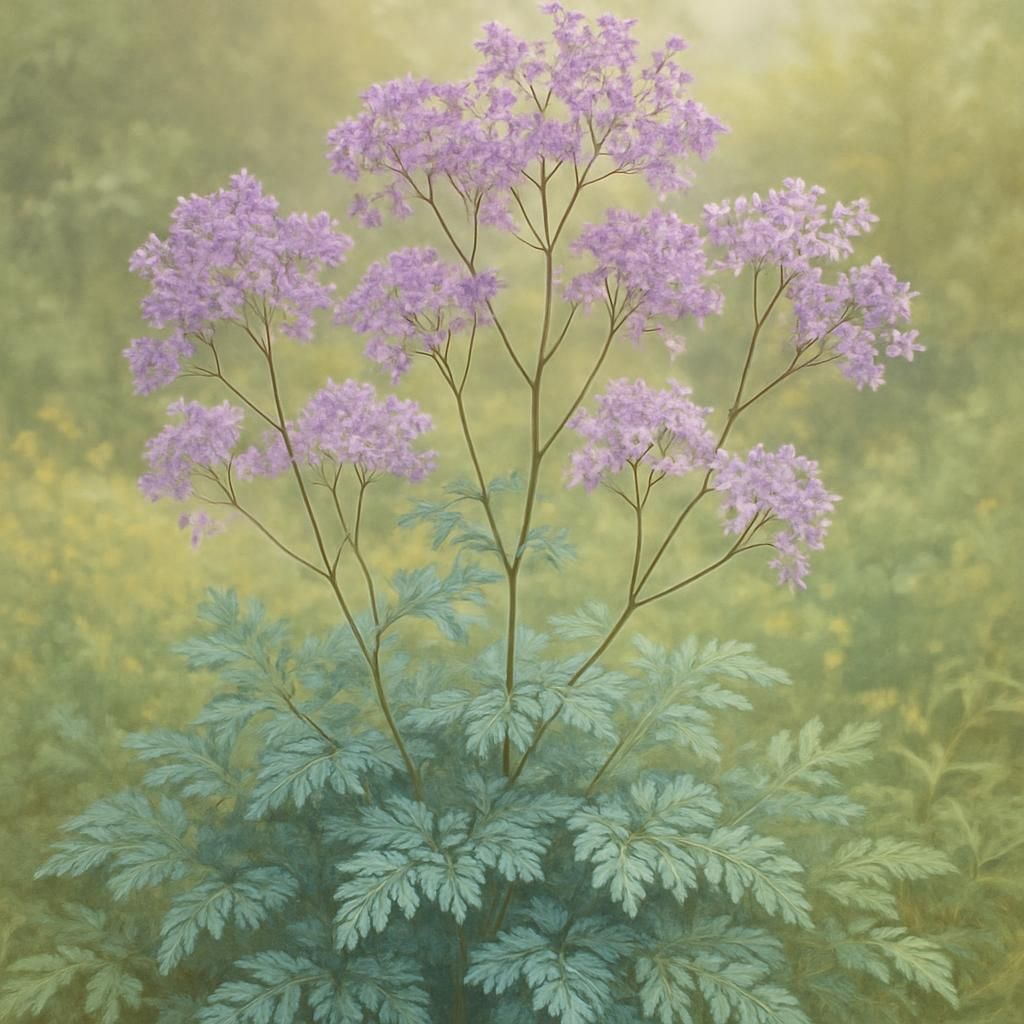
Introduction to Thalictrum
Thalictrum, a diverse genus within the Ranunculaceae family, encompasses over 120 species of elegant perennials commonly referred to as meadow-rue. These plants are celebrated for their finely divided, blue-green foliage that mimics ferns and their ethereal sprays of small, petal-less flowers held high on wiry stems. Native primarily to temperate regions of North America, Europe, and Asia, Thalictrum species have long been incorporated into cottage gardens, woodland edges, and modern naturalistic landscapes. Their ability to provide both textural contrast and vertical interest without overwhelming neighboring plants makes them indispensable in mixed perennial borders. Professional growers value Thalictrum for its relatively low maintenance once established and its resistance to many common garden stresses when sited correctly.
Beyond its ornamental appeal, certain species such as Thalictrum have historical uses in traditional herbal practices, though modern cultivation focuses predominantly on aesthetic and ecological contributions. The plants attract pollinators including bees and hoverflies while offering late-season interest through attractive seed heads. Their preference for consistently moist conditions positions them as ideal choices for rain gardens, stream banks, and damp woodland plantings. With proper attention to soil, light, and spacing, Thalictrum can form long-lived clumps that return reliably for many years.
Botanical Profile of Thalictrum
Thalictrum species exhibit a clumping growth habit with compound, biternate to triternate leaves that create a feathery appearance. Stems are typically slender yet strong, reaching heights of 60–180 cm depending on the cultivar and species. Flowers lack true petals; instead, showy stamens in shades of white, lavender, purple, or yellow provide the visual interest, often appearing in loose panicles or corymbs during late spring through midsummer. Species commonly grown include Thalictrum aquilegiifolium, Thalictrum delavayi, Thalictrum rochebruneanum, and Thalictrum flavum. Most are fully hardy in USDA zones 4–8, though some selections extend this range slightly.
The root system consists of fibrous rhizomes that spread slowly, allowing controlled expansion without aggressive invasiveness. Foliage remains attractive throughout the growing season provided adequate moisture is maintained. Seed production is variable; many hybrids are sterile or produce limited viable seed, favoring vegetative propagation for true-to-type plants. The genus name derives from Greek, referencing the plant’s supposed resemblance to the olive tree in leaf division, though the visual parallel is subtle.
Soil, pH, and Climate Requirements for Thalictrum
Successful cultivation begins with understanding the precise environmental parameters that Thalictrum demands. These perennials perform best in rich, moisture-retentive yet well-drained soils that prevent both drought stress and waterlogging. Organic matter content should be high to support the plant’s preference for consistent hydration around the root zone.
| Parameter | Ideal Range | Notes |
|---|---|---|
| Soil Type | Loamy, humus-rich | Incorporate compost or leaf mold |
| Soil pH | 6.0 – 7.5 | Slightly acidic to neutral |
| Drainage | Good, never waterlogged | Raised beds recommended in heavy clay |
| Temperature Range | 15–24 °C daytime; hardy to -20 °C | Protect young plants in first winter |
| Light | Partial shade to dappled sun | Morning sun, afternoon shade ideal |
| Spacing | 45–60 cm between plants | Allows air circulation and clump expansion |
| USDA Hardiness Zones | 4–8 | Mulch in zones 4–5 for winter protection |
Consistent moisture is critical; allow the top 2–3 cm of soil to dry slightly between waterings but never permit the root zone to desiccate. In regions with hot summers, afternoon shade and deep organic mulch significantly improve performance.
Step-by-Step Planting & Propagation
Plant Thalictrum in early spring or early autumn when soil temperatures are cool. Begin by amending the planting area with 5–8 cm of well-rotted compost or leaf mold to improve structure and moisture retention. Dig holes twice the width of the root ball and equal in depth. Position crowns at soil level, backfill, and water thoroughly to settle the medium around roots.
For propagation, division of established clumps every 3–4 years in early spring yields the most reliable results. Each division should contain at least three to five shoots and a healthy portion of roots. Alternatively, root cuttings taken in late winter can be placed in a sandy propagation mix under high humidity. Seed propagation is possible for species but requires cold stratification of 6–8 weeks at 4 °C followed by sowing in a well-draining seed-starting medium. Germination typically occurs within 3–6 weeks at 15–18 °C. Maintain even moisture and provide bright indirect light until seedlings develop true leaves.
Care & Maintenance regimes for Thalictrum
Once established, Thalictrum requires moderate ongoing attention focused on moisture management and seasonal cleanup. Apply a 5–8 cm layer of organic mulch such as shredded bark or leaf mold in spring to conserve moisture and suppress weeds. Fertilization should be conservative; excessive nitrogen promotes weak, floppy growth.
| Task | Schedule | Details |
|---|---|---|
| Watering | Weekly or as needed | Maintain even moisture; increase in heat |
| Fertilizer | Early spring & mid-summer | Balanced organic 5-5-5 or compost tea |
| Pruning | Late autumn or early spring | Cut back spent stems to 5–10 cm above ground |
| Mulching | Early spring | Renew annually to retain moisture |
| Division | Every 3–4 years in early spring | Rejuvenates clumps and controls spread |
Stake taller varieties if grown in exposed sites or rich soils that encourage rapid vertical growth. Monitor for lodging after heavy rain and provide discreet support with grow-through rings when necessary.
Pests, Diseases & Organic Management
Thalictrum is generally resilient but can encounter occasional issues. Aphids may colonize tender new growth in spring; blast with water or apply insecticidal soap. Spider mites can appear during hot, dry spells—maintain humidity and use neem oil as needed. Slugs and snails occasionally damage young foliage; employ beer traps or iron-phosphate baits.
Fungal problems such as powdery mildew or leaf spot diseases arise in overcrowded or poorly ventilated plantings. Improve air circulation through proper spacing and remove affected foliage promptly. Root rots including Pythium and Phytophthora are prevented by ensuring excellent drainage and avoiding overwatering. Organic fungicides containing copper or potassium bicarbonate provide additional protection when cultural measures prove insufficient.
Harvesting, Curing & Optimal Storage
Thalictrum is primarily grown for cut flowers and foliage rather than edible harvest. Cut stems when approximately two-thirds of the flowers in a panicle have opened, ideally in early morning. Place immediately in cool water with floral preservative. For drying, hang small bunches upside down in a dark, well-ventilated area at 20–24 °C for 7–10 days. Once fully desiccated, store in airtight containers away from light to preserve color.
Seed collection for propagation involves harvesting mature, dry follicles in late summer. Clean seeds and store in paper envelopes within a cool, dry location; viability remains high for up to two years when kept below 10 °C. Rhizomes or divisions intended for replanting should be kept moist in damp sphagnum or perlite at 2–5 °C until planting time.
Companion Planting for Thalictrum
Thalictrum pairs beautifully with other moisture-loving perennials that share its preference for partial shade. Compatible companions include Astilbe, Hosta, and ferns, which provide contrasting leaf textures. Early-blooming bulbs such as snowdrops and wood anemones extend seasonal interest beneath emerging Thalictrum foliage. In sunnier margins, pair with Yarrow or Thyme to attract beneficial insects while maintaining soil moisture through mulch.
Avoid aggressive spreaders that may outcompete slower-establishing Thalictrum clumps. Instead, integrate with plants of similar cultural requirements to create balanced, resilient plant communities. This approach reduces pest pressure through biodiversity and minimizes maintenance inputs over time.