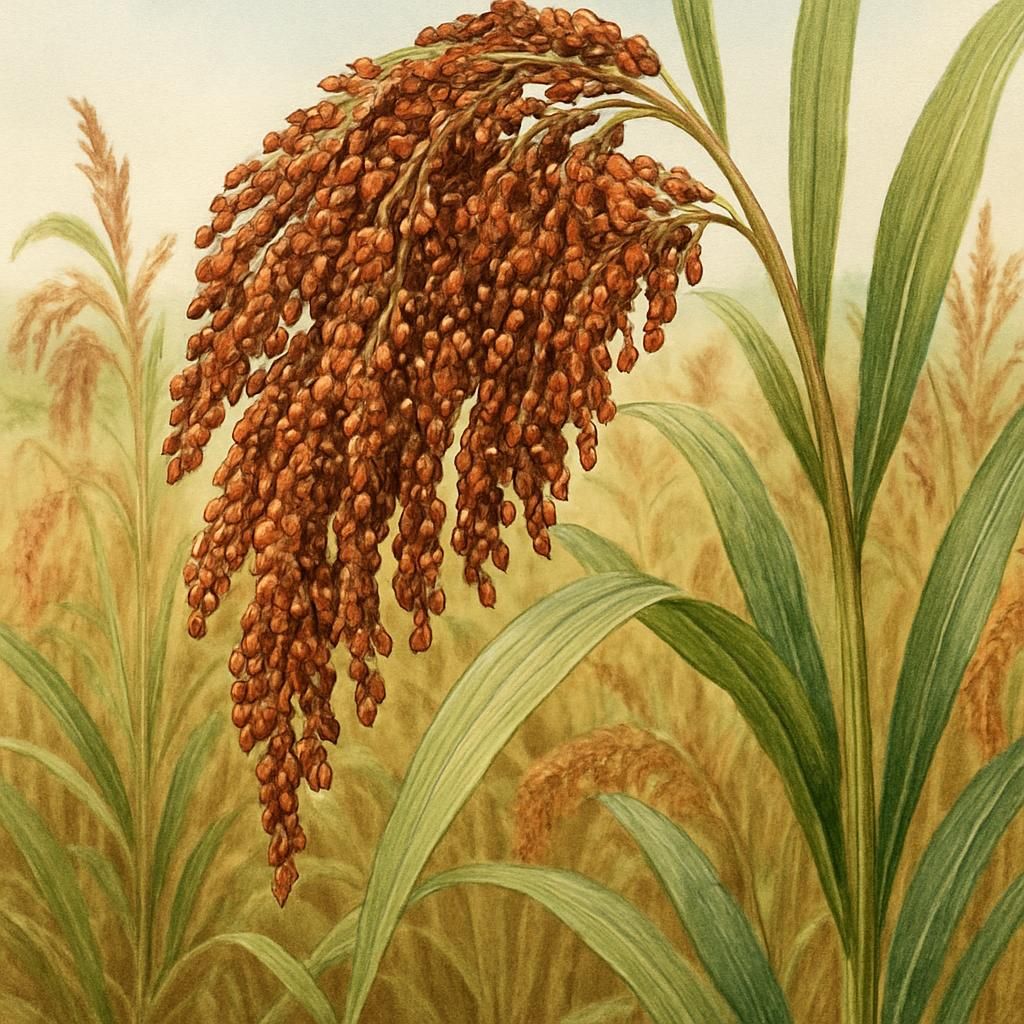
Introduction to Teff (Red/Brown)
Teff is an ancient grain primarily cultivated in Ethiopia and Eritrea, gaining international recognition for its nutritional benefits and versatility as a gluten-free grain. As a staple in Ethiopian cuisine, it forms the base of injera, a traditional sourdough flatbread. Teff is favored not only for its compact size but also for its adaptability to diverse growing conditions, making it a feasible crop for farmers across different regions.
Botanical Profile of Teff (Red/Brown)
Teff (Eragrostis tef) is a species of lovegrass under the family Poaceae. It grows to a height of about 30-120 cm and is characterized by its fine stems and small, ellipsoid grains. Depending on the soil and climatic conditions, teff can be either red or brown, with slight variations in nutritional profile and applications.
Soil, pH, and Climate Requirements for Teff (Red/Brown)
Teff is adaptable but thrives in conditions that mimic its native environment. Below is a table depicting its ideal growing conditions:
| Parameter | Ideal Condition |
|---|---|
| Soil Type | Well-drained loam |
| Soil pH | 5.5 - 6.5 |
| Temperature Range | 15°C - 35°C |
| Rainfall Requirements | 300 - 500 mm annually |
Teff can withstand droughts and is relatively resistant to waterlogging, but for optimal yields, a warm climate with moderate rainfall is preferred.
Step-by-Step Planting & Propagation
- Site Selection: Choose a location with full sunlight and well-drained soil. Test the soil to ensure a pH between 5.5 and 6.5.
- Preparation: Clear the area of debris and weeds. Use organic matter to enrich the soil.
- Sowing: Directly sow seeds in rows with a spacing of 15-20 cm between them. Ensure the seeds are not deeper than 1-2 cm to facilitate healthy germination.
- Irrigation: Watering should be moderate. Overhead irrigation systems can help in maintaining the required moisture levels without waterlogging.
- Thinning: After germination, thin the plants to maintain a density that ensures sufficient air circulation.
Care & Maintenance Regimes for Teff (Red/Brown)
Teff's maintenance involves regular monitoring of soil moisture and appropriate fertilization. Regular inspections and adherence to a schedule are beneficial.
| Care Aspect | Schedule |
|---|---|
| Watering | Once a week during dry spells |
| Fertilizing | Once every 4-6 weeks with a balanced organic fertilizer |
| Weeding | As needed to prevent competition |
Mulching can be an effective strategy to retain soil moisture and suppress weeds.
Pests, Diseases & Organic Management
Teff is susceptible to certain pests and diseases, though its resilience is noteworthy. Common pests include Spider Mites and aphids. Diseases like rusts and smuts can affect teff, particularly in humid conditions. Organic management strategies involve:
- Companion Planting: Use herbs such as Thyme to repel pests.
- Biological Control: Introduce beneficial insects like ladybugs to control aphid populations.
- Cultural Practices: Rotate crops to prevent the establishment of pests and diseases. Avoid overhead irrigation to reduce the risk of smut infections.
For more insights into organic management, consider reviewing Crop Diseases Under the Microscope: 9 Organic Fixes for Small Farm Resilience.
Harvesting, Curing & Optimal Storage
Teff is ready for harvest approximately 90-120 days after planting when the seeds have ripened and the stems begin to yellow. Harvest through traditional means or small-scale mechanical harvesters. Post-harvest, allow the crop to cure under a shaded and ventilated area to reduce moisture content before storage.
For optimal storage:
- Store in a cool, dry place.
- Ensure storage containers are airtight to prevent pest infestations.
- Regularly monitor for signs of moisture or pest activity.
Companion Planting for Teff (Red/Brown)
Teff benefits from companion planting strategies that improve soil health and deter pests. Ideal companions include:
- Legumes: Plant Peas to fix nitrogen in the soil.
- Herbs: Basil and Thyme provide aromatic defenses against pests.
Companion planting can enhance yields by promoting a balanced ecosystem. This concept is explored in Summer Companion Planting: 10 Organic Pairings to Boost Small Farm Resilience.