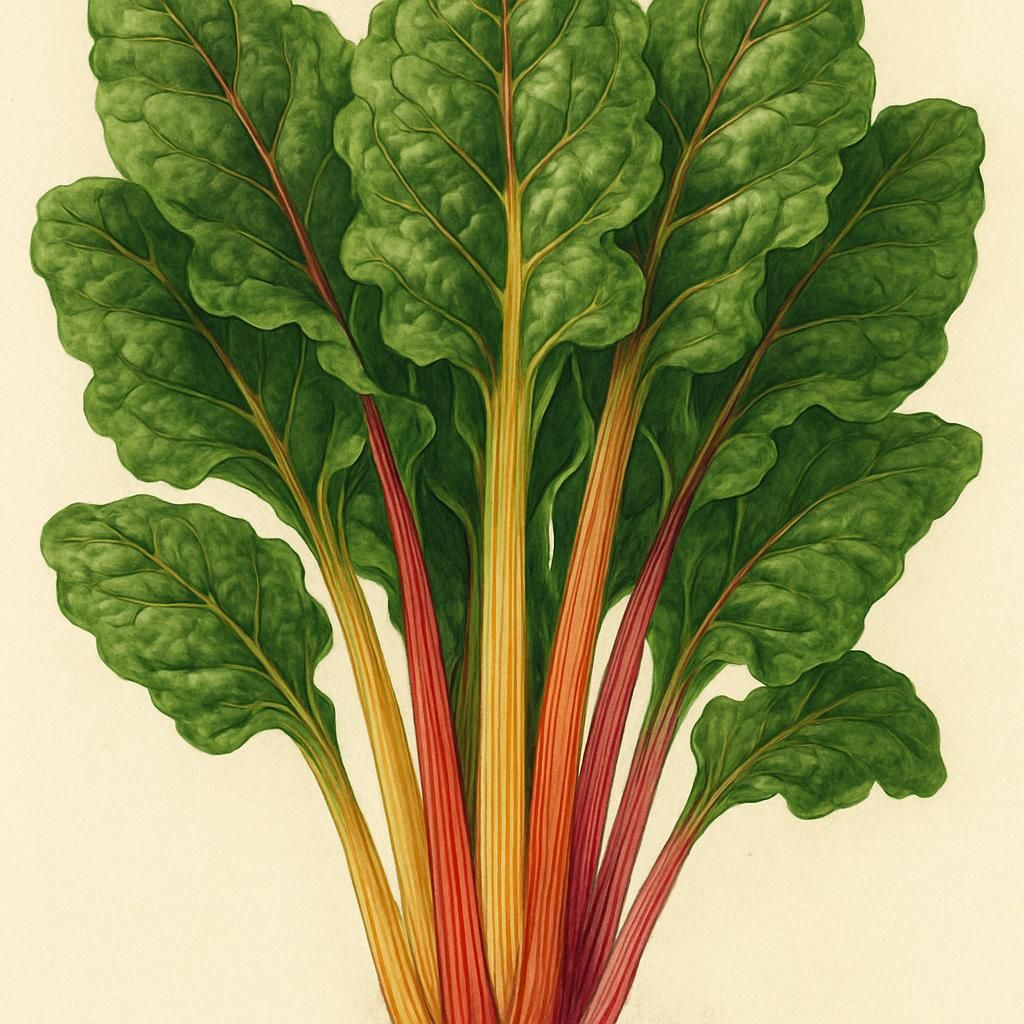
Introduction to Swiss Chard (Celebration)
Swiss Chard (Celebration) is a stunningly colorful variety of chard known for its vibrant pink, yellow, and red stems, contrasting beautifully with its dark green leaves. This variety not only adds visual appeal to any garden but also offers high nutritional value, rich in vitamins A, C, and K. Its hardy nature and adaptability make it an ideal choice for both novice and experienced gardeners.
Botanical Profile of Swiss Chard (Celebration)
Swiss Chard, scientifically known as Beta vulgaris subsp. cicla, is a biennial plant within the Amaranthaceae family, commonly grown as an annual for its edible leaves and stems. The 'Celebration' variety is especially noted for its colorful stems that add a festive touch to both gardens and culinary dishes.
Soil, pH, and Climate Requirements for Swiss Chard (Celebration)
To ensure the optimal growth of Swiss Chard (Celebration), understanding its soil, pH, and climate requirements is crucial. This variety prefers a fertile, well-drained soil with a slightly acidic to neutral pH level. The table below summarizes the ideal growing conditions:
| Parameter | Ideal Condition |
|---|---|
| Soil Type | Loamy, well-drained |
| Soil pH | 6.0 to 7.0 |
| Temperature | 50°F to 75°F (10°C to 24°C) |
| Climate | Cool to moderate |
| Sunlight | Full sun to partial shade |
Step-by-Step Planting & Propagation
- Site Selection: Choose a location that receives at least 4 to 6 hours of sunlight per day. Partial shade is beneficial in warmer climates.
- Soil Preparation: Enrich the soil with organic compost and ensure it is well-draining. This enhances soil fertility and structure.
- Sowing Seeds: Plant seeds directly in the soil about 1/2 inch deep. Space them 18 inches apart to allow for mature plant development.
- Watering: Keep the soil consistently moist but not waterlogged. Initial watering should be gentle to avoid seed displacement.
- Thinning: Once seedlings reach a couple of inches in height, thin them to ensure proper air circulation and growth space.
Care & Maintenance Regimes for Swiss Chard (Celebration)
Proper care involves regular watering, fertilization, and pruning schedules. Implementing these regimes ensures your Swiss Chard thrives.
| Care Aspect | Frequency and Method |
|---|---|
| Watering | Water deeply 1-2 times per week, adjusting in dry spells |
| Fertilizing | Apply balanced fertilizer every 4-6 weeks |
| Pruning | Harvest outer leaves regularly to promote new growth |
Pests, Diseases & Organic Management
Swiss Chard (Celebration) is susceptible to several pests and diseases. Common issues include aphids, spider mites, and leaf miners. Effective management involves:
- Natural Predators: Encourage beneficial insects like ladybugs to control aphid populations.
- Neem Oil: Use neem oil as a natural pesticide to deter spider mites and other pests.
- Proper Hygiene: Remove any diseased leaves promptly to prevent the spread of leaf spot diseases and powdery mildew. Learn more about essential pest defenses in Fall Pest Siege: 9 Organic Defenses to Shield Small Farms from Invading Armies.
Harvesting, Curing & Optimal Storage
- Harvesting: Begin harvesting when leaves are at least 6 to 8 inches long. Regular harvesting encourages continued growth.
- Storing: Wash and dry the leaves thoroughly and store them in breathable bags in the refrigerator, which can keep them fresh for up to a week.
Companion Planting for Swiss Chard (Celebration)
Swiss Chard grows well with onion, garlic, and spinach. These companions can help deter pests and support healthy growth conditions. Avoid planting near corn, as it may compete for nutrients and space.
For more tailored companion planting insights, view Spring Companion Planting: 8 Organic Pairings to Maximize Small Farm Yields.