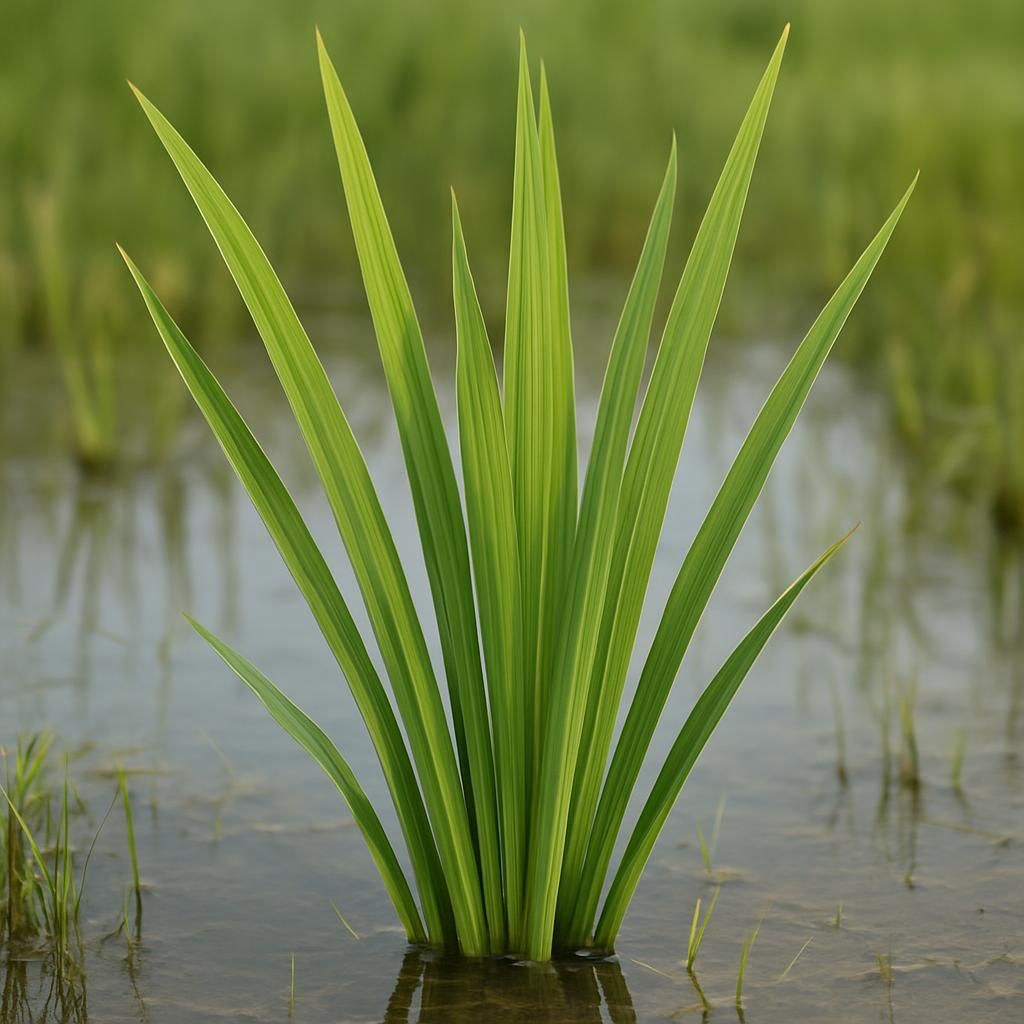
Introduction to sweet flag
Sweet flag (Acorus calamus) is an ancient wetland perennial valued for its fragrant, creeping rhizomes. Grown for thousands of years across Eurasia and North America, the plant has been used in Ayurvedic, Chinese, and European herbal traditions. Its essential oil and powdered rhizome serve as carminatives, insect repellents, and flavoring agents. Modern growers cultivate sweet flag for niche herbal markets, wetland restoration projects, and specialty distilleries.
Botanical Profile of sweet flag
Sweet flag belongs to the Acoraceae family and is a semi-evergreen, rhizomatous herb. It produces sword-shaped, aromatic leaves 60–120 cm long and forms dense clonal colonies via horizontal rhizomes. Small, inconspicuous flowers appear on a spadix in early summer. The species is diploid in Europe and tetraploid in North America and Asia; both forms contain the compound β-asarone, which varies in concentration.
Soil, pH, and Climate Requirements for sweet flag (MUST INCLUDE A MARKDOWN TABLE OF IDEAL CONDITIONS)
Sweet flag performs best in consistently moist to saturated soils. It tolerates seasonal flooding but declines under prolonged drought. The plant prefers fertile, loamy textures with high organic matter. It grows from USDA zones 4–10 and requires full sun to partial shade.
| Parameter | Ideal Range | Notes |
|---|---|---|
| Soil Type | Loam to clay loam | High organic matter improves yields |
| Soil pH | 5.5–7.5 | Slightly acidic to neutral |
| Temperature Range | 15–30 °C (growing season) | Frost hardy to −20 °C |
| Annual Rainfall | 800–2000 mm | Supplemental irrigation in dry spells |
| Light | Full sun to partial shade | 6+ hours direct light maximizes rhizome growth |
| Elevation | 0–2000 m | Performs well in lowland wetlands |
Step-by-Step Planting & Propagation
- Site Preparation: Clear competing vegetation and incorporate 5–8 cm of well-rotted compost into the top 20 cm of soil. Create shallow basins or raised beds with berms to maintain consistent moisture.
- Rhizome Selection: Choose healthy, firm rhizomes 8–15 cm long with visible buds. Avoid soft or discolored sections.
- Spacing: Plant rhizomes 30 cm apart in rows 60 cm apart. Set buds 2–3 cm below the soil surface.
- Timing: Early spring (soil temperature >10 °C) or autumn in mild climates.
- Watering: Flood the bed immediately after planting and maintain 2–5 cm of standing water for the first four weeks.
Care & Maintenance regimes for sweet flag (MUST INCLUDE A MARKDOWN TABLE OF WATER, FERTILIZER, AND PRUNING SCHEDULES)
Sweet flag requires minimal intervention once established. Focus on moisture management and annual nutrient top-dressing.
| Season | Water Schedule | Fertilizer Schedule | Pruning Schedule |
|---|---|---|---|
| Spring | Maintain 2–5 cm standing water | Apply 5 kg/ha well-rotted manure | Remove winter-damaged foliage |
| Summer | Keep soil saturated; irrigate if dry | Side-dress 3 kg/ha fish emulsion | Deadhead spent spadices |
| Autumn | Reduce water gradually | Apply 2 kg/ha wood ash | Cut back to 15 cm above soil |
| Winter | Allow natural flooding or mulch cover | No fertilizer | Remove debris to reduce overwintering pests |
Pests, Diseases & Organic Management
Sweet flag is generally pest-resistant but may host Aphids and Spider mites in greenhouse culture. Root rot caused by Pythium species can occur in poorly aerated substrates. Organic controls include neem oil sprays for aphids and improved drainage plus beneficial microbes for root-rot prevention. Regular division every 3–4 years reduces disease buildup.
Harvesting, Curing & Optimal Storage
Harvest rhizomes in late autumn of the second or third year when leaves begin to yellow. Lift plants carefully, wash rhizomes, and trim foliage to 2 cm. Cure by air-drying in shade for 7–10 days until moisture content reaches 12 %. Store whole or sliced rhizomes in airtight containers at 10–15 °C with low humidity. Properly cured material retains aroma for up to two years.
Companion Planting for sweet flag
Sweet flag pairs well with other wetland species such as Taro and Ginger. It benefits from nitrogen-fixing neighbors like Clover planted on drier margins. Avoid planting near heavy feeders that compete for moisture. In constructed wetlands, sweet flag improves water quality when interplanted with Rice and sedges.
For additional reading on wetland crop systems, see the relevant Wiki page on Rice. Additional practical insights on soil health strategies are available in The Forgotten Art of Fall Soil Revival: 8 Organic Strategies for Small Farm Resilience.