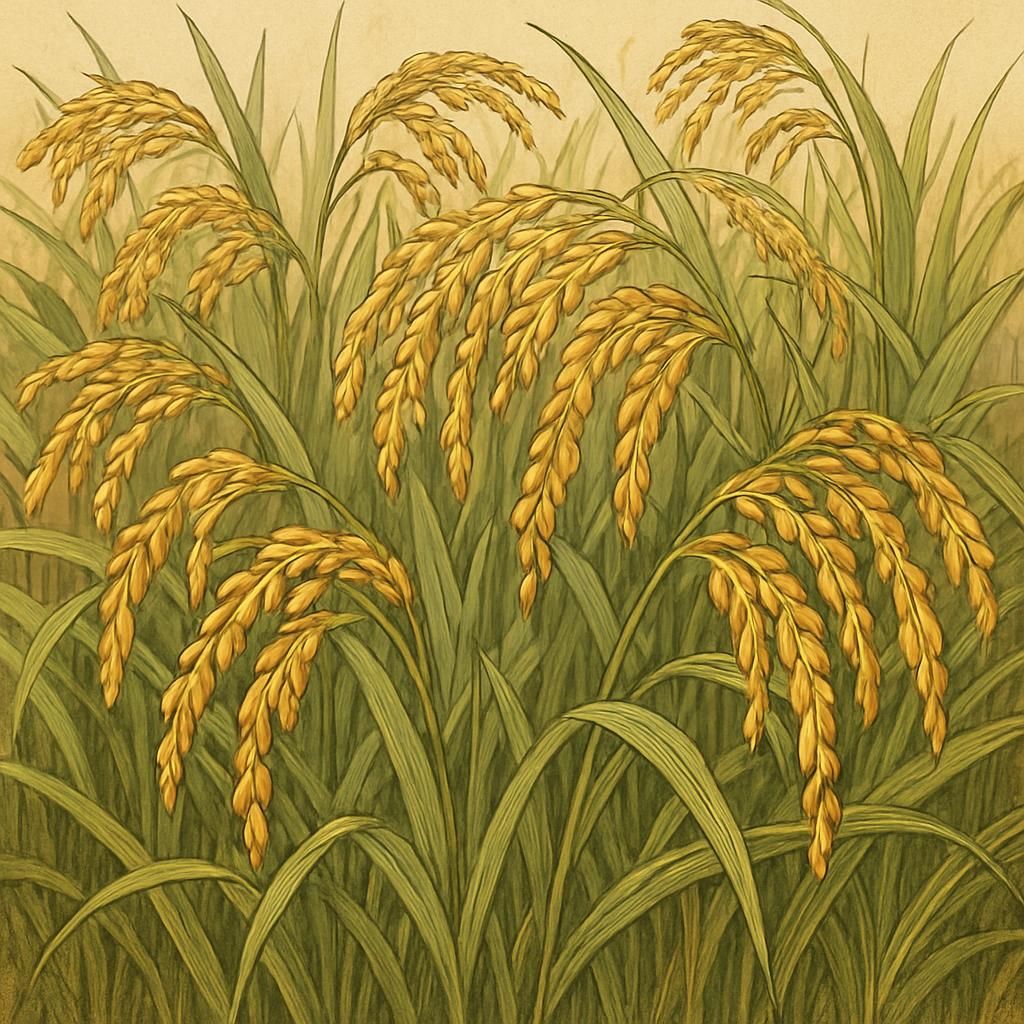
Introduction to Swarna Rice
Swarna Rice, also known by its commercial name 'Masuri', is a staple crop cultivated extensively across the rice belts of India. This variety is favored for its high yield and resilience to adverse conditions, providing a reliable source of nutrients for both local consumption and global export.
Botanical Profile of Swarna Rice
Swarna Rice is a type of Rice with botanical classification under the species Oryza sativa. It features medium-sized, slender grains that cook into a soft, fluffy texture. This variety exhibits a moderate growth period, typically maturing in about 140 days, making it ideal for regions with shorter growing seasons.
Soil, pH, and Climate Requirements for Swarna Rice
Swarna Rice thrives in well-drained clayey loam soils enriched with organic matter. Below is a table summarizing its ideal growing conditions:
| Condition | Ideal Range |
|---|---|
| Soil Type | Clayey loam |
| Soil pH | 5.5 - 6.5 |
| Temperature | 25°C - 35°C |
| Rainfall | 1000 - 1500 mm annually |
| Altitude | Up to 1000 meters above sea level |
Step-by-Step Planting & Propagation
- Seed Selection: Start with high-quality seeds from a reputable supplier. Ensure that the seeds are certified and free from pests and diseases.
- Seed Preparation: Pre-soaking seeds in water for 24 hours improves germination. Post soaking, drain and let the seeds sprout for another 24 hours.
- Field Preparation: Plough the field thoroughly to achieve fine tilth. Incorporate organic manure into the soil to enhance nutrient content.
- Sowing: Sow sprouted seeds directly using the broadcasting method or transplant seedlings that are 2-3 weeks old.
- Spacing: Maintain a spacing of 20x15 cm to ensure adequate air movement and light penetration.
- Irrigation: Keep the field inundated with 2-5 cm of standing water during the entire growing period.
Care & Maintenance regimes for Swarna Rice
Maintaining Swarna Rice involves timely watering, fertilization, and weed control. Here’s a concise care schedule:
| Care Regime | Schedule |
|---|---|
| Watering | Consistent flooding; 2-5 cm depth |
| Fertilizing | NPK ratio of 60:30:30 kg/ha; split into 3 applications |
| Pruning/Weeding | Mechanical weeding every 2-3 weeks |
Pests, Diseases & Organic Management
Swarna Rice is susceptible to several pests such as Spider Mites and diseases like leaf blight. Employ integrated pest management (IPM) strategies to control pests without excessive use of chemical pesticides.
- Spiders Mites: Use neem oil sprays or introduce natural predators like lady beetles.
- Leaf Blight: Prevent through crop rotation and use disease-free seed stock.
Harvesting, Curing & Optimal Storage
Harvesting: Typically occurs 140 days post-sowing when grains are hard and contain minimal moisture (~20%). Use mechanical harvesters for efficiency.
Curing: Post-harvest, dry the rice thoroughly to reduce moisture content to 12-14%, preventing fungal infections.
Storage: Store in cool, dry conditions using airtight containers to deter pests and maintain grain quality.
Companion Planting for Swarna Rice
While rice is often grown in monocultures, strategic Companion Planting with crops like Sesame or Millet can foster beneficial insect populations and augment soil health.
This well-rounded guide empowers both novice and seasoned farmers to cultivate Swarna Rice, ensuring productive harvests that contribute to sustainable agriculture.