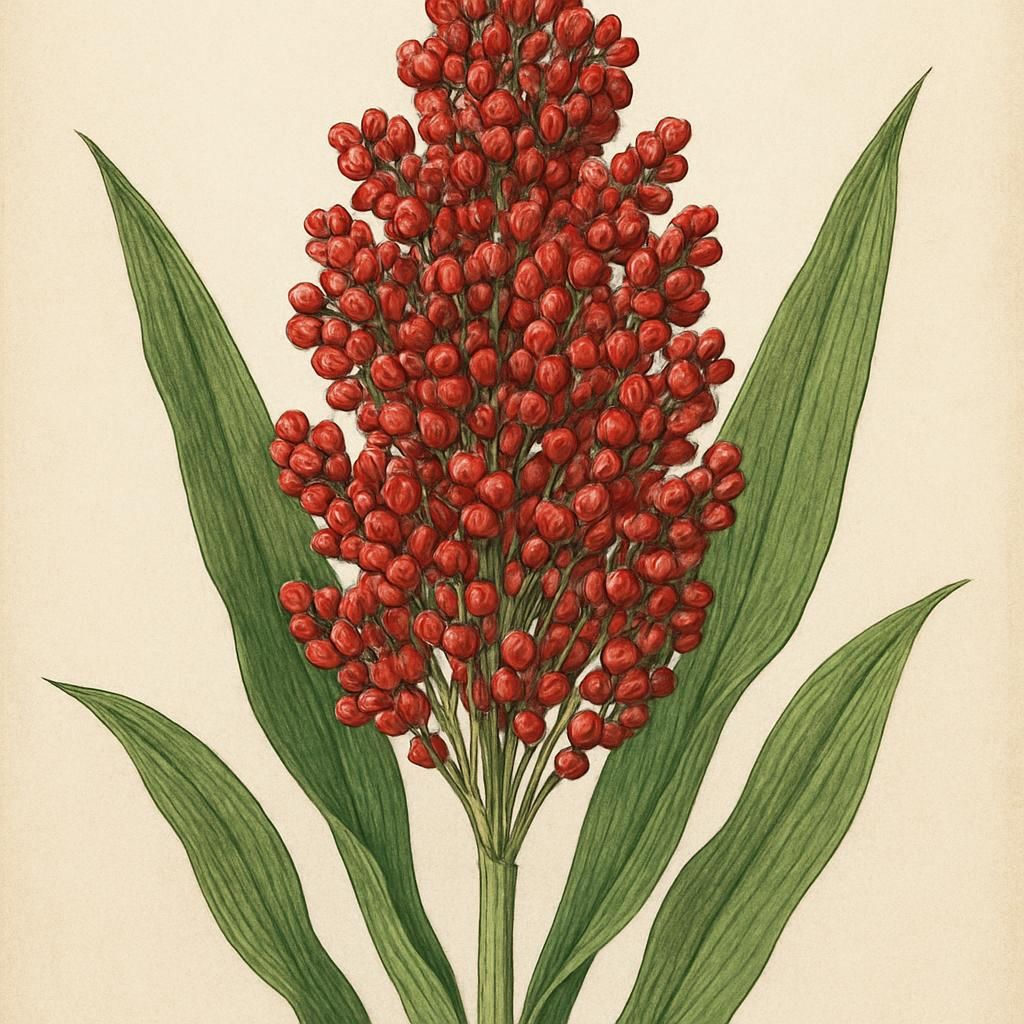
Introduction to Sorghum (Red Feterita)
Sorghum, specifically Red Feterita, is an increasingly popular grain crop due to its resilience and adaptability. Predominantly grown in semi-arid regions, this sorghum variety is cherished for its high yields and minimal water requirements, making it a staple in dry agricultural zones. Its versatility extends from animal fodder to biofuel production, contributing to its global agricultural significance.
Botanical Profile of Sorghum (Red Feterita)
Red Feterita belongs to the species Sorghum bicolor, known for its robust stalks and efficient C4 photosynthesis process. This variety stands out for its distinctive red seeds and superior drought tolerance. The plant can reach heights of up to 3 meters, and its broad leaves are adept at conserving moisture, making it an ideal choice for areas with limited rainfall.
Soil, pH, and Climate Requirements for Sorghum (Red Feterita)
Red Feterita thrives in a range of soil types, although well-drained, loamy soils are ideal. Its ability to grow in less-than-ideal soil conditions enhances its viability in regions facing soil degradation. In terms of climate, sorghum prefers warmth and can withstand temperatures up to 40°C, though it performs optimally between 25°C and 30°C.
| Attribute | Ideal Condition |
|---|---|
| Soil Type | Loamy, well-drained |
| pH Level | 6.0 to 7.5 |
| Temperature | 25°C to 30°C |
Step-by-Step Planting & Propagation
- Site Selection: Choose a sunny location with well-draining soil.
- Land Preparation: Till the soil to a fine tilth, and incorporate organic matter to improve soil fertility.
- Sowing: Sow seeds directly into the prepared soil at a depth of 2-4 cm, maintaining a spacing of 15-20 cm between plants and 60-75 cm between rows to ensure optimal growth.
- Watering: Initiate watering based on the soil's moisture retention capability, ensuring the soil remains moist but not waterlogged.
- Thinning: Once seedlings are established, thin them to allow adequate space for each plant to thrive.
Care & Maintenance Regimes for Sorghum (Red Feterita)
Red Feterita requires minimal maintenance, but adhering to a regular care schedule promotes maximum yield.
| Care Aspect | Schedule Description |
|---|---|
| Watering | Weekly, deep watering, especially during dry spells |
| Fertilizer | Apply a balanced NPK fertilizer bi-monthly |
| Pruning | Not necessary, but remove damaged leaves if necessary |
Pests, Diseases & Organic Management
Red Feterita, while resilient, is susceptible to certain pests like Spider Mites and diseases like Charcoal Rot. Employing organic management strategies such as neem oil sprays and maintaining adequate plant spacings can mitigate these issues effectively.
Harvesting, Curing & Optimal Storage
Harvest Red Feterita when the grains are hard and the plant has turned brown. This typically occurs 3-4 months after planting. After harvesting, allow the grains to dry fully before storing them in a cool, dry place to prevent mold and pest infestations.
Companion Planting for Sorghum (Red Feterita)
For optimal growth, plant Red Feterita alongside crops such as Mung Bean and Cowpea Curculio, which can help improve soil nitrogen levels and deter pests.
For more insights on organic farming strategies, visit our blog on The Truth About Weather Patterns and Small Farm Resilience.
Learn more about Sorghum on our wiki page.