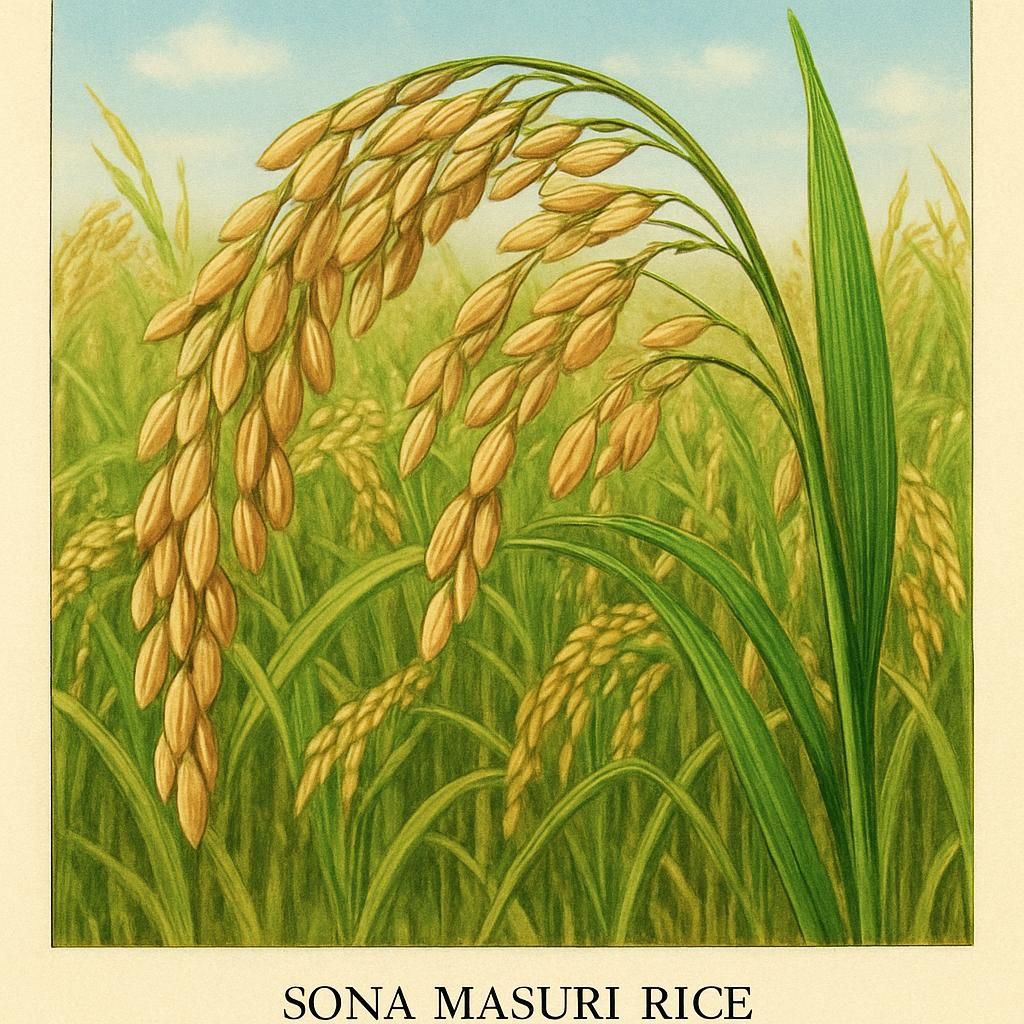
Introduction to Sona Masuri Rice
Sona Masuri Rice is renowned for its lightweight and aromatic characteristics. It is a staple food in many South Indian households, offering a versatile ingredient for dishes ranging from biryanis to simple rice meals. Originating from the fertile fields of Andhra Pradesh and Karnataka, Sona Masuri boasts a unique appeal due to its fluffy, non-sticky grain properties.
Botanical Profile of Sona Masuri Rice
Sona Masuri Rice is a cultivar of the species Oryza sativa, belonging to the genus Oryza. As a medium-grain rice, it features a slightly shorter and wider shape compared to other rice types like basmati. It is adapted for cultivation in both irrigated and rain-fed fields, making it a resilient choice for varying agricultural practices.
Soil, pH, and Climate Requirements for Sona Masuri Rice
To achieve optimal growth, Sona Masuri requires specific soil and climate conditions. Here's a structured table of its ideal growth conditions:
| Aspect | Ideal Conditions |
|---|---|
| Soil Type | Loamy, clayey, fertile |
| Soil pH | 5.5 - 7.0 |
| Temperature | 25°C - 35°C |
| Rainfall | 1000mm - 1500mm annually |
Step-by-Step Planting & Propagation
- Field Preparation: Begin by tilling the land to a fine tilth. Ensure the field is free from weeds and residual stubs that may hinder planting.
- Seed Selection: Choose certified Sona Masuri seeds from a trusted source to ensure genetic purity and optimal yield.
- Sowing: Soak the seeds in water for 24 hours and then dry them in shade for germination. This pre-soaking enhances germination rates.
- Transplanting: After 25-30 days, transplant the seedlings into the main field, maintaining a spacing of 20x15 cm.
- Water Management: Maintain a flooded condition in the fields until 10 days before harvest.
Care & Maintenance Regimes for Sona Masuri Rice
A proper care routine ensures a healthy crop and maximum yield. Below is a table outlining the essential care regimes:
| Aspect | Schedule & Method |
|---|---|
| Water | Continuous flooding; reduce before harvest |
| Fertilizer | 100 kg/ha N, 50 kg/ha P, 50 kg/ha K |
| Pruning | Regularly remove weeds and pests |
Pests, Diseases & Organic Management
Sona Masuri Rice, like many crops, is susceptible to various pests and diseases. Common issues include blast, leaf spot diseases, and stalk-boring caterpillars. Organic management strategies can significantly reduce pest and disease impact:
- Use neem oil sprays to deter insects.
- Implement crop rotation with Soybeans to naturally break pest cycles.
- Use pheromone traps to monitor and reduce pest populations.
For an in-depth guide on tackling rice diseases, see Crop Diseases Under the Microscope: 9 Organic Fixes for Small Farm Resilience.
Harvesting, Curing & Optimal Storage
Harvest Sona Masuri Rice when 80-85% of the grains turn golden yellow. Post-harvest, follow these steps:
- Cutting: Use sickles to cut the matured stalks close to the ground level.
- Threshing: Separate the grains from straw through mechanical means.
- Drying: Sun-dry the grains to reduce moisture content to around 14% for storage.
- Storage: Store in a clean, dry, and well-ventilated facility to prevent rodent and insect damage.
Companion Planting for Sona Masuri Rice
Companion planting can optimize space use, improve pest and disease control, and enhance crop growth. Compatible plants for Sona Masuri Rice include:
- Marigold to repel nematodes.
- Clover, which acts as a natural nitrogen fixer, enhancing soil fertility.
- Thyme, known for deterring several insect pests.
Explore more organic pairing strategies in Summer Companion Planting: 10 Organic Pairings to Boost Small Farm Resilience.