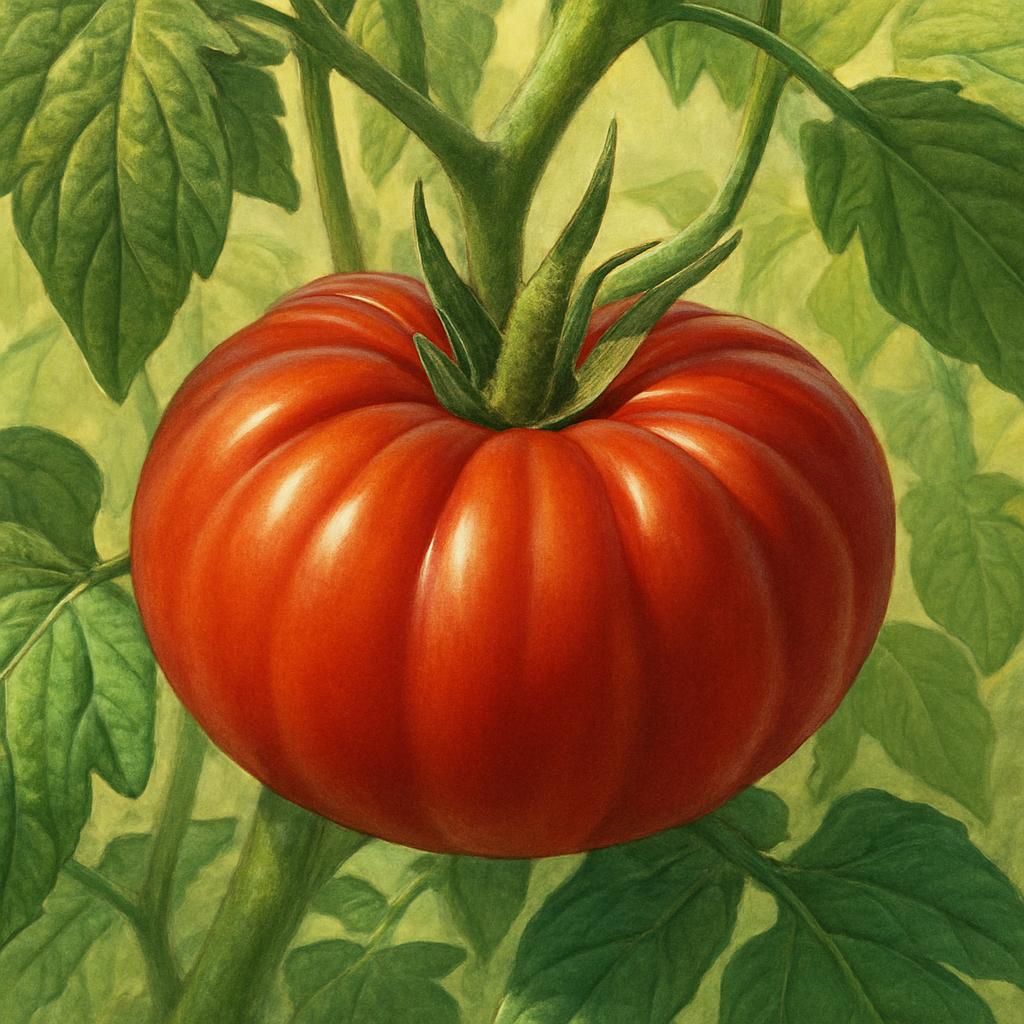
Introduction to Schimmeig Stoo Tomato
The Schimmeig Stoo Tomato stands out among heirloom varieties for its striking ribbed shoulders, deep crimson color, and rich, balanced flavor that combines sweetness with subtle acidity. Developed through careful selection for both culinary excellence and reliable yields, this indeterminate cultivar produces fruit weighing 10–16 ounces over an extended harvest window. Gardeners and commercial growers alike value its disease tolerance and adaptability to a range of climates when proper cultural practices are followed.
Botanical Profile of Schimmeig Stoo Tomato
Schimmeig Stoo belongs to the nightshade family, Solanaceae, and exhibits classic indeterminate growth reaching 6–8 feet in height. The plants produce compound leaves with a slightly rugose texture and clusters of yellow flowers that develop into heavily lobed, oblate fruits. Internally, the flesh is meaty with few seeds and a high solids content, making it ideal for fresh eating, sauces, and roasting. Compared with standard round tomatoes, the variety shows greater resistance to cracking under fluctuating moisture conditions.
Soil, pH, and Climate Requirements for Schimmeig Stoo Tomato
Successful cultivation begins with understanding precise environmental parameters. The following table summarizes the optimal conditions:
| Parameter | Ideal Range | Notes |
|---|---|---|
| Soil Type | Loamy, well-drained | Incorporate 2–3 inches of compost |
| Soil pH | 6.2–6.8 | Test annually; adjust with lime or sulfur |
| Temperature | Day 70–85°F / Night 55–65°F | Protect below 50°F; avoid above 95°F |
| Sunlight | Full sun (8+ hours) | Morning sun preferred in hot climates |
| Spacing | 24–36 inches between plants | Rows 4–5 feet apart |
| Frost Tolerance | None | Transplant after last frost |
Step-by-Step Planting & Propagation
Start seeds indoors 6–8 weeks before the last expected frost date. Sow ¼ inch deep in sterile seed-starting mix at 75–80°F; germination occurs in 5–10 days. Harden off seedlings for 7–10 days before transplanting. Dig planting holes 12 inches deep and wide, mixing in aged compost and a handful of balanced organic fertilizer. Set transplants so the lowest leaves sit just above soil level to encourage additional rooting. Install sturdy cages or trellises at planting to support heavy fruit loads. Water thoroughly after transplanting and apply a 2-inch layer of organic mulch to conserve moisture and suppress weeds.
Care & Maintenance regimes for Schimmeig Stoo Tomato
Consistent attention to water, fertility, and pruning maximizes both yield and fruit quality. The schedule below provides a professional framework:
| Growth Stage | Watering Schedule | Fertilizer Schedule | Pruning Schedule |
|---|---|---|---|
| Seedling (0–4 wks) | Keep evenly moist; ¼–½ inch daily | Dilute fish emulsion every 10–14 days | Remove lower leaves touching soil |
| Vegetative (4–8 wks) | 1–1.5 inches per week | Side-dress with 5-5-5 at 4 weeks | Remove suckers below first flower cluster |
| Flowering/Fruit Set | 1.5–2 inches per week | Apply calcium-rich foliar spray weekly | Continue selective sucker removal |
| Ripening | Reduce slightly to concentrate sugars | Cease nitrogen; maintain potassium | Minimal pruning; remove diseased foliage |
Monitor soil moisture at 4-inch depth; irrigate deeply but infrequently to promote deep roots. Mulch maintenance and consistent leaf removal improve airflow and reduce disease pressure.
Pests, Diseases & Organic Management
Common challenges include Aphids, Spider Mites, Hornworms, and fungal issues such as Early Blight and Powdery Mildew. Scout weekly, focusing on leaf undersides and stem bases. Deploy floating row covers during early growth to exclude pests. Release beneficial insects such as lady beetles and lacewings at the first sign of aphids. For fungal prevention, maintain 18–24 inches of spacing and prune for airflow. Apply neem oil or Bacillus thuringiensis (Bt) as needed according to label rates. Copper-based fungicides provide organic control for bacterial spot when applied preventively.
Harvesting, Curing & Optimal Storage
Harvest Schimmeig Stoo fruits when they reach full color and yield slightly to gentle pressure. Use pruning shears to cut stems, leaving a short calyx attached. For off-vine ripening, place mature-green fruit in a single layer at 65–70°F; ethylene produced by ripe bananas can accelerate the process. Fully ripe tomatoes store best at 55°F with 85–90% humidity for up to two weeks. Avoid refrigeration below 50°F, which causes chilling injury and flavor loss. For long-term preservation, process into sauces or dehydrate slices within 48 hours of harvest.
Companion Planting for Schimmeig Stoo Tomato
Strategic pairings enhance growth and deter pests. Basil planted nearby repels Hornworms and improves flavor. Marigolds suppress nematodes and attract pollinators. Carrots and beets benefit from the shade provided by tomato foliage while loosening soil. Avoid planting near Fennel or walnuts, which release growth-inhibiting compounds. Rotating tomatoes with legumes such as Peas or Beans the following season restores nitrogen and breaks disease cycles. Refer to proven patterns in Summer Companion Planting: 10 Organic Pairings to Boost Small Farm Resilience for additional crop combinations.