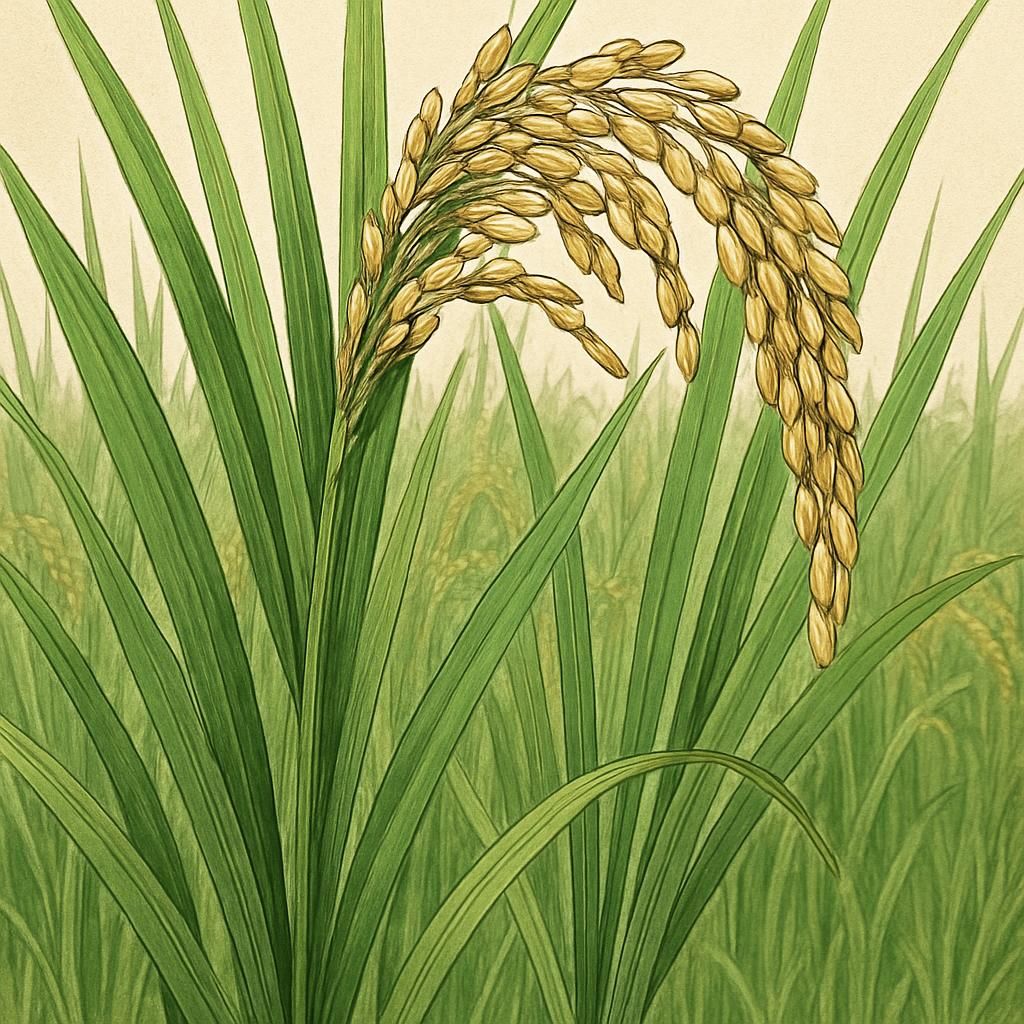
Introduction to Sasanishiki Rice
Sasanishiki Rice is a distinguished short-grain variety originating from Japan, renowned for its delicate taste and versatile use in traditional Japanese dishes. With a notable balance between stickiness and firmness, Sasanishiki's culinary appeal is especially evident in sushi and onigiri.
Botanical Profile of Sasanishiki Rice
Latin Name: Oryza sativa 'Sasanishiki'
- Plant Type: Annual
- Growth Habit: Erect
- Height: 1 to 1.5 meters
- Growth Cycle: Approximately 120-150 days from planting to harvest
Soil, pH, and Climate Requirements for Sasanishiki Rice
Sasanishiki Rice requires specific conditions to thrive, especially as a crop reliant on specific water and nutrient management.
| Condition | Ideal Range |
|---|---|
| Soil Type | Clay to silty loam |
| Soil pH | 5.5 to 7.0 |
| Temperature | 18 - 30°C (daytime) |
| Watering | Flooded conditions |
| Sunlight | Full Sun |
Step-by-Step Planting & Propagation
- Seed Selection and Preparation: Start with high-quality Sasanishiki rice seeds obtained from a reputable source. Ensure seeds are treated against common rice pathogens.
- Soil Preparation: Cultivate fields to ensure fine tilth. Apply organic matter for optimal nutrient supply.
- Sowing: Sow seeds in a well-prepared nursery bed. Germination typically occurs within 7-10 days.
- Transplantation: Transplant seedlings into paddy fields after 25-30 days at a spacing of 20x15 cm.
- Water Management: Maintain water levels around 3-5 cm above the soil surface, adjusting as necessary to promote tillering.
Care & Maintenance Regimes for Sasanishiki Rice
Proper care includes consistent watering, fertilization, and pest control to ensure a healthy crop.
| Aspect | Schedule |
|---|---|
| Watering | Maintain flooded conditions; drain before harvest |
| Fertilization | Nitrogen-rich fertilizer every 4 weeks |
| Pruning | Not applicable; focus on weed control |
Pests, Diseases & Organic Management
Sasanishiki Rice is vulnerable to several pests and diseases that require vigilant management.
- Pests: Spider Mites, Brown Planthopper
- Diseases: Rice Blast, Bacterial Leaf Blight
- Management: Use neem oil for controlling minor pest infestations. Implement crop rotation and manage water levels to reduce disease.
Harvesting, Curing & Optimal Storage
- Harvesting: Typically, 120-150 days after planting when grains are 80-85% gold.
- Curing: Dry paddy grains in the sun until moisture content is approximately 14%.
- Storage: Store in a cool, dry place, ideally in hermetic bags to prevent pest intrusion.
Companion Planting for Sasanishiki Rice
Consider integrating Soybeans and Lychee in fields or adjacent locations. These companions can deter pests and enrich soil fertility, enhancing overall yield resilience.
For more insights on resilient farming techniques, explore our article on Summer Companion Planting: 10 Organic Pairings to Boost Small Farm Resilience to effectively manage your Sasanishiki Rice fields.
Learn more about Rice and its variants by exploring our resources.