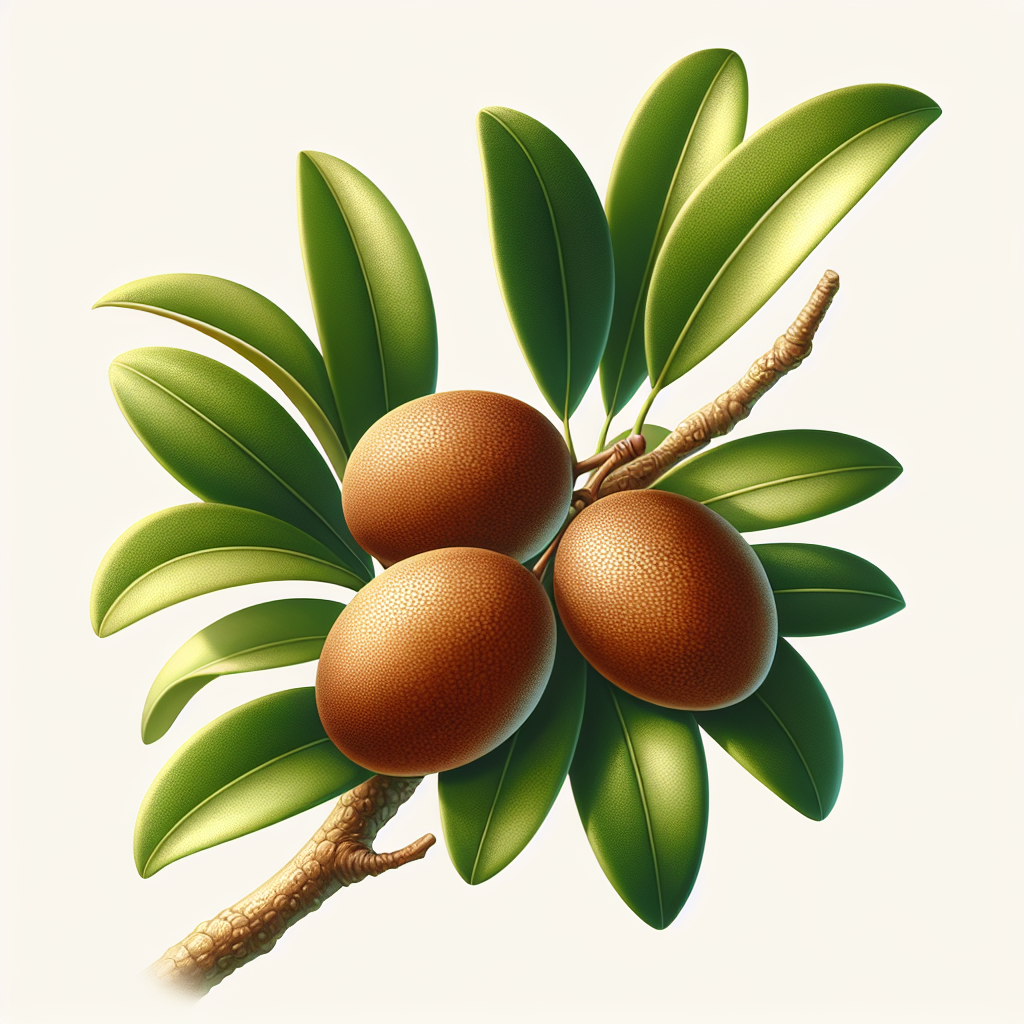
Introduction to Sapodilla (Silas Wood)
Sapodilla, scientifically known as Manilkara zapota, is a tropical evergreen tree celebrated for its delicious, gritty-sweet fruit that tastes like a blend of pear, brown sugar, and caramel. The 'Silas Wood' cultivar stands out among sapodilla varieties for its superior flavor profile, larger fruit size (up to 4-5 inches in diameter), and consistent productivity in subtropical to tropical regions. Native to Central America and cultivated widely in Mexico, the Caribbean, India, and Southeast Asia, sapodilla trees can live over 100 years, producing fruit for decades with proper care.
This deep-dive growing guide is tailored for professional growers, small farms, and homesteaders aiming to cultivate Sapodilla (Silas Wood) successfully. With high market demand for its unique chicle gum heritage (used in chewing gum) and fresh fruit appeal, 'Silas Wood' offers excellent ROI in warm climates. Expect first fruits in 5-7 years from seed or grafted trees, with mature trees yielding 200-500 pounds annually. Key to success: patience during establishment and protection from occasional pests. Mango (crop) growers will find sapodilla a complementary tropical powerhouse.
Botanical Profile of Sapodilla (Silas Wood)
Sapodilla (Silas Wood) belongs to the Sapotaceae family, characterized by its slow-growing, upright canopy reaching 30-60 feet tall and 20-40 feet wide at maturity. The tree features glossy, elliptical leaves (3-6 inches long) arranged spirally, producing small, bell-shaped white flowers year-round in clusters of 1-5. Fruits are round to oval, brown-skinned with 5-10 black seeds embedded in sweet, granular flesh that must ripen fully off the tree for peak edibility.
'Silas Wood' is a grafted selection prized for its high sugar content (20-25° Brix), minimal latex (chicle) bitterness when unripe, and resistance to fruit drop. Botanically, it exhibits latex canals throughout, a defense mechanism against herbivores. Root system is deep taproot with lateral spread, making it drought-tolerant once established. Flowering is continuous but peaks in dry seasons, with fruit maturation in 3-6 months. Pollinated primarily by bees and wind, parthenocarpy is rare, so cross-pollination enhances yields. Compared to standard sapodilla, 'Silas Wood' has thicker skin for better shipping and a more uniform oval shape.
Propagation via air-layering or grafting onto rootstocks like 'Prolific' ensures dwarfing (15-25 feet) for easier harvesting. Nutritionally, fruits provide 80-100 calories per 100g, rich in fiber, vitamins A and C, and antioxidants, positioning it as a superfruit in health markets.
Soil, pH, and Climate Requirements for Sapodilla (Silas Wood)
Sapodilla (Silas Wood) demands well-drained, fertile soils with pH 6.0-7.5, tolerating sandy loams to clay loams but hating waterlogging. Optimal soil: deep, volcanic or alluvial with 2-3% organic matter. Conduct soil tests; amend acidic soils with lime (1-2 tons/acre) and alkaline with sulfur. Mulch with 4-6 inches of organic matter to retain moisture and suppress weeds.
Climatically, it thrives in USDA zones 10b-11, requiring 70-90°F averages, no frost, and 40-60 inches annual rainfall evenly distributed. Humidity above 60% aids fruit set; drought tolerance kicks in after 3 years. Windbreaks are essential in exposed sites, as young trees snap easily. Full sun (8+ hours) is mandatory; partial shade stunts growth. In marginal areas like coastal Florida or southern California, use microclimates or high tunnels. Salt tolerance is moderate, suiting seaside farms. For heatwaves, reference Why Summer Heatwaves Are Silently Killing Small Farm Yields - And 7 Organic Strategies to Fight Back for resilience tactics.
Step-by-Step Planting & Propagation
Propagation: Grafting is best for 'Silas Wood'—use cleft or veneer on 1-2 year rootstocks in spring. Success rate: 80-90%. Air-layering (marcotting) works year-round: girdle 1-inch branch, apply rooting hormone (IBA 5000 ppm), wrap in moist sphagnum, roots in 6-8 weeks. Seeds viable 3 months; stratified in sand for 4 weeks, germinate in 2-4 weeks at 85°F.
Site Prep: Select frost-free, elevated sites. Dig 2x2x2 ft holes, mix 40% compost, 20% perlite. Space trees 25-35 ft apart (15 ft for dwarfs).
Planting: Plant in early rainy season. Bare-root or container trees at same depth as nursery. Stake loosely, water deeply (20 gal/tree). Apply 1 lb 10-10-10 fertilizer.
Young Tree Care: Irrigate weekly first year (1-2 inches/week), mulch 6 ft radius. Prune only deadwood until 5 years.
Care & Maintenance regimes for Sapodilla (Silas Wood)
Irrigation: Drip systems deliver 0.5-1 inch/week; deficit irrigate mature trees for better flavor. Avoid overhead to prevent fungal issues.
Fertilization: Annual schedule: Feb (N-heavy 16-4-8, 1 lb/tree), May (P-K 6-6-6, 2 lbs), Aug (micronutrients). Foliar Fe, Zn, Mn quarterly. Mature: 2-4 lbs N/year split applications.
Pruning: Annual light heading post-harvest to open canopy, remove watersprouts. Train to central leader for dwarfs.
Weed Control: Mulch + mow; organic pre-emergents like corn gluten.
Monitor growth: 2-3 ft/year first decade. Thin fruit clusters to 2-3/inch for size.
Pests, Diseases & Organic Management
Pests: Monitor for mealybugs on new growth—neem oil (2% weekly). Scale insects: hort oil dormant sprays. Fruit flies: kaolin clay barriers. Beetles and borers: spinosad. Beneficials: lacewings, ladybugs.
Diseases: Anthracnose in wet seasons—copper fungicide (pre-bloom). Phytophthora root rot: improve drainage, phosphite drenches. Pink disease: prune infected branches.
Organic IPM: Scout weekly, use traps (pheromone for flies), companion herbs. Reference Why 90% of Small Farms Fail at Pest Management - And 8 Organic Fixes That Actually Work for protocols. Solarize soil pre-plant.
Harvesting, Curing & Optimal Storage
Harvest when fruit shoulders yield to thumb pressure, skin matte brown (immature green fruits latex-heavy). Mature trees: 3-5 picks/year, hand-ladder harvest into padded crates. Yield peaks at 10-15 years.
Curing: Ripen at 77-86°F, 85-90% RH for 5-7 days; ethylene bags accelerate. Fully ripe: translucent flesh, no grit.
Storage: Fresh: 50-55°F, 85-90% RH, 2-3 weeks. Processed: puree frozen (-0°F, 12 months), dried chips.
Market as premium: 50-100 fruits/tree first crop.
Companion Planting for Sapodilla (Silas Wood)
Pair with guava for pest deterrence (guava repels flies), pineapple as groundcover suppressing weeds. Nitrogen-fixers like pigeon pea interplanted young trees. Avoid water-hungry crops like banana. Herbs: basil, marigold for nematodes. Multi-story: underplant with ginger. Enhances biodiversity, soil health.