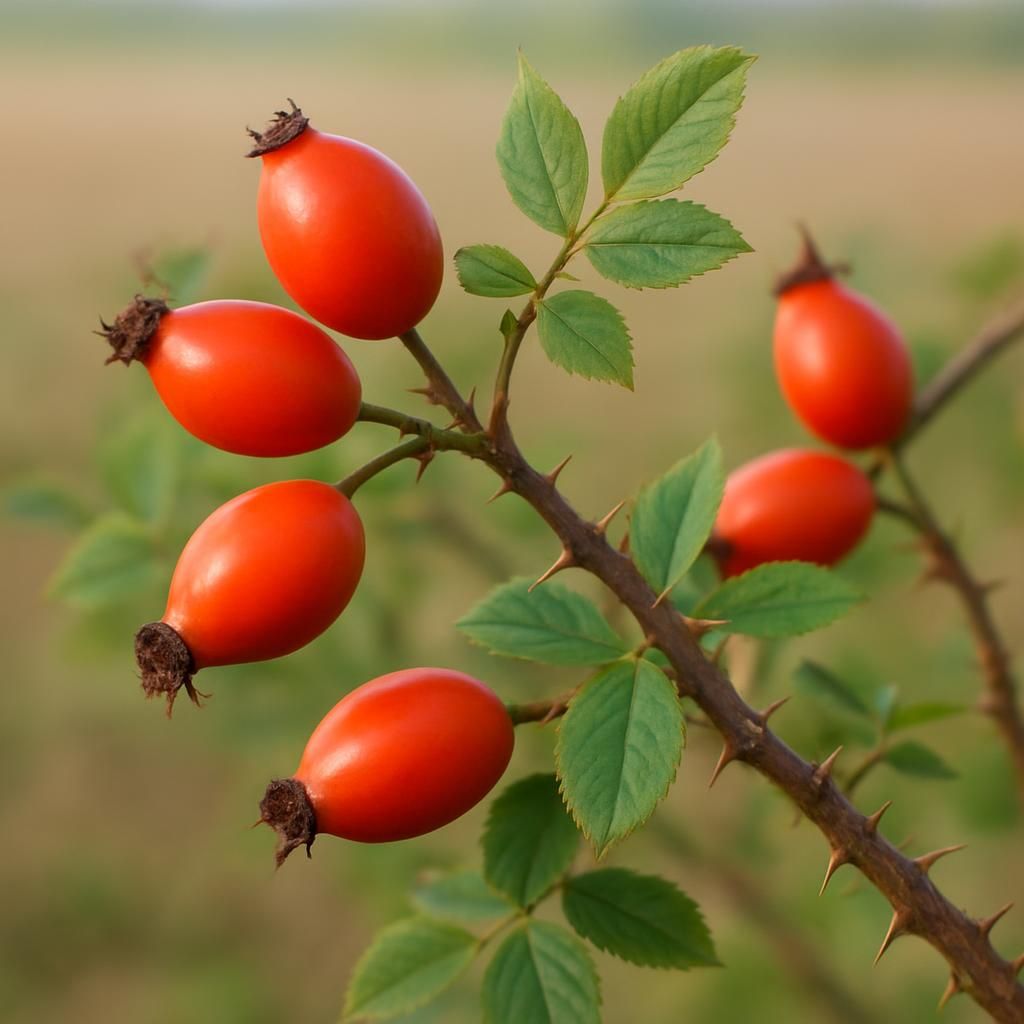
Introduction to Rose Hips (Rosa canina)
Rosa canina, known as the dog rose, is a vigorous deciduous shrub native to Europe, northwest Africa, and western Asia. It is widely cultivated for its bright red-orange hips that develop after flowering and are prized for their exceptionally high vitamin C content, antioxidants, and culinary applications in teas, jams, and syrups. Professional growers value Rosa canina for its resilience, low maintenance requirements, and dual-purpose role as both a productive crop and an attractive hedge plant.
Commercial and small-scale production focuses on selecting disease-resistant cultivars and optimizing harvest timing to maximize nutrient density. Rose hips are typically harvested in late summer through autumn when fully colored but still firm. The crop supports diversified farm income through fresh, dried, and value-added products while providing ecological benefits such as pollinator habitat and erosion control on slopes.
Botanical Profile of Rose Hips (Rosa canina)
Rosa canina belongs to the Rosaceae family and grows as a sprawling shrub reaching 1–3 meters in height with arching, thorny stems. The plant produces single, five-petaled pink or white flowers in late spring that give way to oval or round hips containing numerous seeds. The hips ripen from green to vibrant orange-red and are rich in ascorbic acid, flavonoids, and carotenoids.
The root system is deep and fibrous, conferring excellent drought tolerance once established. Leaves are pinnate with 5–7 leaflets and provide moderate shade in mixed plantings. The species is diploid (2n = 14) and readily hybridizes with other Rosa species, which growers should consider when sourcing planting stock to maintain true-to-type hips.
Soil, pH, and Climate Requirements for Rose Hips (Rosa canina)
Successful cultivation begins with matching site conditions to the plant’s preferences. Rosa canina performs best in well-drained loamy soils with moderate fertility. Heavy clay or waterlogged sites should be amended with organic matter or raised beds to prevent root diseases.
| Parameter | Ideal Range | Notes |
|---|---|---|
| Soil Type | Loam to sandy loam | Well-drained; avoid compacted or saline soils |
| Soil pH | 6.0–7.0 | Slightly acidic to neutral; tolerates 5.5–7.5 |
| Temperature Range | 15–25 °C daytime | Hardy to –20 °C; requires 800–1200 chill hours |
| Annual Rainfall | 600–1000 mm | Supplemental irrigation in dry periods |
| Sun Exposure | Full sun (6+ hours) | Partial shade reduces hip production |
| Elevation | Up to 1500 m | Good air circulation reduces disease |
Step-by-Step Planting & Propagation
Propagation is most reliable from semi-hardwood cuttings taken in late summer or from seed that has undergone cold stratification. Seed-grown plants require 18–24 months to reach transplant size and may show genetic variation in hip size and vitamin content. Cuttings root readily in a 1:1 perlite-peat mix under intermittent mist.
Site preparation includes clearing perennial weeds and incorporating 5–8 cm of well-rotted compost. Plant bare-root or container-grown shrubs in early spring or autumn at 1.5–2 m spacing within rows and 2.5–3 m between rows for mechanical access. Set plants at the same depth as the nursery container, firm the soil, and water thoroughly. Apply a 5–7 cm mulch layer of wood chips or straw to conserve moisture and suppress weeds.
Care & Maintenance regimes for Rose Hips (Rosa canina)
Consistent care maximizes both yield and longevity. Irrigation, nutrition, and pruning must be synchronized with phenological stages to avoid excessive vegetative growth at the expense of flowering and hip set.
| Season | Watering Schedule | Fertilizer Application | Pruning Action |
|---|---|---|---|
| Early Spring | Deep soak every 7–10 days if dry | 5–10 kg well-rotted manure per plant | Remove dead, diseased, and crossing wood |
| Late Spring | Maintain even moisture during bloom | Side-dress with 2–3 kg compost tea | Tip-prune new growth to encourage branching |
| Summer | 15–20 L per plant weekly | Foliar kelp spray monthly | Light shaping only; avoid heavy cuts |
| Autumn | Reduce to encourage hardening | Apply 3–5 kg rock phosphate if deficient | Remove 1/3 oldest canes at ground level |
| Winter | Minimal; protect from desiccation | None required | Major structural pruning while dormant |
Pests, Diseases & Organic Management
Rosa canina is relatively resistant but can be affected by Aphids, Spider mites, and Powdery mildew. Regular scouting and cultural practices form the foundation of integrated pest management.
Aphid colonies on tender shoots are best controlled with strong water sprays or insecticidal soap. Spider mite outbreaks are reduced by overhead irrigation and releasing predatory mites. Powdery mildew is minimized by spacing plants for airflow and applying sulfur or neem oil at the first sign of infection. Root-knot nematodes can be managed with biofumigation using mustard cover crops and maintaining high organic matter.
Harvesting, Curing & Optimal Storage
Rose hips reach peak vitamin C content when fully colored but still slightly soft. Harvest by hand using gloves to avoid thorns, collecting hips with a short stem attached. Process within 24 hours to preserve nutrients.
For drying, slice hips in half, remove seeds, and dehydrate at 35–40 °C until brittle. Store dried hips in airtight glass containers away from light for up to 18 months. Fresh hips can be refrigerated for 2–3 weeks or frozen whole for later culinary use. Value-added products include syrups, leathers, and powders that command premium prices at farmers’ markets.
Companion Planting for Rose Hips (Rosa canina)
Strategic companions enhance biodiversity and reduce pest pressure. Marigold and Nasturtium deter aphids and provide ground cover. Aromatic herbs such as Thyme and Rosemary improve pollinator activity and may suppress fungal spores. Understory planting of Clover fixes nitrogen and improves soil structure while reducing erosion on sloped sites.
Avoid planting near Blackberry or other vigorous brambles that compete for light and harbor shared pests. Interplanting with Yarrow attracts beneficial insects that prey on rose pests, creating a resilient polyculture system.