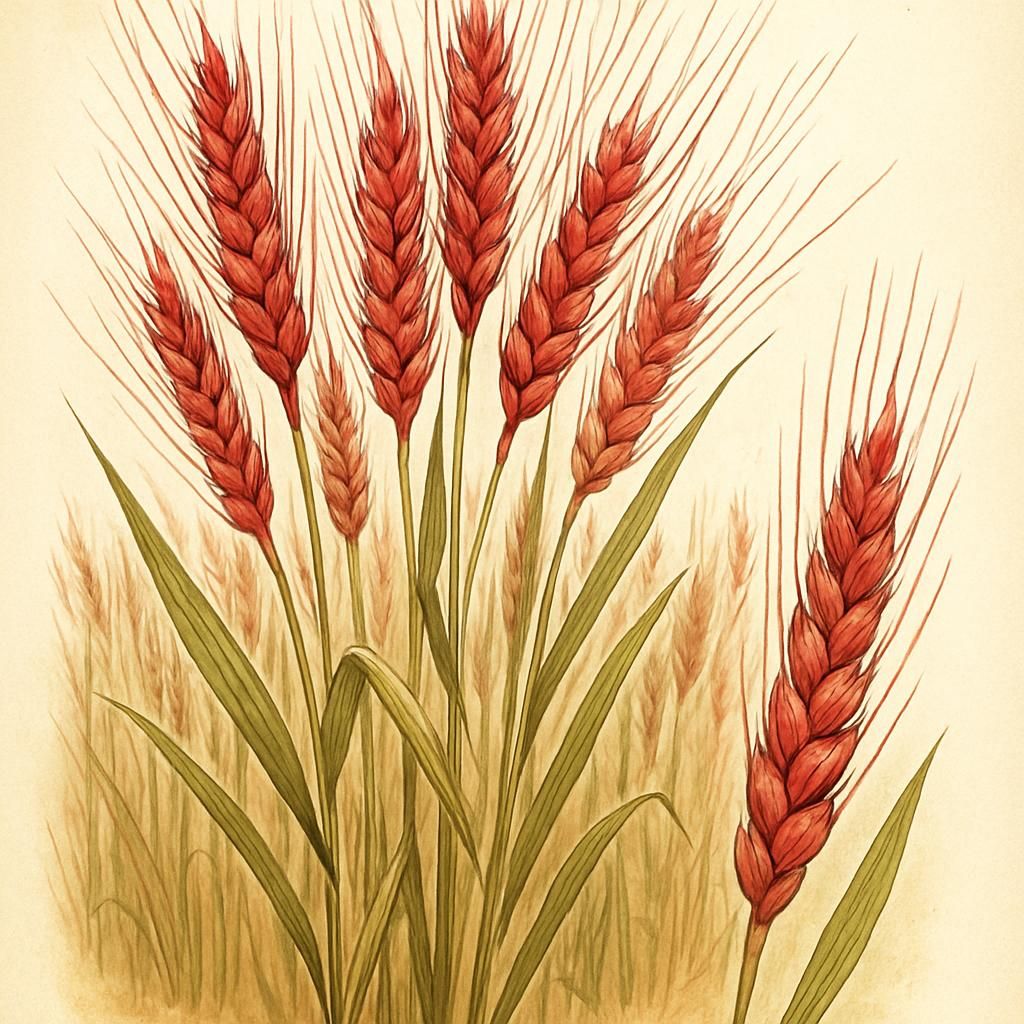
Introduction to Red Fife Wheat
Red Fife Wheat, a historic Canadian grain, stands out for its exceptional flavor and baking prowess. First cultivated in the mid-19th century, it is celebrated for its adaptability to various climates and its robust resistance to many of the pests and diseases that burden other wheat varieties. Now a favorite among artisanal bakers and organic farmers, it remains a staple for sustainable agriculture.
Botanical Profile of Red Fife Wheat
Classified scientifically as Triticum aestivum, Red Fife Wheat belongs to the Poaceae family, characterized by its tall stems and distinctive reddish-hued kernels. As with most wheat varieties, it is an annual grass, completing its lifecycle within a year. The plant thrives through a temperate growing season, maturing in approximately 110 to 120 days.
Soil, pH, and Climate Requirements for Red Fife Wheat
Red Fife Wheat is relatively flexible regarding soil conditions but performs best in well-drained, fertile soils with adequate organic matter. Key environmental preferences are outlined below:
| Factor | Ideal Conditions |
|---|---|
| Soil Type | Loamy, well-drained |
| Soil pH | 6.0 to 7.5 |
| Temperature | 15°C to 25°C (59°F to 77°F) |
| Rainfall | 400-750 mm annually |
Step-by-Step Planting & Propagation
- Seed Selection and Preparation: Use certified seeds to minimize disease risk. Opt for seeds that are plump and free from damage.
- Soil Preparation: Prior to planting, till the soil to a depth of 6 to 8 inches and enrich it with organic compost to enhance fertility.
- Sowing: Plant seeds 1 to 1.5 inches deep. If broadcasting, ensure even distribution; for row planting, maintain a spacing of 6 to 8 inches between rows.
- Timing: For spring planting, sow seeds once the danger of frost has passed. Fall planting is suitable where winters are mild, ensuring the crop vernalizes properly.
Care & Maintenance Regimes for Red Fife Wheat
Proper care is essential to maximize yield and grain quality. Below is a regime schedule:
| Practice | Recommendations |
|---|---|
| Watering | Moderate, avoid waterlogging. |
| Fertilization | Organic compost at planting; NPK |
| fertilizer during growth. | |
| Pruning | Not applicable for wheat. |
Pests, Diseases & Organic Management
Red Fife Wheat is susceptible to some common diseases but generally shows better resilience. Notable pests include aphids and Hessian fly, while diseases like Stem Rust can affect the crop. Organic management strategies include crop rotation, maintaining soil health, and using disease-resistant seed varieties. Beneficial insects and natural predators can effectively control pest populations.
Harvesting, Curing & Optimal Storage
When harvesting Red Fife Wheat, ensure the grain moisture content is around 14% to 16%. This generally occurs when the kernels are firm and no longer green. After harvesting, cure the wheat by drying it to a moisture level of 12% for long-term storage. Store grain in a cool, dry place to preserve quality and prevent pest infestations.
Companion Planting for Red Fife Wheat
Successful companion plants for wheat include legumes like Peas and Beans, which enhance soil nitrogen content. Planting species with pest-repellent properties such as Marigolds can also be beneficial. To learn more about effective combinations, check out our Spring Companion Planting: 8 Organic Pairings to Maximize Small Farm Yields.
Learn more about general wheat cultivation here.